A jab that could prevent cancer might be available within the next decade, according to British scientists.
Clinical trials for a vaccine aimed at preventing lung cancer are set to commence next year. Efforts are already in progress to develop additional vaccines that could stop breast, ovarian and bowel cancers from developing within the body.
The plan is for British researchers to combine these vaccines into a single anti-cancer jab that young people could receive free of charge on the NHS during a visit to their GP.
This vaccine could potentially save up to 3.6 million lives globally each year from those who die from the most severe types of cancer, and could extend the average human lifespan.
• 'Christmas Day silly walk saved my eight-year-old boy's life'
• Mum told this could be her last Christmas after dismissing cancer as breastfeeding pain
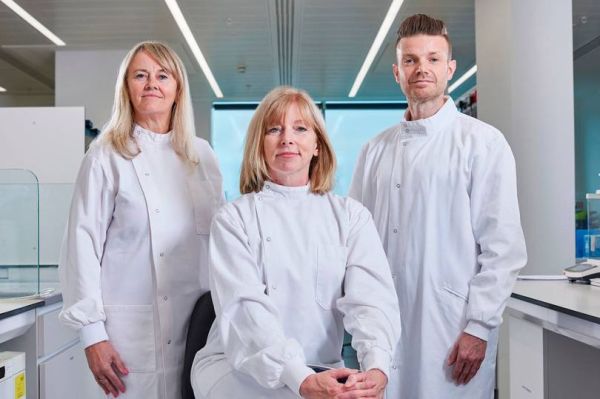
It would also free up resources to combat other lethal diseases such as dementia and heart disease. This remarkable breakthrough is being spearheaded by medical researchers at the University of Oxford, reports the Daily Star.
The project has received support from the NHS, Cancer Research UK, the Spain-based CRIS Cancer Foundation and major pharmaceutical companies.
Sarah Blagden, a clinician-scientist and professor of experimental oncology at the University of Oxford, disclosed the significant progress made in the quest for a vaccine in the Channel 4 documentary series 'Cancer Detectives: Finding the Cures'.
But, she also revealed how the project could be a life-saving game-changer within a decade.
She envisioned a future where a single vaccine could potentially stop most major cancers, akin to the jabs we receive to protect against measles, mumps, rubella, whooping cough and tetanus. The idea struck her while she was listening to a podcast in her car.
The podcast featured Professor Charles Swanton, deputy clinical director at The Francis Crick Institute in London, discussing his team's research into how cancers evolve within the body and develop resistance to treatment.
Sarah, 56, had an epiphany, realising that medical research might be better directed towards preventing cancer development rather than treating it as a fully-fledged disease.
Fast forward three years, utilising the rapid vaccine development techniques refined during the pandemic, her team is on the verge of introducing an anti-lung cancer jab to the world.
She said: "What we think we have is the first vaccine that could actually prevent cancer from starting in the first place. Even lung cancer takes probably a decade plus to develop in your lungs. So there's this thing called pre-cancer - it's the form that cancer goes through before it becomes proper cancer.
"That is your cells are already undergoing this transition towards cancer. What we've done is design a vaccine to get your immune system to eradicate those cells.
"I heard Charlie actually talking about it on a podcast. And I contacted him and said, 'Charlie, you should design a vaccine against those early changes'. Coming from Oxford we've got all these vaccine groups coming out of the pandemic.
"We thought we can use the backbone of the vaccines that we've been working on and we can actually repurpose them to design them against cancer rather than Covid.
"He got back to me and said, 'okay, I'll put you in touch with my team'. And that's how it started.
"Everybody's got ideas - they're cheap. But it has been quite painful to get it off the ground because we had to convince people that this was a good idea. It took me three attempts to get funding for it because it's a bit out of the box.
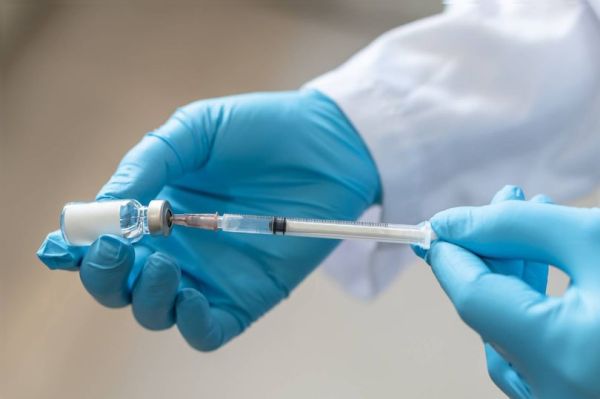
"But we've got the first batch of the vaccine made in Oxford and we're going to open the clinical trial in the summer next year. We're working on a number of different vaccines now preventing lots of different cancers.
"What we'd like to do is pool them all into one vaccine that you give to the population - to your kids. Their cancer risk would go right down. That would be the plan. We'd like to imagine that we could do this within the next decade or maybe the next 20 years."
Sarah highlighted that her team's efforts are causing a significant shift in the approach medical professionals take towards combating cancer.
"Oncologists like myself, we're very fixed on treating established cancer," she said. "We're not looking underneath the iceberg at the moment. But this is an opportunity to actually go in with something to prevent it.
"In the world no-one else is doing it like this. There are other people doing early work on vaccines but we're working in a much more coordinated, faster way and we're working across multiple disease areas.
"So if we have five or six different vaccines we would then want to try and make one out of the best parts of those and we would want to give it to people in early adulthood.
"It's going to be possible for the university to develop a vaccine that's going to be useful across the world. I know I sound like I'm going mad here but, you know, if it's good... I don't want to stop.
"I don't want to have a long gap between us developing the lung cancer one to, say, the breast one. I want us to keep moving fast, fast, fast.
"We're very lucky at the moment. We've got really amazing scientists, we've got really cool technologies, we've got patients supporting us, we've got an infrastructure and funders that agree with us.
"I think this is kind of a one-in-a-generation opportunity to do this. So we just need to do it quickly and not waste any time."
Sarah explained that her team was dedicated to demonstrating the vaccines were both safe and effective - a procedure which had accelerated thanks to lessons learnt from COVID. "I never really kind of wanted to sort of verbalise it because I thought everyone would think I was crazy," she said.
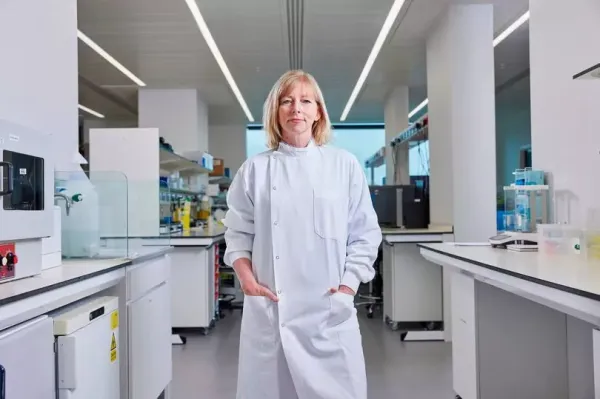
"But in my dream I would like you to get vaccinated at a certain age and it protects you. And I can't see why we wouldn't want to do that. This comes from a good place. This comes from, you know, we've all got family members with cancer, we've all got our own experiences of how rotten cancer is, what a horrible disease it is.
"And so this comes from us wanting to try and get rid of this disease. We're not in the hands of Big Pharma, it's come from our minds, it's come from our desire to make a difference, to make an impact.
"I couldn't do this on my own. But I think we all feel that this is kind of really important. A lot of the scientists that have got involved are committing more and more of their days to doing this work because we all think, 'wow, this actually could be a big game changer'.
"We've seen already from the experiments that we've done - let's just say that they look really, really promising. The data that's come through looks like it potentially could work. My message to cancer is, 'we're coming for you'."
-
Nimra Khan goes viral with AI selfies featuring Hollywood stars

-
Survey Reveals The Exact Day Workers Stop Trying Before The New Year
-
5 Zodiac Signs Experience The Best Horoscopes On December 27, 2025

-
Every Ryobi Leaf Blower You Can Buy Today, Ranked By Price
-
What’s ahead for startups and VCs in 2026? Investors weigh in