Highlights
•Software ownership is steadily declining as subscription-based SaaS models dominate creative, productivity, and enterprise tools in 2025
•Subscriptions offer continuous updates, cloud access, and AI-driven features, but lock users into recurring payments
•Long-term costs of SaaS often exceed traditional one-time purchases, especially for professionals using multiple tools
•User experience benefits from constant improvements but suffers from forced changes and reduced workflow stability
Software ownership is the thing of the past, and most people prefer subscriptions to pay for the kindness of constant updates and cloud-powered convenience. In 2025, the fight is not about ideologies anymore; it is just a matter of fact: are subscription models really the best choice with regard to value, flexibility, and user experience, or are users just paying more for less control?
When Buying Software, it No Longer means owning it
There used to be a time when the purchasing of software was all commission. One-time payment, installation, and use for as long as the hardware was alive were that model’s features, which are becoming more and more outdated. By 2025, software will be hardly ever something that a person buys; it will always be something that is rented.
SaaS models based on subscriptions have become the industry’s norm for every kind of software, from productivity suites and creative tools to security software and even operating systems. What started as an option for a few has turned into a core change in the way software is conceived, marketed, and experienced.
Today’s users are faced with the choice of whether or not they can still count on subscriptions. The battle is mostly settled, but whether they truly are a step forward.
Why Subscriptions Took Over
For software companies, the benefits of SaaS are clear and undeniable. Predictable revenue through subscriptions, smoother cash flow, and user relationship closeness are some of the perks of the new model. Companies would not have to wait for a few years to release major updates; instead, they could continuously roll out the updates, always responding to users’ and markets’ needs for faster feedback and improvement.
Software development also changed through this transition. The cloud connectivity is the reason that boasts the instant bug fixing, global deployment of new features, and unlimited experimenting with AI that would not be possible with the offline-only modes.
For users, the very initial proposal was vastly appealing. They had no more large upfront payments at the start of use, the latest features were always available, and the problem of compatibility was diminished. Basically, it was a win-win situation. However, the reality has been more complex than that.
The Cost Question: Paying Less or Paying Forever?
Subscriptions look like they are the affordable option at first sight. The monthly payment does not seem to be a lot in comparison to the price of a one-time purchase. But then, eventually, they end up costing just as much, if not more, than the one-time purchase. The ones who used to pay every few years are now paying for subscriptions continuously, and often they even have to subscribe to several services.
In 2025, it will not be uncommon for professionals to have subscriptions for productivity tools, design software, storage, collaboration platforms, and security services all at the same time. While each subscription fee is reasonably low, the total bill becomes pretty high.
On the other hand, ownership is accompanied by both psychological and financial closure. You buy, you own, and you are the one who decides when to upgrade. With subscriptions, the opposite is the case. The moment you stop paying, access is gone, and in some cases, even to your own data.
This paradigm shift has drastically changed the power relationship between users and developers.
Flexibility and Access: The SaaS Advantage
Though prices are a major issue, subscriptions still remain at the top regarding flexibility. The users have the freedom to increase or decrease their usage, change the plan, or use the software on different devices at once without any delay. The cloud sync feature makes it possible for the user to access his or her work at any time, whether he or she is using a laptop, tablet, or phone.
To organizations and collaborative groups, this flexibility is a game-changer. The ability to collaborate, work in shared areas, and use cloud-based processes has brought about a new level of productivity. The software is no longer confined to a single computer; it is available everywhere.
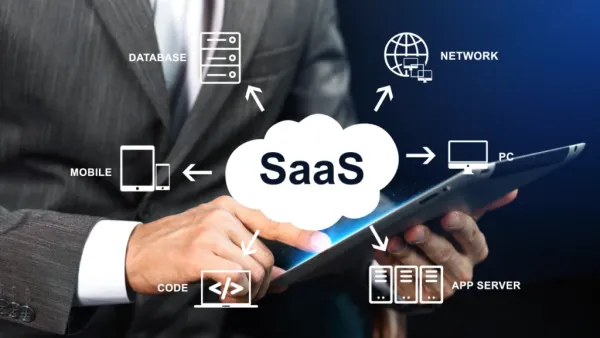
On the other hand, ownership-based models find it really hard to survive in such a competitive environment. Offline licenses do not have the smooth updates, continuity from one device to another, and collaboration features that are part of the online licenses. They still attract individual users, but they progressively feel out of touch with the modern ways of working.
User Experience: Constant Improvement or Constant Change?
Continuous improvement is one of the most powerful arguments for SaaS. The various features are always changing, bugs are being fixed, and security patches are coming in automatically. Instead of waiting for years for important upgrades, users get them constantly.
In spite of this constant change, there is still a lack of stability. Interfaces are changing without prior notice, sometimes useful tools are removed, and one has to go through the whole process of learning over again. The users become passive recipients of the decisions made by the software providers instead of being active participants.
On the other hand, software that is owned instead of subscribed to has the disadvantage of being slow to change, but is very consistent regarding other aspects. The tools will always be familiar, predictable, and not affected by the business strategy changes. This stability is very important for certain users, especially professionals who have their workflows set up.
Data, Control, and Dependency
The most important effect of the SaaS era is probably the dependency factor. Subscription software makes a user rely on certain file formats, storage in the cloud, and ecosystems that are hard to get out of. Sometimes moving data may be very difficult, time-consuming, or even intentionally obstructed.
Software ownership gives the user more freedom. Data is stored locally, formats are mostly open, and access is not based on the user making regular payments. The difference is significant, especially when taking into account the rights of the individuals and data sovereignty in the digital world, which are becoming more and more important issues.

At the same time, ownership means taking on responsibilities. Users will have to take care of the backing up, securing, and making compatible of files by themselves, activities that many do not mind giving up to subscription services.
The AI Factor: Accelerating the Shift
Artificial intelligence has totally redrawn SaaS adoption into the fast lane. The usage of AI characteristics needs huge amounts of data, unceasing updates, and cloud computing, all of which are well-matched to the pay-per-use model. The same applies to the tools that produce content, process data, and perform tasks automatically, as they all require continuous development and support from the infrastructure.
In such a scenario, ownership-based software is becoming harder to compete with head-to-head. The AI powers are not “bought once” and can be taken as static attributes. They are the services that constantly evolve, thereby amplifying the logic of subscriptions.
This technological reality implies that, at least for AI-driven tools, SaaS is not merely a preferred business choice but a functional necessity.
Are Users Pushing Back?
As the technology is widely adopted, some resistance signs are nevertheless emerging. Users more and more frequently challenge the price increases, mandatory upgrades, and features taken away. Some programmers have reacted to this by giving mixed models subscriptions and perpetual licenses offered side by side, or lifetime access tiers, for instance.
Open-source software has also reaped benefits from the trend and gained more traction by providing ownership, openness, and community-driven development as substitutes to commercial SaaS platforms.
These shifts indicate that the dissatisfaction is indeed there, but it is scattered. Typically, convenience overpowers the principle, especially when it comes to deadlines and productivity.
Conclusion: Winning, But Not Unchallenged
The year 2025 has undoubtedly marked the triumph of subscription-based software in the market, but the argument is not over. SaaS is providing flexibility, innovation, and AI-powered features that the ownership models just are not able to compete with. The subscriptions become the one and only practical choice for the businesses, creators, and teams that want to work together.

Still, the price of using this convenience is always being dependent, having less control, and making the payment forever. Ownership might be losing its grip, but the quest for independence has not gone away.
The software future could be in not selecting one model over the other, but in getting a compromise wherein the users get to enjoy the advantages of constant innovation without giving up control altogether.SaaS is winning for the time being. However, the argument is far from being closed.
-
US : Air Travel Disrupted by Severe Winter Storm During Holiday Rush

-
Patna: Launches Coordinated Drive to Rescue Children from Street Begging and Ensure Long-Term Rehabilitation

-
Chhapra Tragedy: Silent Winter Tragedy Claims Four Lives in Chhapra Home

-
England’s Melbourne Revival: A Landmark Test Win That Reignited the Ashes Battle

-
Kis Kisko Pyaar Karoon 2 Re-Release: Kapil Sharma’s Comedy Sequel Set for a Fresh Box Office Run in 2026