According to Motorwaythe 2026 car market is going to be marked with nostalgic car designs, car personalization inspired by social media, and of course, more tech. Although looking at the past to inspire future car design is indeed welcome, some trends are shaping up to be quite concerning. With the current economic state plagued by supply chain issues and tariffs costing automakers billions of dollars, the industry is forced to reconsider market philosophy, and it does so by often relying on trends.
However, trends are, by design, temporary, and even though they influence the decision-making of a certain period within the industry, they don’t always reflect long-term benefits. As someone who has followed the car market for 20 years, I’ve always been fascinated with what the new car is going to offer. Sometimes, that progress delivers improvements drivers have been waiting decades for. Other times, it moves the industry in the wrong direction. Here are five 2026 car trends we’re already dreading.
A complete takeover of dashboard screens
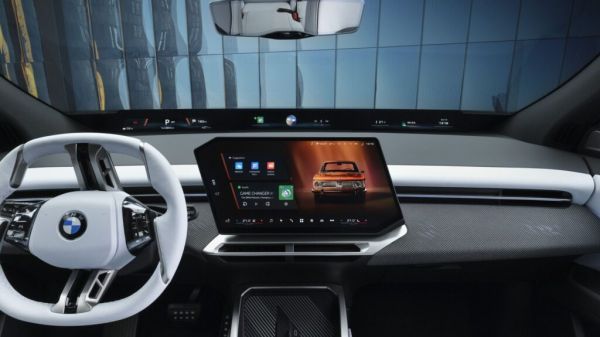
Huge in-car infotainment screens have been a point of discussion for years now. Ever since the 1976 Aston Martin Lagonda, one of five classic cars that had digital dashboards way before they hit mainstream, screens kept on getting bigger and brighter. In 2026, it seems like we are reaching the very peak of the screen takeover, with many upcoming cars now sporting end-to-end, full-length screens that span the entirety of the dashboard.
For example, the Mercedes GLC is the best-selling Mercedes on the planet, and for such an important vehicle, sensible product decisions are vital. For the brand-new 2026 model, Mercedes has decided to incorporate a gargantuan 39.1-inch dashboard screen — the biggest fitted to any Mercedes car ever. BMW’s upcoming “Neue Klasse” design philosophy, which is set to lead the design language of all upcoming 2026 and beyond BMW’s, also focuses on multiple huge screens.
Specifically, the very first “Neue Klasse” BMW, the 2026 ix3 features a combined total of more than 60 inches of screens, that’s more than what you’d find in some home theaters. Lincoln is also refreshing the Nautilus for 2026, and its combined screen real estate is 48 inches of uninterrupted displays. We are yet to see how these rolling movie theaters fare in the safety department, but making such massive screens not distracting sure seems tricky.
Same interiors across different models
When buying a car from a higher market segment, people naturally expect to get a car that looks different from the inside than one from a lower segment. However, it seems like some brands with new 2026 cars don’t share the same sentiment. The new 2026 Audi A5 and the imminent Audi A6 have two distinctly different MSRPs. That is because they are from different segments. The A5 starts at $49,700 while the A6 is expected at around $64,100.
So, if you are after the A6, you probably expect the $15,000 price difference to translate to how these two luxury cars feel and look inside, but no, they are the same. Even worse, the entry-level Mercedes sedan, the $51,650 2026 Mercedes C 300 and the flagship sedan, the $119,500 2026 S 550 also have almost identical screen and overall dashboard layouts. Remember, you can essentially buy more than two C-Classes for a price of a single S550.
American cars are similar. The new mid-size 2026 Chevrolet Blazer EV starts at $44,600 while its smaller counterpart, the 2026 Equinox EV starts at $34,995. When simply looking at the interior, you’d be hard-pressed to tell the difference. To top it all off, the $91,100 “standard” Cadillac Escalade shares an almost identical dashboard and screen layout with the ultra-limited $400,000 Celestiq. The authenticity of classic car dashboards are gone, and using screens and minimalist design is now a standard.
The end of the physical gauge cluster
Physical gauge clusters have practically vanished from the car industry, and in 2026, it seems like even the driver-oriented favorite, the Porsche 911, is ditching them as well. Although the Porsche Taycan launched without a physical gauge cluster in 2019, the 911 has managed to maintain a physical gauge right up until the new 992.2 2025/2026 911. Even after almost seven decades of continuous tradition, the physical gauge cluster is no more.
This shift is not only associated with sports cars. The new 2026 Honda CR-V ditched physical clusters for the very first time, only offering either a 7-inch digital cluster or an 11-inch digital cluster. The 2026 Toyota Corolla also ditched analog gauge clusters entirely. Although you were able to select analog screens on both for 2025 models, that is no longer the case. Although some cars do feature incredibly cool dashboard displays, completely eradicating clusters eliminates tactility, personalization, and in some cases, visibility.
According to human-factors research published in the International Journal of Industrial Ergonomicspointer-style analog clusters were found to be more efficient and less visually demanding for drivers compared to bar-style digital counterparts. Specifically, pointer-style clusters reduced glance times by as much as 280 milliseconds, and pointers are the general architecture you’d find in most traditional analog gauges.
The potential demise of CarPlay
During a recent podcast appearance on The VergeGM’s CEO Mary Barra came out and said the company has decided to move away from Apple CarPlay in favor of a native Android infotainment system. This means that GM, starting now, is slowly transitioning to a complete abandonment of CarPlay through 2028.
The reason why could have something to do with how data is collected and GM wanting to retain customers on their own software. BMW also came out and said that it won’t support CarPlay Ultra. Moreover, other car brands are also skipping Apple CarPlay, including Audi, Volvo, and Polestar. Although it’s too soon to tell whether GM’s move will gain traction with the rest of the industry, Apple CarPlay could indeed be challenged in 2026.
After all, GM was also one of the very first brands to incorporate fully capacitive 12.3-inch capacitive screens within its 2013 CUE system. Judging by the first trend of massive dashboard and gauge cluster screens, these very solutions partly envisioned by GM have spiraled into an industry trend we (and many car owners and experts) aren’t too fond of.
Screws that only automakers can turn
On December 11, 2025, WIPO published a patent designated DE102024115950. This new BMW patent could limit independent repair shops and vehicle owners from working on their own cars. The filing describes a BMW-designed fastener that requires a proprietary BMW-specific wrench to loosen or tighten. This means that owners and mechanics will not be able to work on some of BMW’s systems without this tool.
This represents the latest chapter in the ongoing industry-wide right-to-repair battle, and BMW appears to have thrown a wrench into the mix — quite literally. U.S. senators have criticized other carmakers for restricting people from working on their cars or from choosing their repair shops. Paid subscriptions are also a part of the problem, and lawmakers are putting their foot down about subscription car features — but it is not enough.
A New York Senate bill addressing paid vehicle features passed both the Senate and the Assembly but ultimately failed to become law after being vetoed on December 5, 2025. This suggests that the support for eradicating subscription-based car features and exclusive fasteners is not yet strong enough to produce meaningful changes in the world of politics. In the meantime, all we can do is make sure trends such as these are openly challenged.