The number of people who think you must be born in Britain to be British is on the rise, according to new analysis warning of a spike in ethno-nationalism. Research conducted by YouGov for the Institute for Public Policy Research (IPPR) has revealed that 36% of people believe "Britishness" is something you are born with, compared to 19% in 2023.
While most members of the public still associate national identity with a set of shared values, the belief that "belonging to this nation is defined by ancient rights and historical claims" is on the rise, fuelled by far-right narratives, according to the IPPR. Parth Patel, associate director of the think-tank, told The Guardian: "Politicians and activists on the right are trying to change how we think about ourselves and one another. Worryingly, they are starting to change the hearts and minds of some people in Britain."
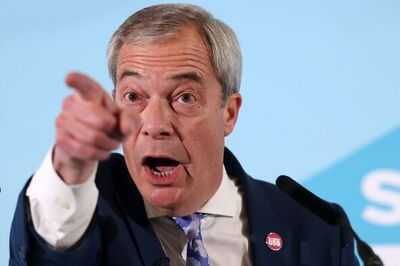
The polling found that 71% of those who professed support for Nigel Farage's Reform UK party said people must have British ancestry to claim the national identity, while 37% said they would be prouder of Britain if it was less populated by minority ethnic groups in a decade's time.
"[Right-wing figures] believe belonging to this nation is defined by ancient rights and historical claims, and want the rest of us to believe that too," Mr Patel said.
"Having become used to opponents who challenge them mainly on grounds of economic equality, progressives now find themselves locked in conflict with those who reject far more basic tenets of human equality. We should be meeting this contest with confidence and conviction."
The analysis showed that the majority of supporters of all other major UK political parties, including Labour and the Conservatives, defined nationhood as a civic community based on shared values, rather than ethnic ancestry.
Perceived ethno-nationalism - the definition of national identity as shared ancestry, heritage and ethnicity - has increasingly reared its head in the public discourse over recent months, fuelled by fears surrounding illegal migration.
Around 40,600 migrants have made the dangerous Channel crossing since the start of 2025, with more than 69,000 cases in the asylum appeals backlog at the end of September, according to the Ministry of Justice.
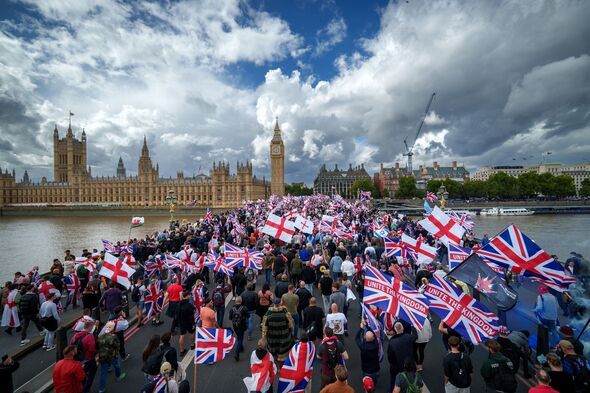
Migrant hotels across the country saw a wave of protests over the summer after an asylum seeker housed in Essex was charged with sexually assaulting a teenage girl and over 110,000 people joined far-right activist Tommy Robinson's "Unite the Kingdom" rally in London in September.
Labour's poll ratings have also plummeted since last year's general election, while Reform has risen to the forefront of UK politics, in part due to concerns about the impact of immigration on public services, social cohesion and national identity.
Prime Minister Keir Starmer celebrated a fall in net migration to the lowest annual figure since 2021 as a "step in the right direction" last month and reiterated his pledge to close all asylum hotels by the next election.
Nick Garland, associate fellow at the IPPR, said: "A vast majority of the public still believes in a nation built on shared values and common interests, not birthplace or background. The urgent task for the government - and for progressives more broadly - is to give voice to this belief by setting out a compelling alternative vision of the nation: a story of who we are that looks forward, not back.
"The fight over what it means to be British must be met by rejecting division and reclaiming a shared, inclusive national project."
-
Big cat 'as tall as car bonnet' filmed prowling driveway in UK town

-
Who is Martha from the Wake Up Dead Man cast?

-
Stop using popular 'temporary' solution to clear drains that makes it 'far worse'

-
“Not Natural Exit….,” Ex-Cricketer Questions Virat Kohli & Rohit Sharma's Sudden Test Exits

-
How long is Ruby Franke in jail for?