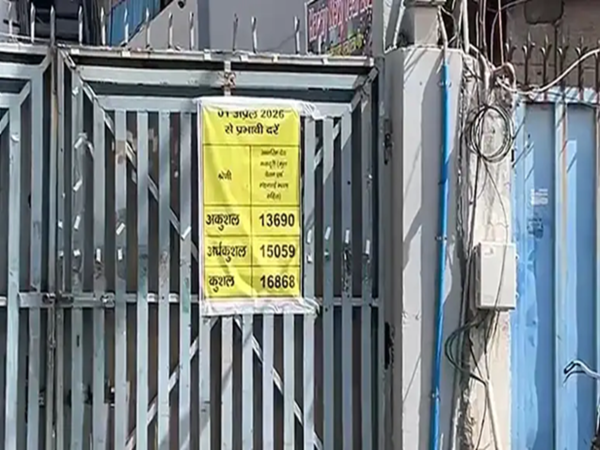
Noida Labour Protest: Recently, thousands of workers in Noida, Uttar Pradesh, took to the streets in protest. These workers, employed in various factories and companies, alleged that they were made to work for long hours but received a meager daily wage of just ₹300 in return. The protests turned violent at times, with clashes between the police and the workers reported in several locations.
Following a prolonged period of unrest, the UP government finally announced a wage hike for the workers and issued directives to every factory and company regarding the implementation of this decision. Currently, banners have been displayed outside numerous companies in Noida, outlining the specific wage rates applicable to unskilled, semi-skilled, and skilled employees. In this context, we explain who falls into which category and the corresponding differences in their salary structures.
**Factors Determining Minimum Wages**
The government has formulated a Labour Code to govern wages and salaries. This code outlines the methodology for determining minimum wages and specifies the key factors that must be taken into consideration during this process. According to the code, there are three primary parameters used for this determination:
The first parameter is the **Geographical Area**; wages are determined based on the specific location where the worker is employed. For instance, wage rates may be adjusted according to the cost of living prevalent in large cities, small towns, or rural villages.
The second parameter is **Experience**. When determining wages or salaries, it is essential to take into account the level of professional experience possessed by the employee.
The third parameter is **Skill** (or Proficiency). Under this criterion, wages are fixed based on different skill-based categories. Four distinct categories have been established to define the corresponding salary scales.
**The Four Categories**
**Unskilled:** This category comprises individuals whose work does not require any specific specialized skills or technical expertise. It typically includes daily-wage laborers and those engaged in various forms of casual or manual labor.
**Semi-skilled:** Semi-skilled workers are individuals who possess a basic understanding or rudimentary knowledge of the specific work they perform. They do not, however, possess complete mastery or expertise in the job. Skilled: This category comprises individuals who are absolute experts in their work. In other words, a machine operator who possesses complete proficiency in operating a specific machine would be classified as skilled.
Highly Skilled: This category includes individuals who are experts in technical tasks.
What is the Salary Difference?
Salaries for workers across these various categories may vary from one state to another. Recently, the Haryana government implemented an increase of approximately 33% in wages for all workers; following this move, protests demanding salary hikes also erupted in Noida. Typically, the salary for unskilled workers ranges between ₹12,000 and ₹15,000. Meanwhile, the salary for semi-skilled workers can reach up to approximately ₹17,000. Skilled workers, on the other hand, earn between ₹20,000 and ₹22,000.
Disclaimer: This content has been sourced and edited from NDTV India. While we have made modifications for clarity and presentation, the original content belongs to its respective authors and website. We do not claim ownership of the content.
-
Taurus Yearly Horoscope

-
White House and Anthropic CEO discuss working together amid rising fear about Mythos model

-
Mythos a serious threat but more will follow, Barclays CEO says

-
Nvidia rival Cerebras discloses US IPO filing as AI boom drives listings

-
Nimble companies are succeeding in the AI era: YC's Jared Friedman