Top News

Rajya Sabha Polls Announced: What Is The Procedure And How Does Voting Work? Explained
Sneha | June 1, 2026 8:11 PM CST

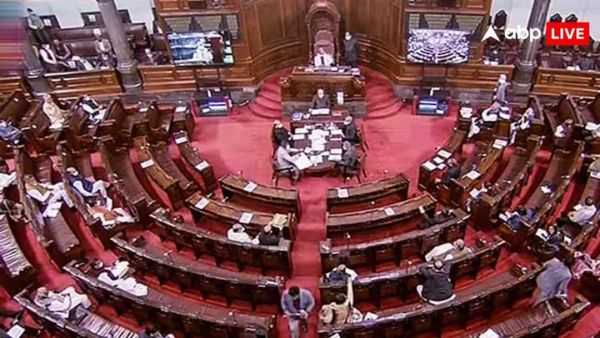
The Election Commission of India (ECI) has announced the schedule for elections to 27 seats in the Rajya Sabha, comprising biennial elections for 24 seats across 10 states and bye-elections for three seats in Maharashtra, Tamil Nadu and Odisha. The poll panel has also announced elections to the Legislative Councils of Bihar and Karnataka.

The nomination process for all the announced elections commenced at 11:00 am on June 1, 2026. Candidates can submit their nomination papers until 3:00 pm on June 8. The scrutiny of nominations will be conducted by the respective Returning Officers (ROs) on June 9, while June 11 has been fixed as the last date for withdrawal of candidature. If elections become necessary due to contests, polling will be held on June 18 from 8:00 am to 4:00 pm. The counting of votes will begin at 5:00 pm on the same day for all the notified elections.

Apart from the Rajya Sabha elections, the ECI has also announced biennial elections for nine seats in the Bihar Legislative Council and seven seats in the Karnataka Legislative Council. A bye-election will also be held for one vacant seat in the Bihar Legislative Council.

How Are Rajya Sabha Members Elected?

Members representing states and Union Territories in the Rajya Sabha are elected through an indirect election process. Unlike Lok Sabha elections, the public does not vote directly for Rajya Sabha members.

Representatives from each state are elected by the elected members of the respective State Legislative Assemblies, while representatives from eligible Union Territories are chosen by members of their Electoral Colleges. The election is conducted through the system of proportional representation by means of the Single Transferable Vote (STV).

RS Election: Understanding Process

The number of Rajya Sabha seats allotted to each state is determined under the Fourth Schedule of the Constitution. One-third of the members retire every two years, and elections are held to fill those vacancies.

To understand the process, consider a state where elections are being held for three Rajya Sabha seats.

Suppose the State Assembly has two parties:

  • Party A: 100 MLAs
  • Party B: 40 MLAs

Both parties may nominate candidates for the three available seats. To secure a Rajya Sabha seat, a candidate must obtain a minimum number of votes, known as the quota.

The quota is calculated using the following formula:

Quota = [Total number of valid votes ÷ (Number of seats to be filled + 1)] + 1

In this example:

Quota = (140 ÷ 4) + 1 = 36 votes

This means a candidate needs at least 36 votes to be elected.

How Does Voting Work?

MLAs do not cast separate votes for each seat. Instead, they rank candidates in order of preference—marking them as first preference, second preference, third preference, and so on.

A candidate who secures the required quota of first-preference votes is declared elected. In the above example, Party B, despite having only 40 MLAs, can still ensure the election of one candidate by consolidating its votes behind a single nominee.

Similarly, Party A, with 100 MLAs, can comfortably elect two candidates by allocating enough votes to meet the quota for each. This system ensures that representation in the Rajya Sabha broadly reflects the strength of political parties in the State Assembly rather than allowing a single party to win all available seats.


READ NEXT
Cancel OK