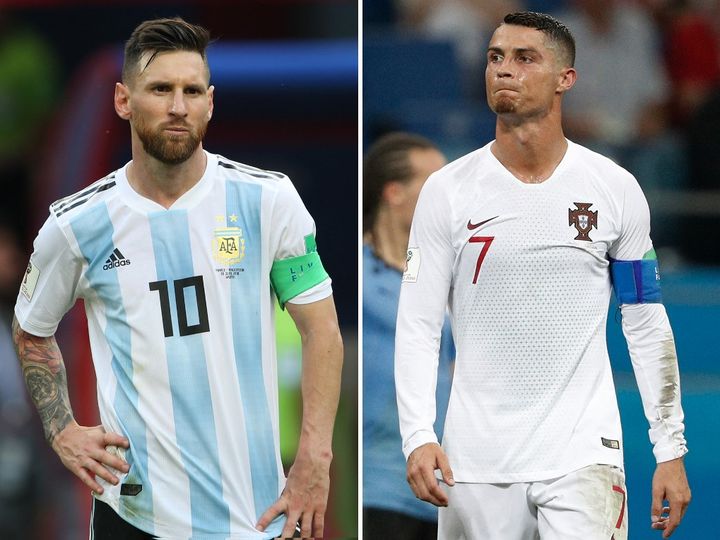
Lionel Messi (Argentina) and Cristiano Ronaldo (Portugal).
A total of 1,248 players from 48 national teams have been officially confirmed to participate in the 2026 FIFA World Cup, which will be hosted across the United States, Canada, and Mexico.
FIFA has officially finalised and announced the list of 48 teams that will take part in the world’s biggest football tournament.
With just days remaining before the competition begins, the participation of 1,248 players has also been confirmed.
Legendary figures such as Lionel Messi (Argentina), Cristiano Ronaldo (Portugal), and Guillermo Ochoa (Mexico) will once again feature, joining a new generation of young players ready to make their mark in football history.
The three superstars are set to participate in their sixth World Cup, an unprecedented milestone in the history of the tournament.
Since making their debuts on the World Cup stage more than two decades ago, the trio have continued to represent their national teams and remain active participants in the planet’s most prestigious football event.
However, none of these three players hold the record as the oldest player at the 2026 World Cup.
That distinction belongs to Scotland’s veteran goalkeeper Craig Gordon, who is 43 years old.
On the other end of the spectrum, Mexico’s Gilberto Mora will be the youngest player at the tournament at just 17 years old.
He leads a group of 22 players aged under 20, which also includes rising stars such as Warren Zaire-Emery from France and Bilal El Khannouss from Morocco.
FIFA’s statistics highlight that the 2026 World Cup represents a significant generational transition in world football.
Out of the 1,248 registered players, 891 will make their first-ever appearance at a World Cup finals.
This means that the majority of participants will experience the unique atmosphere of the world’s biggest football competition for the very first time.
Beyond the player milestones, the 2026 World Cup also marks a historic evolution in terms of organisational scale.
For the first time, the tournament will feature 48 teams — an increase from the previous formats of 16, 24, and later 32 teams in past editions.
The total number of matches has also been expanded to 104, spread across stadiums in the United States, Canada, and Mexico.
The expansion of participating teams has opened doors for several new football nations.
Cape Verde, Curaçao, Jordan, and Uzbekistan will make their World Cup debuts, promising inspiring and memorable stories throughout the tournament.
The 2026 World Cup also reflects the deepening globalisation of modern football.
According to FIFA data, the 1,248 players represent 449 clubs across 71 different countries and regions.
Many national teams feature players who compete in top leagues around the world, including nations like Uruguay, Senegal, and Ivory Coast.
By contrast, teams such as Qatar and Saudi Arabia have chosen to maintain their domestic identity, relying heavily on players competing in their own national leagues.
With its unprecedented scale, the presence of living legends, and a new wave of young talent, the 2026 World Cup promises to be more than just a quest for the next champion.
It will serve as a defining moment in global football — where icons of one era and the rising stars of the next converge on the sport’s grandest stage.
-
SIP During Market Crashes: Why Staying Invested Can Deliver Bigger Returns Over Time

-
ITR Filing 2026: How Section 44ADA Makes Tax Filing Easier for Freelancers and Professionals

-
ABP Live Doc Talk | Why Women Are More Prone To UTIs And The Risks Of Holding Urine

-
UN Warns Of Strong El Niño Return With 80% Chance By August, Risks Of Extreme Weather Rise
-
Supreme Court Disposes Of WFI Plea Over Wrestler Vinesh Phogat Selection Trials, Leaves Issues Open