By Max Parrott, Analytical Football Journalist
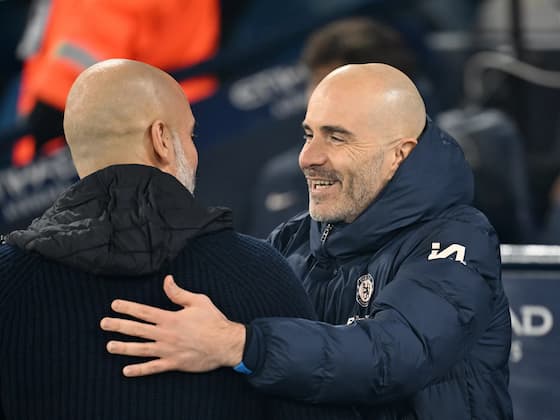
Enzo Maresca appears increasingly poised to succeed Pep Guardiola as Manchester City manager, with the six-time Premier League champions still negotiating compensation terms with Chelsea.
These ongoing discussions have delayed the Italian’s official appointment, which many fans expected would already be finalised. The uncertainty continues to linger at the Etihad, with senior players like captain Rodri reportedly waiting until after the World Cup to make decisions about their futures.
It is understood that a verbal agreement has been reached for Maresca to take over on a three-year deal. The Italian coach had departed Chelsea on New Year’s Day after his relationship with club executives deteriorated.
Bringing back a former City assistant — even one who played a role during the treble-winning season — represents a bold yet calculated gamble for the club.
This analysis explores how Maresca might structure his Manchester City side and which players could thrive under his tactical vision as the club enters a new chapter.
Maresca’s coaching journey includes leading Manchester City’s U23 squad to a Premier League 2 title in the 2020–21 season, staying true to the club’s trademark emphasis on positional play. However, his first senior managerial role at Parma proved challenging.
His intricate and demanding tactical system required highly specific player profiles — a difficult ask in the unpredictable world of Italian football.
Following his stint at Parma, Maresca joined Leicester City, where he implemented a dominant possession-based approach. His Leicester side averaged 61.6% possession and built play meticulously from the back, suffocating opponents through control. The Foxes won 13 of their first 14 Championship matches and secured promotion with 97 points, catching the attention of Chelsea in the process.
During his 18 months at Chelsea, Maresca experienced both highs and lows but proved his credentials at an elite level. Under his guidance, the Blues claimed the UEFA Conference League title and went on to win the 2025 FIFA Club World Cup, defeating European champions PSG 3–0 in a commanding final.
In the Premier League, his attacking structure unlocked the creative potential of players like Cole Palmer and Enzo Fernández, culminating in a fourth-place league finish in his first season.
Maresca is known for his rigid tactical philosophy, once comparing management to playing chess: “You design a plan, anticipate countermoves, and position each piece strategically.” His teams are characterised by strict positional discipline and collective movement.
They advance up the pitch as a compact, slow-moving unit to maintain possession and prevent counter-attacks. However, this rigidity can sometimes make his sides predictable. Opponents using deep, organised defensive setups often found ways to frustrate Maresca’s Chelsea, who occasionally lacked the creativity to break down such resistance.
At Chelsea, his build-up play began with the deepest player — the goalkeeper. In early phases of possession, the keeper stepped forward to act as a third centre-back. How Maresca adapts this strategy at City will be intriguing, especially with Gianluigi Donnarumma, a world-class shot-stopper but not renowned for his footwork.
Patience is a cornerstone of Maresca’s system. Defenders are encouraged to remain composed, sometimes even motionless, to lure opposition pressers before exploiting the gaps that emerge.
This approach allows the centre-backs to spread wide and full-backs to advance higher, creating numerical superiority in midfield. The goalkeeper, defenders, and midfielders combine in short, precise passing sequences to bypass the first line of pressure.
As play progresses, the structure transitions into a 3-2-4-1, with one full-back moving inside to form a midfield double pivot. At Chelsea, this role was often filled by Malo Gusto; at Manchester City, Nico O’Reilly is expected to take on that responsibility.
The double pivot offers central control, helping the team dominate possession and neutralise opposition pressing. This frees the advanced midfielders to operate in half-spaces, where they can connect attacks and create overloads between the lines.
Such central compactness forces defences to narrow, leaving wingers in advantageous one-on-one situations out wide — a fundamental aspect of Maresca’s offensive play.
Once settled in a 3-2-5 attacking shape, Maresca’s sides use rapid third-man combinations to unlock defensive structures. At Chelsea, the pattern often involved the double pivot feeding playmakers like Cole Palmer or Enzo Fernández, who then released wingers into space before making underlapping runs for return passes, creating cut-back opportunities.
Implementing this intricate system demands technically refined players — a resource Manchester City have in abundance.
Under Maresca, City’s setup will likely begin as a 4-3-3 and evolve into a 3-2-5 during possession. Donnarumma will step into the backline, supporting the double pivot of Rodri and O’Reilly in progressing the ball.
Defensively, Marc Guéhi will act as the anchor, managing transitions and covering the space behind the advanced line. O’Reilly’s role as an inverted left-back will be pivotal in adding extra support in midfield.
In attack, the focus will be on central dominance to free wingers like Jeremy Doku and Antoine Semenyo for direct duels. Rayan Cherki and target signing Elliot Anderson will operate between the lines as creative playmakers, linking midfield and attack with quick interchanges.
At the spearhead, Erling Haaland will serve as the focal point — occupying defenders and converting the team’s cut-backs and crosses into goals.
Throughout his managerial career, Maresca has had to tailor his complex framework to the quality of his squad. At Manchester City, he would inherit arguably the most technically gifted group in world football.
Guardiola’s tenure, defined by his obsession with control, yielded 20 major trophies. Now, the challenge falls to Maresca — a coach equally devoted to structure and precision — to maintain and evolve that legacy.
Whether the immense pressure of following Guardiola proves too much or whether Maresca’s philosophy flourishes with this elite squad remains to be seen. The next chapter at the Etihad is about to begin, and Maresca’s appointment seems only a matter of time.
-
Deliver tenant farmers’ rights, Telangana activists warn Congress

-
Trump says Iran shot down US Apache helicopter, vows response

-
Whose roads are better? Check out viral Hyderabad-Bengaluru post

-
Woman drugged, gang raped in Karnataka’s Davanagere

-
Ballari engineering student found hanging, family cries foul