
Watching an Imtiaz Ali film today feels like a warm hug to the soul. There is something deeply stirring about the way love unfolds on screen through the gaze of a filmmaker who has, time and again, given us characters that feel eternal, be it Geet’s uninhibited joy in Jab We Met, Ved’s unravelling in Tamasha, Jordan’s aching yearning in Rockstar and Meera’s conflict between ambition and love in Love Aaj Kal. What the filmmaker often calls the “blemishes of life” become the very essence of his storytelling.
Because life, as we know it, rarely unfolds in a perfect sequence. We stumble, we fall, we fail, we make mistakes and then we gather ourselves and move forward. In Imtiaz Ali’s cinema, art imitates this chaos of living, and in doing so, reflects something profoundly human back to us. That is perhaps why his films continue to resonate across generations, finding renewed meaning long after their release.
With his upcoming film Main Vaapas Aaunga, Imtiaz Ali returns to familiar emotional terrain of love and longing but this time set against the sweeping, painful backdrop of India’s Partition. The story unfolds through the lens of a present-day grandson, played by Diljit Dosanjh, marking his second collaboration with the filmmaker after Amar Singh Chamkila.
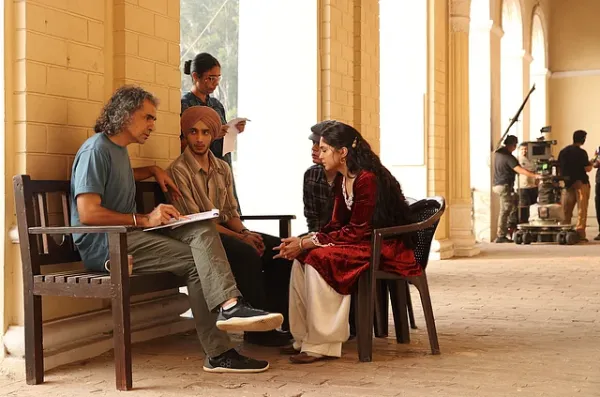
With actors Vedang Raina and Sharvari on the sets of 'Main Vaapas Aaunga'
At its heart is a dementia-stricken grandfather, portrayed by Naseeruddin Shah, who revisits his teenage love story from pre-Partition India. His younger self is played by Vedang Raina, alongside Sharvari as his love interest, bringing to life a romance shaped by fading memory and displacement.
In conversation with Khaleej Times ahead of the film’s release, Imtiaz Ali opens up about love as a recurring language in his work, the emotional weight of displacement and the art of creating music that stands the test of time.
Excerpts from an interview:Whenever we watch an Imtiaz Ali film, it feels like a warm hug to the soul. A large part of that is because love has remained a recurring language throughout your filmography. What keeps drawing you back to it, especially with Main Vaapas Aaunga?
Imtiaz Ali: Well, I approach a film with the same sentiment that I am going to receive a warm hug. That something is going to happen which will change my life, the way I think and the way I feel.
The experience of making Main Vaapas Aaunga has been exactly that. I’m really looking forward to presenting it to people all over the world. And when the movie comes out, you’ll understand why I say “all the people of the world”.
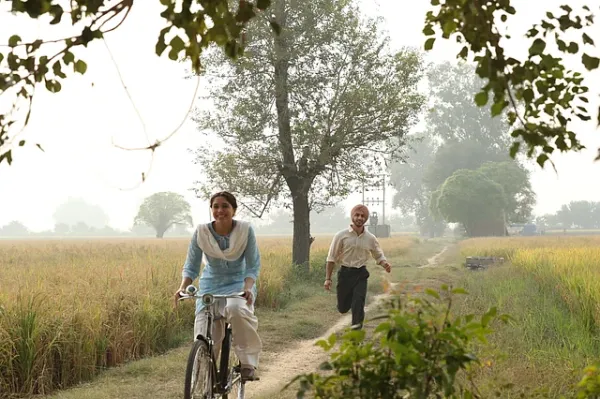
On the sets of 'Main Vaapas Aaunga'
All of us are plagued and troubled by common things. We think our problems are different, but actually the same problems exist everywhere. We often feel that the forces of hatred and destruction are so big. They devastate cities and lives. But almost every family contains a living example of the fact that love wins in the end. It is always in a victorious stance.
Stories of love are even more necessary when there is strife in the world. Main Vaapas Aaunga is such a story. It is true that it is a story of love between two people. But there is also longing and displacement. And displacement, as we know, is perhaps the biggest story of this century.
From Jab We Met to Love Aaj Kal and now Main Vaapas Aaunga, your films have explored relationships in very different forms. How has your own understanding of love evolved over the years?
Imtiaz Ali: I never claim to make love stories. I feel I am making movies about people. And while writing them, it turns out that these people are in love or are dealing with the emotion of love. Honestly, you feel that I’m creating these characters, but I feel these characters are creating me and my mentality.
Sometimes, when you’re writing or making a movie, you’re not completely in control. You don’t know why you did what you did. You didn’t know what would happen if Geet misses the train. Then Aditya comes from somewhere. While writing it, I feel, “Oh, he’s there. Now what will happen?” I’m writing in suspense myself. So, I guess the characters are leading me on.
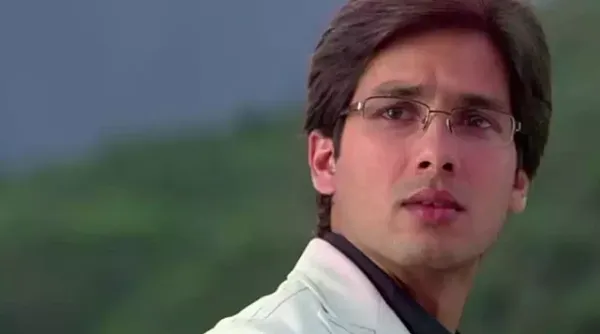 Still from 'Jab We Met'
Whenever I write a movie, my understanding develops and also breaks because some conceptions that I have carried from before get challenged. My ideas of relationships, of what a romantic couple should be, all of that undergoes turmoil and change.
One thing audiences always associate with your cinema is its immersive sense of world-building, which make the places feel lived-in and authentic. How did you approach recreating the world of pre-Partition India?
Imtiaz Ali: What you’re referring to as world-building — places, spaces, costumes, looks, properties, the way people walk, the way they talk, the language — I absolutely love that. And I feel you’ve got to do world-building even if you’re doing contemporary spaces because there is a world everywhere, which is different.
Especially in a world that is becoming the same. You go to any tourist city and it starts looking identical. The same Airbnbs, the same malls, the same merchandise. So, I feel that especially younger people want something different.
When I travel, I try to go to places that are exactly the essence of what they are supposed to be geographically, anthropologically and socially. Therefore, when I’m making movies, I automatically create those spaces.
In this film, 1947 gave us the liberty of creating a very specific world. Every person had to be constructed. Every property on every desk had to be created. You get a hundred people and want them to climb into a train in a scene, but every hairstyle has to be period-specific. Those are things audiences may not consciously notice, but they know whether something feels authentic or not.
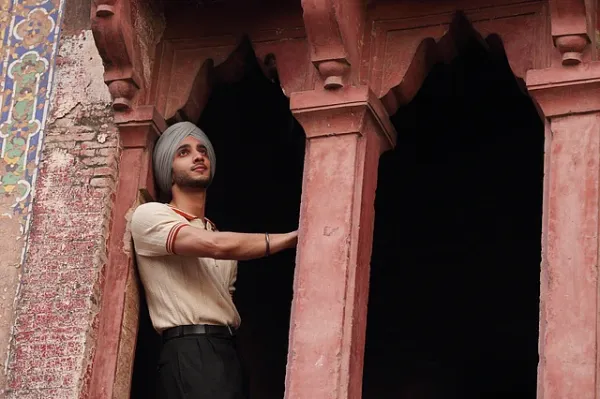
On the sets of 'Main Vaapas Aaunga'
That feeling helps the drama. It helps the believability. In fact, if the space is real, it’s easier to act better.
Naseeruddin Shah looks almost unrecognisable in the film. What made him right for this role?
Imtiaz Ali: This was probably the most difficult role in the film. The character is 95 years old, bedridden for much of the story and struggling with memory loss. Naseer Saab had to wear prosthetics, a beard, a turban and medical apparatus for long hours every day. But what I needed was a very finely calibrated performance.
This character’s memory changes constantly. One day he believes he is in June 1946. The next day he may be somewhere else entirely. Sometimes he remembers things and sometimes he forgets words while speaking.
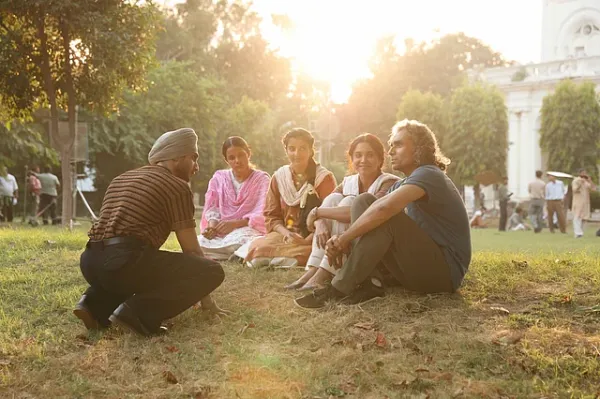
On the sets of 'Main Vaapas Aaunga'
Playing memory loss is difficult because you cannot simply forget your lines. It requires immense control. I needed somebody with extraordinary craft and experience, but also somebody who genuinely loves acting enough to endure a role like this.
The chemistry between Naseer and Diljit became very special. Many people who have seen the film tell me those scenes are their favourite. Diljit’s character listens to him with affection and patience, never making fun of him, always trying to understand what he’s really saying. That relationship became the emotional centre of the film.
Music has always felt like a character in your films. Why has it remained such an important part of your storytelling?
Imtiaz Ali: I love music in films. I love making music. But most of all, I love shooting music. I’m one of those directors who worries when people say songs will gradually disappear from Indian cinema. I really hope they don’t. I love the process of filming a song.
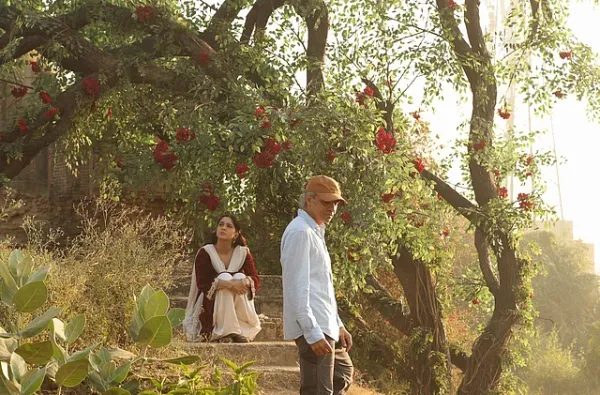
On the sets of 'Main Vaapas Aaunga'
And the music directors I’ve worked with have spoiled me. When you’re working with someone like AR Rahman or Pritam, the quality is naturally at a certain level. But beyond that, they involve me deeply in the process.
There’s a line in the teaser, ‘Woh humein bata bhi rahe hain, par humein unki baatein samajh mein nahin aa rahi’ (He's telling us what's on his mind, but we just can't seem to understand him.) That feels very true to how we talk about mental health today. Was that intentional?
Imtiaz Ali: I do believe that if somebody has the love and compassion in their heart for the person who is talking, they will get them. In the film, everybody is around this old man. But only Diljit's character, Nirvair, really gets him because he loves him that much and genuinely wants to understand what is going on in his mind.
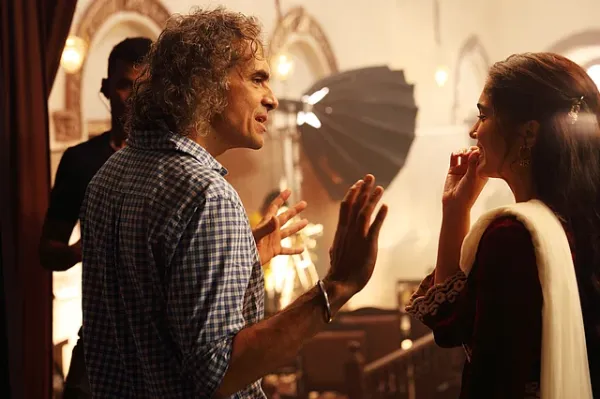
On the sets of 'Main Vaapas Aaunga'
When it comes to mental health, the important thing is not only communication. It is also compassion. It is the expression of kindness and love is what can make the difference. If this approach becomes more commonplace within families and communities, whether online or offline, it is going to solve so many problems.
We're not looking at intellectual solutions. We're looking at solutions that bring us back to our own compassion. A little harshness going away and a little tenderness coming in can make an enormous difference.
Main Vaapas Aaunga is set to release in UAE theatres on June 11.
Exclusive: Bhumi Pednekar on 'Daldal', imposter syndrome and why she’s done being hard on herself Bollywood lyricist and writer Neelesh Misra reflects on anger and algorithms Pakistani actress Saba Qamar on stardom, mental health and mastering intense roles-
Football’s Most Memorable Goal Celebrations Through the Years
-
Qatar World Cup 2022: Schedule, Groups, Venues, Weather, Teams and Ticket Details

-
Transfer saga ends: Kennet Eichhorn set to join Bayer Leverkusen in major summer move
-
All-Time Greats: Ranking the Finest Italian Footballers in History

-
Hyderabad gets its own Masai Mara: Inside Mokila’s new staycation