'Ladki Bahin' or 'Bhai Yojana'? Thousands of Men Found Claiming Benefits in Maharashtra and Bengal
Webdunia | June 10, 2026 8:40 PM CST
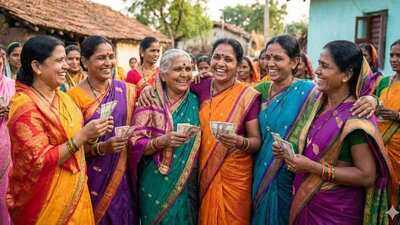
A startling discovery during government audits in Maharashtra and West Bengal has exposed significant irregularities in women-centric welfare schemes, with thousands of men reportedly receiving financial assistance intended exclusively for female beneficiaries.
The findings have reignited concerns about beneficiary verification, data management, and the growing dependence on self-declaration systems in large-scale welfare programs.
Maharashtra Audit Uncovers Male Beneficiaries in Ladki Bahin Scheme
Maharashtra's flagship Mukhyamantri Majhi Ladki Bahin Yojana, launched to provide monthly financial assistance to women, has come under scrutiny after a review reportedly found a large number of ineligible beneficiaries.
According to government data, nearly 8.1 million of the scheme's 24.7 million beneficiaries were found to be ineligible during a verification drive. Among them were 14,298 men who had allegedly been receiving the monthly assistance of Rs.1,500 meant for women.
Officials suspect that false declarations and inaccurate documentation may have been used to gain access to the scheme. Preliminary estimates indicate that more than Rs.21 crore may have been disbursed to such ineligible beneficiaries over the last ten months.
The state government is now examining options to recover the funds and initiate legal proceedings against those found to have submitted fraudulent information.
Chief Minister Devendra Fadnavis defended the initial registration process, explaining that self-certification was introduced to simplify access for eligible women. However, the audit findings have raised questions about the effectiveness of subsequent verification checks.
Ineligible Beneficiaries Extend Beyond Male Applicants
The audit also reportedly identified several other categories of beneficiaries who did not meet eligibility norms.
Authorities found that nearly one million income-tax payers, around 500,000 government employees, and numerous vehicle owners had been receiving benefits despite being outside the scheme's intended target group.
Following the verification process, the total number of beneficiaries reportedly dropped from 24.7 million to approximately 17 million.
Similar Concerns Emerge in West Bengal's Lakshmir Bhandar Scheme
West Bengal's Lakshmir Bhandar scheme, one of the state's flagship welfare initiatives for women, has also come under the spotlight after allegations of large-scale irregularities.
CM Suvendu Adhikari claimed that out of nearly 22 million beneficiaries, around 3 million were allegedly ineligible, including more than 300,000 men.
He further alleged that thousands of male beneficiaries had been identified in multiple districts and that even schemes intended for widows contained names of male recipients.
The issue gained further attention after officials reportedly identified 173 male beneficiaries in the Dhubulia area of Nadia district. Reports suggest that an investigation has been initiated to determine how these names were included in the database.
Questions Over Welfare Delivery Systems
The developments in Maharashtra and West Bengal have intensified the debate over the implementation of welfare schemes across India.
Experts argue that while direct benefit transfer programs have significantly expanded social support, large beneficiary databases remain vulnerable to errors, duplicate records, and fraudulent enrollments if verification mechanisms are not regularly updated.
The cases have highlighted the importance of periodic audits and stricter scrutiny to ensure that welfare benefits reach their intended recipients. They have also raised broader questions about how governments balance rapid welfare expansion with accountability and data accuracy.
As investigations continue, both states are expected to review their beneficiary databases more closely and strengthen verification procedures to prevent similar irregularities in the future.
The findings have reignited concerns about beneficiary verification, data management, and the growing dependence on self-declaration systems in large-scale welfare programs.
Maharashtra Audit Uncovers Male Beneficiaries in Ladki Bahin Scheme
Maharashtra's flagship Mukhyamantri Majhi Ladki Bahin Yojana, launched to provide monthly financial assistance to women, has come under scrutiny after a review reportedly found a large number of ineligible beneficiaries.
According to government data, nearly 8.1 million of the scheme's 24.7 million beneficiaries were found to be ineligible during a verification drive. Among them were 14,298 men who had allegedly been receiving the monthly assistance of Rs.1,500 meant for women.
Officials suspect that false declarations and inaccurate documentation may have been used to gain access to the scheme. Preliminary estimates indicate that more than Rs.21 crore may have been disbursed to such ineligible beneficiaries over the last ten months.
The state government is now examining options to recover the funds and initiate legal proceedings against those found to have submitted fraudulent information.
Chief Minister Devendra Fadnavis defended the initial registration process, explaining that self-certification was introduced to simplify access for eligible women. However, the audit findings have raised questions about the effectiveness of subsequent verification checks.
Ineligible Beneficiaries Extend Beyond Male Applicants
The audit also reportedly identified several other categories of beneficiaries who did not meet eligibility norms.
Authorities found that nearly one million income-tax payers, around 500,000 government employees, and numerous vehicle owners had been receiving benefits despite being outside the scheme's intended target group.
Following the verification process, the total number of beneficiaries reportedly dropped from 24.7 million to approximately 17 million.
Similar Concerns Emerge in West Bengal's Lakshmir Bhandar Scheme
West Bengal's Lakshmir Bhandar scheme, one of the state's flagship welfare initiatives for women, has also come under the spotlight after allegations of large-scale irregularities.
CM Suvendu Adhikari claimed that out of nearly 22 million beneficiaries, around 3 million were allegedly ineligible, including more than 300,000 men.
He further alleged that thousands of male beneficiaries had been identified in multiple districts and that even schemes intended for widows contained names of male recipients.
The issue gained further attention after officials reportedly identified 173 male beneficiaries in the Dhubulia area of Nadia district. Reports suggest that an investigation has been initiated to determine how these names were included in the database.
Questions Over Welfare Delivery Systems
The developments in Maharashtra and West Bengal have intensified the debate over the implementation of welfare schemes across India.
Experts argue that while direct benefit transfer programs have significantly expanded social support, large beneficiary databases remain vulnerable to errors, duplicate records, and fraudulent enrollments if verification mechanisms are not regularly updated.
The cases have highlighted the importance of periodic audits and stricter scrutiny to ensure that welfare benefits reach their intended recipients. They have also raised broader questions about how governments balance rapid welfare expansion with accountability and data accuracy.
As investigations continue, both states are expected to review their beneficiary databases more closely and strengthen verification procedures to prevent similar irregularities in the future.
READ NEXT
-
Will Donald Trump Hand Over the 2026 World Cup Trophy to the Champions?

-
Can Messi Break the Streak? Argentina Stay Top as Captain Scores on Return

-
Roy Keane Reveals Details of Private Conversation with Bruno Fernandes After Public Clash

-
€120 Million Per Season! Real Madrid Finalises 'The Most Significant Deal in Football History'

-
Cristiano Ronaldo, 41, can still inspire Portugal at the 2026 World Cup, says Hugo Almeida