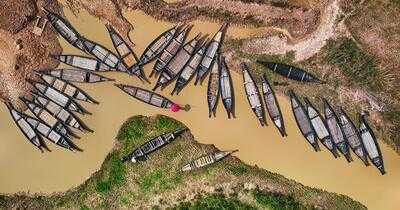
Bangladesh has just approved one of the largest river engineering projects its history: the Padma Barrage, a vast river-control project intended to restore water in the country’s drought-prone southwest.
It comes at a dangerous moment for South Asia’s rivers. China is building the world’s largest hydropower dam upstream on the Brahmaputra, India is accelerating its own dam-building programme, and the treaty governing Ganges water-sharing between India and Bangladesh expires in December 2026.
Rather than easing regional water insecurity, the Padma Barrage risks adding to a cycle of unilateral river engineering across the subcontinent. South Asia is entering a regional dam-building race – without the institutions needed to share its rivers.
Bangladesh’s water crisisSupporters say the barrage is a pragmatic response to chronic water insecurity in Bangladesh. The country sits at the end of the vast Ganges-Brahmaputra river system, where rivers that originate in the Himalayas spread into thousands of channels before they reach the sea. Despite all this water, the main river channels are drying up in summer and some smaller rivers are disappearing rapidly.
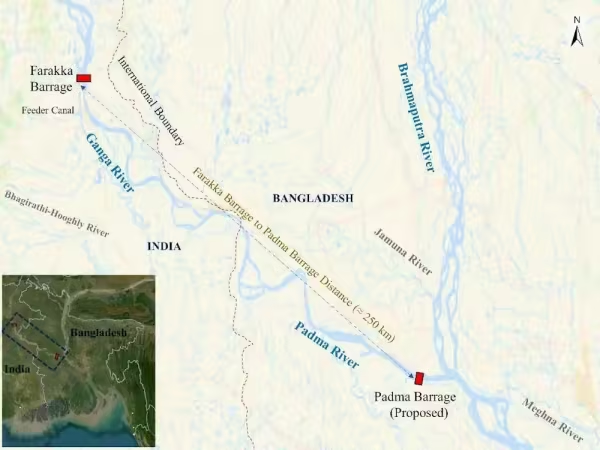
Bangladesh did not create this problem alone. Since the 1970s, the Farakka Barrage, built across the Ganges upstream in India, has diverted water towards the huge city of Kolkata to flush sediment away from its port.
The consequences for Bangladesh are...
Read more
-
Gary Lineker baffled by Lewis Hall’s omission from England World Cup squad, questions Thomas Tuchel’s selection choices

-
Marcus Rashford could remain at Manchester United as Michael Carrick signals openness to remarkable return

-
Youri Djorkaeff: ‘Ronaldo and I connected instantly – I’m not comparing him to Messi or Cristiano, but Il Fenomeno was the greatest’

-
22-year-old held in Madhapur for peddling drugs from Vijaywada

-
BJP’s Bandi Sanjay credits Revanth for unlocking central funds