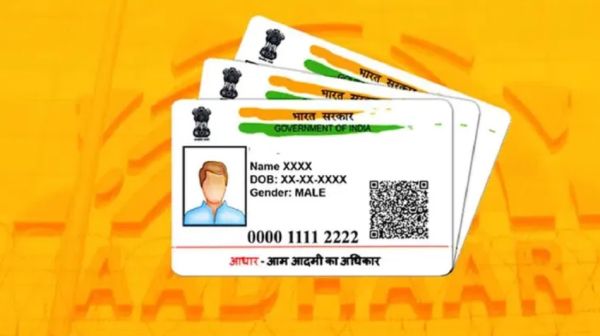
In a major step towards enhancing privacy, the Unique Identification Authority of India (UIDAI) is considering completely revamping the Aadhaar card, which will contain only the holder’s photo and a scannable QR code—without name, address, date of birth and even a 12-digit number. The move, which is aimed at reducing identity fraud and plugging gaps in offline verification, may be implemented by December, CEO Bhuvnesh Kumar said during a stakeholder webinar on the upcoming Aadhaar app.
Speaking to over 250 companies ranging from banks to fintechs, Kumar questioned the need for printed details: “Why any extra information on the card? It should just be a photo and QR code. If we keep printing, people will assume it’s true—and the wrong people will take advantage of it.” He warned that physical cards often lead to counterfeit cards, and said: “Aadhaar is not a document; authenticate with the number or QR scan.” This is similar to the Aadhaar Act’s ban on offline storage of biometrics or numbers, yet rampant photocopying by hotels and event organizers continues, leading to increasing breaches.
The December 1 review will give green signal to rules banning such practices, which will promote age verification and also maintain privacy. “A law is being made to stop dependence on photocopies,” Kumar said while promoting UIDAI’s Digital Personal Data Protection (DPDP) Act.
Additionally, UIDAI’s new Aadhaar app—soon to go into beta, replacing mAadhaar—supercharges offline verification. Users can store up to five family profiles, share masked or full details via QR, lock biometrics with a single click, and update mobile/address via face scan—all without the internet for basic tasks. “It’s secure, convenient and fraud-proof—cut out physical copies to reduce risk,” Kumar stressed, emphasizing proof-of-presence through offline face matches for events or check-ins.
Experts call this pairing a fortress of privacy: QR-embedded data ensures consent-based access, reducing exposure for 1.3 billion holders. Deputy Director General Vivek Chandra Verma gave a demo of integration for easy KYC in housing societies or cinema halls. Still, the rollout depends on stakeholder consent—non-compliance could result in a fine of up to ₹1 crore.
As India eyes the era of paperless ID, this upgrade could redefine digital trust, curbing fraud worth ₹10,000 crore annually. Download the app from official channels after launch; It is important to be careful of fake things.
-
Suman Pahuja: Weight loss inspiration and diet plan

-
Dengue in Diabetes Patients: How dangerous is dengue for diabetes patients? Researchers advised special care and vaccine

-
Prince William and Prince Harry could reunite for Princess Diana’s 30th anniversary

-
Progress in business: Know the true difference between Satvik worship and Tantrik experiment…

-
Daily Tarot Horoscopes For Monday, July 27, 2026