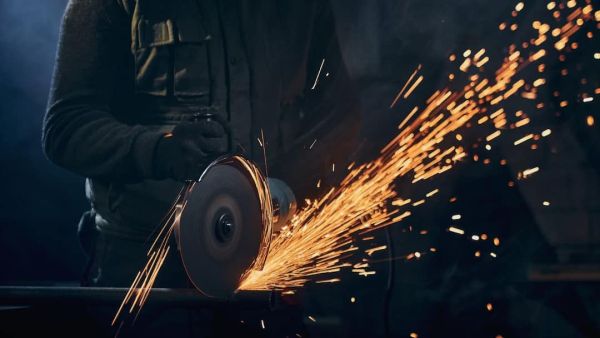
India’s manufacturing sector remained robust in November, even as it failed to remain immune to the impact of steep US tariffs. The industry clocked solid growth; however, the pace of expansion considerably softened due to the aggressive duties imposed by US President Donald Trump.
The HSBC India Manufacturing Purchasing Managers' Index (PMI) stood at 56.6, well above the 50 threshold and higher than the long-term average of 54.2. However, the survey compiled by S&P Global revealed that the growth remained soft in comparison to 59.2 recorded a month earlier in October.
This also marked the slowest improvement in operating conditions since February. The survey attributed this moderation to weaker international demand and emerging concerns about tariff‑linked disruptions.
US Tariffs Impact Exports
Pranjul Bhandari, Chief India Economist at HSBC, noted that the “final November PMI confirmed that US tariffs caused the manufacturing expansion to slow.” The new export orders index fell to a 13‑month low, underscoring the strain placed on foreign sales.
India’s exporters reported softer demand from key international markets, citing competitive pressures and project delays. While firms continued to secure orders from Africa, Asia, Europe, and the Middle East, growth momentum in overseas sales weakened.
Business confidence also dipped in November, reflecting heightened concerns about prolonged tariff exposure and its potential knock‑on effects on investments and hiring.
Domestic Demand Remains a Bright Spot
Despite external pressures, Indian manufacturers saw a substantial increase in total new orders, supported by competitive pricing and positive domestic demand trends. Companies highlighted strong client interest and steady order book gains.
Even so, the overall rate of expansion slipped to a nine‑month low, with some firms pointing to challenging market conditions and intensifying competition.
Inflation indicators offered relief. Input cost inflation eased to the slowest pace in nine months, while selling price inflation softened to an eight‑month low, suggesting that manufacturers are benefiting from stable commodity markets and efficient cost management.
What Lies Ahead?
The report noted that while manufacturers remain optimistic about output rising over the next 12 months, optimism has cooled. Global demand uncertainty, geopolitical tensions and tariff exposure continue to cloud the near‑term picture.
Even so, firms expect production levels to remain on an upward trajectory, supported by resilient domestic consumption and improved price stability.
The November PMI reinforces a key theme for India’s industrial sector: growth remains strong, but the pace is now intertwined with global trade dynamics, particularly the ongoing tariff environment.
-
Bride elopes with lover after Varmala ceremony in UP’s Unnao

-
Lawyer arrested in Kerala for killing father, attacking mother

-
Aamir Khan says, ‘It’s unfortunate people are comparing films based on numbers’

-
Hong Kong high-rise fire shows how difficult it is to evacuate in emergency

-
Mamata to scale up anti-SIR campaign with rallies