Victor Rangel-Ribeiro, the noted Goan writer, turned 100 this October. His novel, Tivolem, is sadly out of print,
but searching online lead to another book: The Book of Worst Meals. Rangel-Ribeiro was one of the 25 writers
in this anthology, edited by Walter Cummins and Thomas E.Kennedy, who tried to recall or understand what
constituted their worst dining experiences.
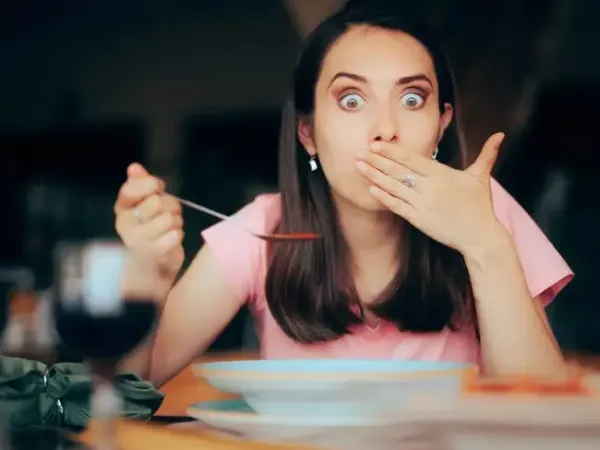
Perhaps inevitably, it makes for unappetising reading, though the authors try to make their stories amusing or at
least arrestingly appalling. Several stories involve food coming out rather than going in. Anyone with a fear of
elevators definitely should not read Kennedy’s account of being stalled in one in Portugal with a group all about
to experience cataclysmic food poisoning!
Rangel-Ribeiro’s contribution is nothing so gross. It’s a wry recollection of his honeymoon in 1954 when he
and his newly-wed wife travelled to the hill station of Mahabaleshwar which was still mostly closed for the
monsoon. They survived a terrifying bus journey along narrow ghat roads, finally reaching the one hotel still
open. The only dinner on offer was roast chicken and potatoes, which they were preparing to tuck into when
suddenly more stranded travellers appeared, demanding rooms and food. The Rangel-Ribeiros had to watch
their small wedding chicken being shared out among many, as they tried to find consolation with potatoes.
Childhood food traumas resonate through later life. My grandfather was a diplomat posted in Sweden, which
means that mother still shudders at the memory of the blood soup served once a week in their school. Tapioca
pearls are just bland, chewy starch when made into sabudana khichdi, but cooked in milk they become the
gelatinous pudding that generations of boarding school kids retchingly recollect as ‘frogspawn’. But Susan
Tekulve inverts the stereotype of picky kids, when on a Scottish holiday her son turns out to love haggis “made
from a sheep’s heart, liver and lungs mined together, mixed with onion and oatmeal, stuffed into the sheep’s
stomach.” She’s the one who after every meal starts getting nightmares filled with sheep entrails.
Tourist locations are always tricky. People are unfamiliar with local food, which makes them misunderstand it,
but also allows unscrupulous locals to palm off poor stuff. In her memoir The Gastronomical Me, M.F.K.Fisher
writes about being served a succession of awful, tasteless dishes in Mexico, until a waiter took pity on her: “He
leaned over me and whispered… “There is an American kitchen and there is a country kitchen, side by side out
there…” He brings out a bowl of the beans the staff was cooking for themselves, and “the feeling of that hot
strong food going down into my stomach was one of the finest I have ever had.”
The food itself can be irrelevant to the quality of a meal. “Good meals appear in the most unlikely spots, and
bad ones can be shamelessly presented on elegant tables,” writes Gladys Swan in her contribution. A meal is a
conversation through food, and miscommunications can happen. I was part of a group of journalists touring
Ireland once, and while most of it was wonderful, meals had tended towards soggy salmon and heavy soda
bread. But we were told that a treat was in store at the Bord Bia, Ireland’s food promotion agency, which would
host a final meal, full of the best Irish produce. Our beaming hosts greeted us: “We thought you’d be missing
Indian food, so we bought a cookbook and asked our chef to make some.” They were so well-meaning it made
the meal of indifferently cooked Indian food acceptable.
The Book of Worst Meals starts by quoting Woody Allen: “The food here is terrible, and the portions are too
small.” Allen goes on to say this is how he feels about life: full of suffering and loneliness, and over too soon.
Meals can be bad and conversations don’t connect, but silence and starvation are worst of all.
but searching online lead to another book: The Book of Worst Meals. Rangel-Ribeiro was one of the 25 writers
in this anthology, edited by Walter Cummins and Thomas E.Kennedy, who tried to recall or understand what
constituted their worst dining experiences.
Perhaps inevitably, it makes for unappetising reading, though the authors try to make their stories amusing or at
least arrestingly appalling. Several stories involve food coming out rather than going in. Anyone with a fear of
elevators definitely should not read Kennedy’s account of being stalled in one in Portugal with a group all about
to experience cataclysmic food poisoning!
Rangel-Ribeiro’s contribution is nothing so gross. It’s a wry recollection of his honeymoon in 1954 when he
and his newly-wed wife travelled to the hill station of Mahabaleshwar which was still mostly closed for the
monsoon. They survived a terrifying bus journey along narrow ghat roads, finally reaching the one hotel still
open. The only dinner on offer was roast chicken and potatoes, which they were preparing to tuck into when
suddenly more stranded travellers appeared, demanding rooms and food. The Rangel-Ribeiros had to watch
their small wedding chicken being shared out among many, as they tried to find consolation with potatoes.
Childhood food traumas resonate through later life. My grandfather was a diplomat posted in Sweden, which
means that mother still shudders at the memory of the blood soup served once a week in their school. Tapioca
pearls are just bland, chewy starch when made into sabudana khichdi, but cooked in milk they become the
gelatinous pudding that generations of boarding school kids retchingly recollect as ‘frogspawn’. But Susan
Tekulve inverts the stereotype of picky kids, when on a Scottish holiday her son turns out to love haggis “made
from a sheep’s heart, liver and lungs mined together, mixed with onion and oatmeal, stuffed into the sheep’s
stomach.” She’s the one who after every meal starts getting nightmares filled with sheep entrails.
Tourist locations are always tricky. People are unfamiliar with local food, which makes them misunderstand it,
but also allows unscrupulous locals to palm off poor stuff. In her memoir The Gastronomical Me, M.F.K.Fisher
writes about being served a succession of awful, tasteless dishes in Mexico, until a waiter took pity on her: “He
leaned over me and whispered… “There is an American kitchen and there is a country kitchen, side by side out
there…” He brings out a bowl of the beans the staff was cooking for themselves, and “the feeling of that hot
strong food going down into my stomach was one of the finest I have ever had.”
The food itself can be irrelevant to the quality of a meal. “Good meals appear in the most unlikely spots, and
bad ones can be shamelessly presented on elegant tables,” writes Gladys Swan in her contribution. A meal is a
conversation through food, and miscommunications can happen. I was part of a group of journalists touring
Ireland once, and while most of it was wonderful, meals had tended towards soggy salmon and heavy soda
bread. But we were told that a treat was in store at the Bord Bia, Ireland’s food promotion agency, which would
host a final meal, full of the best Irish produce. Our beaming hosts greeted us: “We thought you’d be missing
Indian food, so we bought a cookbook and asked our chef to make some.” They were so well-meaning it made
the meal of indifferently cooked Indian food acceptable.
The Book of Worst Meals starts by quoting Woody Allen: “The food here is terrible, and the portions are too
small.” Allen goes on to say this is how he feels about life: full of suffering and loneliness, and over too soon.
Meals can be bad and conversations don’t connect, but silence and starvation are worst of all.