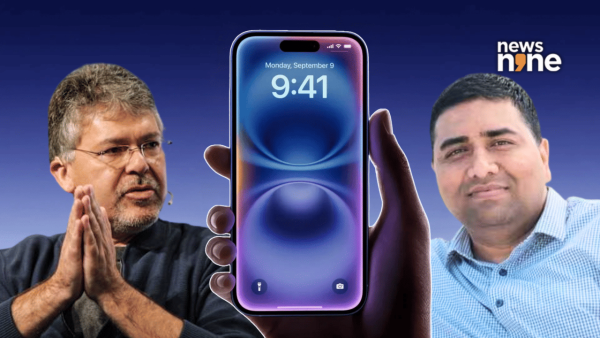
New Delhi: Apple’s latest leadership shake up signals a new phase for its artificial intelligence ambitions. The company confirmed that John Giannandrea, its senior vice president for Machine Learning and AI Strategy, is stepping down and will retire in spring 2026. He joined Apple in 2018 and became one of the central figures behind the firm’s AI direction.
Apple has named Amar Subramanya as the new vice president of AI. Subramanya previously worked at Microsoft and spent 16 years at Google. He will now lead Apple’s foundation models, AI research and safety teams as he reports directly to Craig Federighi.
What changes inside Apple’s AI team mean
The update arrives at a time when Apple faces criticism from experts who argue the company is trailing behind its rivals in AI. Since the launch of Apple Intelligence in 2024, the company has been working hard to prove it can deliver strong AI features on iPhones and other hardware. Users had been expecting a major Siri upgrade this year, but the rollout was postponed to 2026. That delay raised questions about internal challenges.
Giannandrea’s teams currently drive Apple Foundation Models, Search and Knowledge, Machine Learning Research and AI infrastructure. Apple said that some responsibilities will now move under chief operating officer Sabih Khan and services head Eddy Cue. The shift is said to bring the groups closer to similar functions inside the company.
In a statement shared by Apple, CEO Tim Cook said the firm remains focused on AI for the future. Cook thanked Giannandrea for building and advancing the company’s AI efforts and added that “AI has long been central to Apple’s strategy.” He also praised Subramanya’s expertise and the new leadership setup. Cook said Federighi has been “instrumental in driving our AI efforts, including overseeing our work to bring a more personalized Siri to users next year.”
Subramanya joins during a tricky moment for Apple Intelligence
Apple has watched its major peers compete aggressively in the AI race. Microsoft and Google are spending massive amount of money on data centers and infrastructure for new frontier models. Meta is racing fast with its open models too. Apple looks to be taking a different approach by running more AI features directly on iPhones and Macs instead of depending heavily on cloud data centers.
The company recently struck a deal with OpenAI to integrate ChatGPT into Siri and other services. Apple executives have described AI as a “profound” technology and promised to increase investment. Still, investors keep asking how Apple plans to match up. Apple shares are up 16 percent in 2025 but have not grown as fast as the stocks of other tech giants working in AI.
Leadership transition marks a new beginning
Giannandrea will continue to advise the company for a few more months. Apple credited him for building a world class AI workforce and deploying important technologies used daily on its devices. Subramanya’s experience integrating machine learning research into products might prove useful as Apple Intelligence tries to improve its early reviews.
The company said this shuffle will “help Apple continue to push the boundaries of what’s possible.” Apple described this moment as an exciting new chapter that strengthens its focus on trusted and personal AI experiences for users.
It is a big job ahead. Siri needs to impress again. Apple needs to catch up with the pace of competition from Microsoft, OpenAI, Google and Meta. And customers will expect useful AI on iPhones without feeling confused or let down.
Apple’s next major AI updates are expected in 2026. The spotlight will stay on Subramanya and Federighi as they guide what comes next for Apple Intelligence.
-
Strictly Come Dancing star 'makes show history' after shock dance-off

-
Gold Price Today: December 1 Sees Dip in Gold and Silver Rates Across Major Cities

-
Which plane seats are considered the best to avoid turbulence

-
National Pollution Control Day: A reminder that environmental safety is health safety

-
Scientists discover the best snack to boost memory and brain function