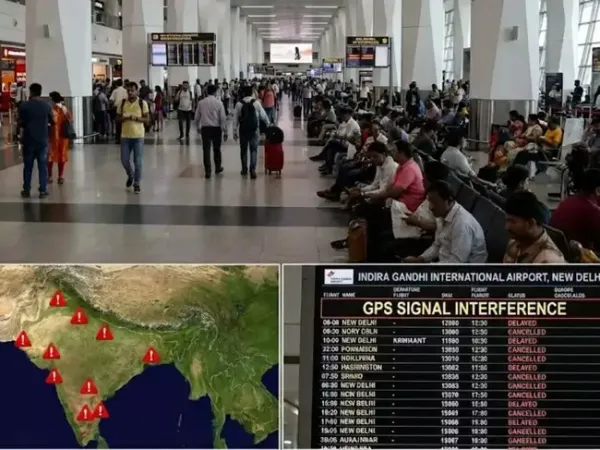
The government on Monday confirmed that several major airports — including Delhi, Mumbai and Bengaluru — detected GPS spoofing signals last month, but assured that flight operations were not affected. The clarification came in the Rajya Sabha amid growing concern over a recent navigation scare at Delhi’s Indira Gandhi International Airport (IGIA).
"Some flights reported GPS spoofing in the vicinity of IGIA, New Delhi while using GPS-based landing procedures, while approaching on RWY (runway) 10. Contingency procedures were used for GPS spoofed flights approaching to RWY 10," Naidu told the House. The Indira Gandhi International Airport (IGIA) in the national capital is the country's busiest airport and RWY refers to runway.
The minister stressed that conventional navigation systems remained active, so flights continued safely without disruption.
Spoofing, if successful, can mislead aircraft and create errors in route or altitude. But the aviation ministry said that India’s conventional backup systems ensured flight paths stayed normal.
The minister also noted that similar interference reports have surfaced from airports in Kolkata, Amritsar, Mumbai, Hyderabad, Bengaluru and Chennai. He added that advanced cyber-security layers for aviation networks are being implemented to counter such threats.
The disruption was traced to the Automatic Message Switching System (AMSS), which is responsible for sending critical flight plan data to the Auto Track System (ATS). With the system down, officials had to switch to manual processing, resulting in long delays.
On Monday, minister of state for civil aviation said in a written reply that the Airports Authority of India (AAI) has been instructed to conduct a comprehensive audit so that such incidents do not happen again.
"To enhance cyber security against global threats, AAI is implementing advanced cyber security solutions for IT networks and infrastructure. These actions have been taken in accordance with the National Critical Information Infrastructure Protection Centre (NCIIPC) and Indian Computer Emergency Response Team (CERT-In) guidelines.
"Cyber security is ensured by continuous upgradation. As the nature and type of the threat changes, new protective measures are being taken," he added.
Minister explains what went wrong
In his reply to MP Niranjan Reddy, Civil Aviation Minister Ram Mohan Naidu said that spoofing signals were picked up near the Delhi airport during GPS-based landing procedures on runway 10. He said the Wireless Monitoring Organisation (WMO) has been deployed to trace the source."Some flights reported GPS spoofing in the vicinity of IGIA, New Delhi while using GPS-based landing procedures, while approaching on RWY (runway) 10. Contingency procedures were used for GPS spoofed flights approaching to RWY 10," Naidu told the House. The Indira Gandhi International Airport (IGIA) in the national capital is the country's busiest airport and RWY refers to runway.
The minister stressed that conventional navigation systems remained active, so flights continued safely without disruption.
What exactly is GPS spoofing?
GPS spoofing is a digital trick that tries to feed aircraft false but believable navigation data. This can distort what pilots see on their systems, from position to speed, and is different from jamming, where the signal is simply flooded or blocked.Spoofing, if successful, can mislead aircraft and create errors in route or altitude. But the aviation ministry said that India’s conventional backup systems ensured flight paths stayed normal.
The minister also noted that similar interference reports have surfaced from airports in Kolkata, Amritsar, Mumbai, Hyderabad, Bengaluru and Chennai. He added that advanced cyber-security layers for aviation networks are being implemented to counter such threats.
Recent Delhi airport scare
The government’s statement comes only weeks after over 400 flights were delayed at Delhi airport due to a technical snag in the Air Traffic Control (ATC) system.The disruption was traced to the Automatic Message Switching System (AMSS), which is responsible for sending critical flight plan data to the Auto Track System (ATS). With the system down, officials had to switch to manual processing, resulting in long delays.
On Monday, minister of state for civil aviation said in a written reply that the Airports Authority of India (AAI) has been instructed to conduct a comprehensive audit so that such incidents do not happen again.
Cybersecurity Treats for Aviation Sector
To a query, Naidu said the global cybersecurity threats to the aviation sector are in the form of ransomware/ malware."To enhance cyber security against global threats, AAI is implementing advanced cyber security solutions for IT networks and infrastructure. These actions have been taken in accordance with the National Critical Information Infrastructure Protection Centre (NCIIPC) and Indian Computer Emergency Response Team (CERT-In) guidelines.
"Cyber security is ensured by continuous upgradation. As the nature and type of the threat changes, new protective measures are being taken," he added.