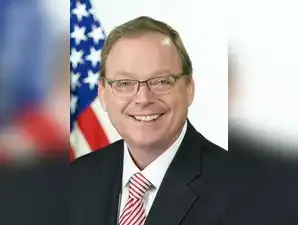
Kevin Hassett has rapidly become the central name in the Fed Chair race as multiple reports show he is now viewed as the leading contender to replace Jerome Powell when his term ends in May 2026. Markets are reacting to this shift because Hassett, currently heading the National Economic Council, is closely aligned with Donald Trump’s push for faster and deeper interest-rate cuts.
Investors say a Hassett-led Federal Reserve could immediately tilt more dovish, affecting Treasury yields, the dollar, and equity sentiment. Bloomberg and Reuters reports indicate he has pulled ahead of rivals like Kevin Warsh, Christopher Waller, Michelle Bowman, and Rick Rieder, with insiders saying Trump wants to finalize the pick before Christmas.
Hassett has openly criticized the current Fed for being slow on rate cuts and is seen as supportive of looser monetary conditions, a stance that financial markets are already pricing in. But the decision is still not official, and confirmation would require Senate approval, making the process politically sensitive.
Analysts warn that a more politically aligned Fed Chair could raise questions over central-bank independence. Yet the combination of Trump’s signaling, policy alignment, and market movements shows why Hassett is now widely treated as the frontrunner.
For now, all signs point to Kevin Hassett, the National Economic Council director. A recent Bloomberg assessment and strong market positioning have pushed him to the top of the five-person shortlist. Trump teased the decision aboard Air Force One, confirming only that the announcement is coming “soon,” while smiling when asked directly about Hassett.
Hassett is publicly staying neutral, but the data shows markets have already moved. Prediction platforms indicate strong momentum behind him.
Hassett himself reinforced that view on CBS’ Face the Nation, saying Americans should expect Trump to pick a chair who will help deliver lower borrowing costs.
For the December 9–10 policy meeting, futures markets show an 87.6% chance of a rate cut. The upcoming voting rotation for 2026 also leans hawkish, meaning more resistance inside the Federal Open Market Committee (FOMC) to aggressive easing.
This could set up immediate tension between the White House’s desire for materially lower rates and a bloc of regional Fed presidents favoring restraint.
Treasury Secretary Scott Bessent, who is leading the selection process, signaled that the new Fed regime will represent more than a shift in rates. He called for simplifying the institution’s mission and reducing the influence of regional presidents, whose frequent speeches and commentary often move markets.
Bessent said the Fed’s role has expanded too far since the 2008 crisis and needs to “step back into the background.” Several regional presidents also face reappointment in 2026, giving the administration leverage to reshape their ranks.
Prominent economist Mohamed El-Erian supported Bessent’s push. He argued that the Fed needs fewer real-time commentaries and more long-term vision, saying reforms are “desperately needed” for both U.S. and global economic stability.
The stakes are high. The identity of the next Fed chair will determine not only the direction of U.S. interest rates but also influence global markets, capital flows, and the credibility of the world’s most powerful central bank. With Powell’s term ending in less than 18 months, the race is entering its final stretch — and Kevin Hassett remains the name to watch.
Kevin Hassett is a market-focused conservative economist known for pushing tax cuts, deregulation, and pro-growth policies. He has long backed supply-side economics and argues that lower taxes boost investment and jobs. He previously served as Chair of the Council of Economic Advisers under Trump and is now leading the National Economic Council. He supports faster interest-rate cuts, criticizes the Fed for moving too slowly, and is seen as aligned with Trump’s push for cheaper borrowing. His stance signals a more dovish monetary path, potentially weaker dollar, and more stimulus-friendly economic environment if he becomes Fed Chair.
Investors say a Hassett-led Federal Reserve could immediately tilt more dovish, affecting Treasury yields, the dollar, and equity sentiment. Bloomberg and Reuters reports indicate he has pulled ahead of rivals like Kevin Warsh, Christopher Waller, Michelle Bowman, and Rick Rieder, with insiders saying Trump wants to finalize the pick before Christmas.
Hassett has openly criticized the current Fed for being slow on rate cuts and is seen as supportive of looser monetary conditions, a stance that financial markets are already pricing in. But the decision is still not official, and confirmation would require Senate approval, making the process politically sensitive.
Analysts warn that a more politically aligned Fed Chair could raise questions over central-bank independence. Yet the combination of Trump’s signaling, policy alignment, and market movements shows why Hassett is now widely treated as the frontrunner.
Is Kevin Hassett now the clear frontrunner for the next Fed Chair?
President Donald Trump says he already knows who will lead the Federal Reserve next. But he is not revealing the name yet. His decision will replace Jerome Powell, whose term ends in May 2026, and it will shape the future of monetary policy at a critical moment for the U.S. economy.For now, all signs point to Kevin Hassett, the National Economic Council director. A recent Bloomberg assessment and strong market positioning have pushed him to the top of the five-person shortlist. Trump teased the decision aboard Air Force One, confirming only that the announcement is coming “soon,” while smiling when asked directly about Hassett.
Hassett is publicly staying neutral, but the data shows markets have already moved. Prediction platforms indicate strong momentum behind him.
- Kalshi: 79% probability
- PredictIt: 75%
- Polymarket: 63%, with a notable 22% probability assigned to “no announcement by Christmas”
Hassett himself reinforced that view on CBS’ Face the Nation, saying Americans should expect Trump to pick a chair who will help deliver lower borrowing costs.
What challenges the next Fed chair will face
Whoever takes the position will inherit a deeply divided central bank. Some officials argue that more rate cuts are necessary to protect a cooling labor market. Others warn that inflation pressure remains too sticky, making further easing risky.For the December 9–10 policy meeting, futures markets show an 87.6% chance of a rate cut. The upcoming voting rotation for 2026 also leans hawkish, meaning more resistance inside the Federal Open Market Committee (FOMC) to aggressive easing.
This could set up immediate tension between the White House’s desire for materially lower rates and a bloc of regional Fed presidents favoring restraint.
Treasury Secretary Scott Bessent, who is leading the selection process, signaled that the new Fed regime will represent more than a shift in rates. He called for simplifying the institution’s mission and reducing the influence of regional presidents, whose frequent speeches and commentary often move markets.
Bessent said the Fed’s role has expanded too far since the 2008 crisis and needs to “step back into the background.” Several regional presidents also face reappointment in 2026, giving the administration leverage to reshape their ranks.
Prominent economist Mohamed El-Erian supported Bessent’s push. He argued that the Fed needs fewer real-time commentaries and more long-term vision, saying reforms are “desperately needed” for both U.S. and global economic stability.
When will Trump announce the next Fed chair?
The White House is signaling that the decision could come before Christmas, though prediction markets still price a meaningful chance of delay. Once selected, the nominee will require Senate confirmation, adding another layer of uncertainty in a politically sensitive environment.The stakes are high. The identity of the next Fed chair will determine not only the direction of U.S. interest rates but also influence global markets, capital flows, and the credibility of the world’s most powerful central bank. With Powell’s term ending in less than 18 months, the race is entering its final stretch — and Kevin Hassett remains the name to watch.
Kevin Hassett is a market-focused conservative economist known for pushing tax cuts, deregulation, and pro-growth policies. He has long backed supply-side economics and argues that lower taxes boost investment and jobs. He previously served as Chair of the Council of Economic Advisers under Trump and is now leading the National Economic Council. He supports faster interest-rate cuts, criticizes the Fed for moving too slowly, and is seen as aligned with Trump’s push for cheaper borrowing. His stance signals a more dovish monetary path, potentially weaker dollar, and more stimulus-friendly economic environment if he becomes Fed Chair.