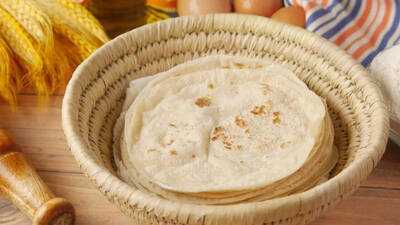
Rotis are a staple in every kitchen in India. They are a type of Indian flatbread that is enjoyed with savoury curries. Traditionally, the dough for rotis is kneaded with water, salt and wheat flour. This is the usual method in most households, however, many people still struggle to make soft and puffed rotis . We bring to you the reason behind hard rotis and what you can do to make soft rotis that stay fresh for long. And did you know that you can also preserve rotis for as long as a year? Read till the end to find out how!
Why do rotis turn crisp and hard?
Appropriate amount of moisture is the best friend of soft rotis. If your dough or the rolled rotis lose too much moisture while and after cooking, you might end up with rubbery, or worse, crusty rotis that are straight out of a nightmare. Therefore, to make soft rotis, you must ensure that they trap enough moisture inside them even after the cooking process is complete. Here are the steps you can follow to make soft and puffed rotis!
Add Oil To The Flour
Adding a little oil to your wheat flour will result in soft and tasty rotis as the oil lends conductivity to the flour. It will help the rotis heat up faster when on the pan without losing a lot of moisture.
Knead a Soft Dough
Many people make the mistake of kneading the dough in a hurry and add insufficient water. You must add the appropriate amount of water to knead a soft and smooth dough. Do not overdo it as it might cause the rolled rotis to break. You can also add lukewarm water or milk to your dough and knead for at least 15 minutes for best results. Leaving it to rise for 20-30 minutes would make it softer and easier to roll.
Roll The Perfect Chapati
When you are making the balls before rolling your rotis, make sure they are small in size and free of any corners or crevices. The balls should be smooth and moist. Use a rolling board and pin with a slightly rugged surface so that the rotis don’t stick to them. Sprinkle the surface with flour before you begin rolling the rotis. No need to strictly measure them but try to roll rotis that are 5 to 7 inches in diameter and 1.5 mm to 2.5 mm in thickness.
The Science of the Pan
For making soft rotis that stay that way, it is important to be mindful of the pan you use to cook them. If you are using a copper pan, it should be 1.5 mm in thickness, steel pan can be 3 mm and aluminium pan can be 2 mm so that the heat is evenly distributed and the rotis can be perfectly cooked. The surface of the pan should be clean and smooth before you start making the rotis.
The Cooking Process
This might seem like a chore at first, but you will get used to it with time. Keep the pan on high heat before you put the rolled chapati over it. The temperature of the pan should be about 160-180 degrees before you cook your roti. You can check if your pan is perfectly hot by putting a few drops of water over it. If they sizzle and evaporate immediately, you can start cooking! Once you put your rolled roti on the pan, cook the first side for just 10 to 15 seconds, flip it and cook for 30 to 40 seconds.
Puff The Chapati On The Flame
After that put the first side centrally and directly on the flame until puffed properly. If the roti is not puffing up properly, press it lightly with a spoon. Ending up with a puffed and cooked chapati should not take more than 60 seconds or else it might lose too much moisture and become tight pretty soon. If your chapati has some portions that have not puffed, use your tongs to put that part over direct heat. Before putting the rotis on the flame, ensure that the burner is not too hot or else it might poke holes in them and as a result, they will not puff up. Reduce the flame 5-7 seconds before putting the rotis over the burner. Toasting the rotis this way helps form a tight layer which entraps water vapours. These evaporate when exposed to the heat of the direct flame to give you perfectly puffed rotis.
Store Over One Another & Apply Ghee
Once your chapati is puffed, press using a spoon to flatten it and store one above the other. This will help to reduce the chances of moisture loss. Do not use your hand to flatten it or the steam that escapes the roti can scald it. If you apply a bit of ghee on your rotis while they are hot, it will keep them moist and enhance their taste. Eat them with your favourite stir fry or curry as soon as possible!
How To Preserve Your rotis?
Polybag
We have a bonus for you. Want to know how to preserve your rotis for later? Just put them in a polybag and store in the freezer. When you have to use them, leave them out for about an hour to defrost, sprinkle a few drops of water on the surface and heat them in the microwave. Alternatively, toast them one by one on a pan after applying oil on both sides.
Aluminium Foil
You can also wrap the rotis in aluminium foil and store in an airtight container to keep them fresh for a whole week!
Ziplock Bag
If you want to store rotis for any longer than a week, it will be a better option to store rolled chapati dough in a ziplock bag by putting butter paper in between them. Cover the rotis on both sides with some flour to prevent sticking. Do not store too many rolled rotis in one bag as they might stick.
-
Bigg Boss 19: Salman Khan hosted reality show to have its grand finale on…, show to start at…

-
Operations of many airlines affected, many flights delayed due to technical glitch

-
Pakistan accuses India of Hindering Sri Lanka relief efforts

-
OpenAI declares ‘code red’ to improve ChatGPT amid rising competition in AI chatbots

-
Virat Kohli To Play In Vijay Hazare Trophy For First Time Since 2010