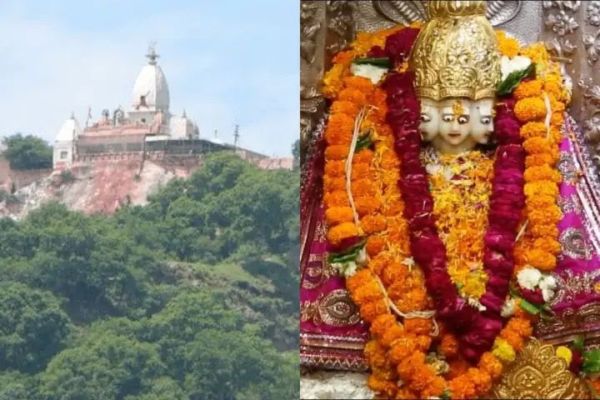
Goddess Manasa is considered as the goddess of detoxification and patron of medicines in Ayurveda and Puranas. In such a situation, let us know in detail about the history, stories and importance of Goddess Mansa.
Who is Devi Mansa? (Mansa Devi Temple)
The history of this temple situated in the hilly area of Haridwar is hundreds of years old. The hill tribes worship Goddess Manasa as the goddess of forests and medicines. In Ayurveda, poison is believed to be used as a medicine and on the basis of this, Goddess Manasa is considered the guardian goddess of all types of poisons.
Mythological beliefs: Manasa as daughter of Shiva
In texts like Vishnu Purana, Shiv Purana and Mahabharata, Goddess Manasa has been described as the daughter of Lord Shiva. According to a legend, the drop of sweat that fell from the head of Lord Shiva, angry due to the violence of Andhakasura, fell on the idol made by a snake mother, due to which the idol came alive and a girl named Manasa was born. Another story tells that when Lord Shiva drank poison during the churning of the ocean, the poisonous drops coming out of his body were absorbed by the snake wives, resulting in the birth of a girl – who later came to be worshiped as the goddess of detoxification.
What is the mystery of Mansa Devi related to Mahabharata? (Mansa Devi Temple)
In Mahabharata, Goddess Manasa is known as Jaratkaru. She was married to sage Jaratkaru and her son Aastika stopped the Sarpa Yagya organized by King Janmejaya, in which the serpents were being destroyed. The purpose of this yajna was to avenge the death of Parikshit, who was bitten by Takshak snake. It is clear from this story that Goddess Manasa is not only the goddess of snakes, but is also the power that protects and maintains the balance of the universe.
Story of Chand Saudagar and Sati Bihula
In the famous 'Mansa Mangal Kavya' of Bengal, the story of Goddess Mansa is related to a businessman named Chand Saudagar, who used to worship only Lord Shiva. Goddess Manasa killed his sons for not getting her worship done. Ultimately Sati Bihula, who was the wife of the youngest son of Chand Saudagar, reached heaven carrying the body of her dead husband in a boat and pleased the gods and goddesses and brought her husband back to life. The message of this story is that worship cannot be imposed on anyone, rather it arises from inner faith and belief.
Temples of Goddess Mansa in different parts of the country
Temples of Goddess Mansa are in different parts of the country, such as: Haridwar (Uttarakhand), Kolkata (West Bengal), Dispur (Assam), Chandigarh and Panchkula, Mandi (Himachal Pradesh). In these temples the goddess is depicted with symbols of Sarpachhatra and snakes. It is believed that remembering 'Manasa Devi', 'Aasteek Muni' and 'Jaratkaru' eliminates the fear of snakebite and the effect of poison becomes inactive.
The shadow of mythological glory also remains present
Goddess Manasa is not just a mythological character, but a wonderful confluence of faith, nature, medicine science and social consciousness in Indian culture. Echoes of both folk and scriptures are heard in his worship. His temple in Haridwar is the center of this belief, where along with reverence, the shadow of mythological glory also resides.