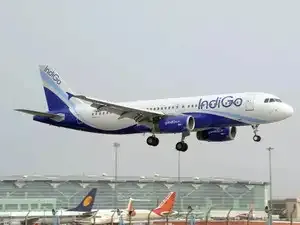
Mumbai: Pilots' body Federation of Indian Pilots (FIP) has alleged that IndiGo, despite getting a two-year preparatory window before the full implementation of new flight duty and rest period norms for cockpit crew, "inexplicably" adopted a "hiring freeze."
FIP said it has urged the safety regulator, DGCA, not to approve airlines' seasonal flight schedules unless they have adequate staff to operate their services "safely and reliably" under the New Flight Duty Time Limitations (FDTL) norms.
Also Read: IndiGo chaos continues: Over 170 flights cancelled at Bengaluru, Hyderabad and Delhi airports
In a letter to the Directorate General of Civil Aviation (DGCA) late Wednesday, FIP urged the DGCA to consider re-evaluating and reallocating slots to other airlines, which have the capacity to operate them without disruption during the peak holiday and fog season if IndiGo continues to "fail in delivering on its commitments to passengers due to its own avoidable staffing shortages."
On Wednesday (December 3), IndiGo cancelled over 150 flights and delayed hundreds by considerable time across various airports due to multiple reasons, including crew shortages resulting from the implementation of the new FDTL norms.
On December 3, only 19.7 per cent IndiGo flights arrived and departed on time from six major airports, according to the Civil Aviation Ministry website.
Also Read: New pilot-rest rules from November 1 trigger major IndiGo disruptions and passenger woes
FIP also said it would like to categorically clarify that the recent spate of IndiGo flight cancellations cannot be attributed to the Delhi High Court-mandated FDTL regulations for pilots.
"All other airlines have provisioned pilots adequately and remain largely unaffected due to timely planning and preparation," it said, adding "the current disruption is the direct consequence of IndiGo's prolonged and unorthodox lean manpower strategy across departments, particularly in-flight operations."
The pilots' body alleged that "despite the two-year preparatory window before full FDTL implementation, the airline inexplicably adopted a hiring freeze, entered non-poaching arrangements, maintained a pilot pay freeze through cartel-like behavior, and demonstrated other short-sighted planning practices."
"FIP strongly advocates that the DGCA must approve seasonal flight schedules only after airlines prove they have adequate pilot strength under the new FDTL norms to operate safely and reliably," the pilots' body said.
Following the rollout of phase 1 of the FDTL on July 1, the FIP alleged that "IndiGo reduced pilot leave quotas, and after phase 2 on November 1, attempted to buy back pilot leave."
"These measures saw poor response and further damaged pilot and employee morale -- especially in a year when airline executives took home record increments approaching or exceeding 100 per cent, while simultaneously blaming pilot migration instead of investing in retention and workplace improvements," FIP said.
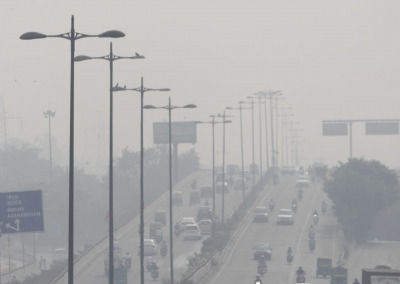
With the onset of the busy winter fog season -- which naturally demands higher pilot availability -- IndiGo still expanded its winter schedule "without recruiting or training additional pilots", raising serious questions about operational responsibility, it stated in the letter.
In line with international regulations, the Indian aviation safety regulator approves two schedules -- winter (late October to late March) and summer (late March to late October) for the domestic airlines.
The Gurugram-based airline has received approval for 15,014 flights per week for the ongoing winter schedule, up almost 10 per cent from 13.691 flights per week that it operated last winter.
The latest FDTL norms, which entail increased weekly rest periods to 48 hours, extended night hours, and limiting the number of night landings to only two, as against six earlier, were initially opposed by domestic airlines, including IndiGo and Tata Group-owned Air India.
But they were subsequently rolled out by the DGCA following the Delhi High Court's directives, albeit with a delay of over one year, in a phased manner, and with certain variations for airlines like IndiGo and Air India.
While the first phase of these FDTL norms came into force in July, the second phase, which reduced the number of night landings from six to two earlier, was implemented from November 1.
The norms were originally to be put in place from March 2024, but airlines, including IndiGo, sought a step-by-step implementation, citing additional crew requirements.
FIP said it has urged the safety regulator, DGCA, not to approve airlines' seasonal flight schedules unless they have adequate staff to operate their services "safely and reliably" under the New Flight Duty Time Limitations (FDTL) norms.
Also Read: IndiGo chaos continues: Over 170 flights cancelled at Bengaluru, Hyderabad and Delhi airports
In a letter to the Directorate General of Civil Aviation (DGCA) late Wednesday, FIP urged the DGCA to consider re-evaluating and reallocating slots to other airlines, which have the capacity to operate them without disruption during the peak holiday and fog season if IndiGo continues to "fail in delivering on its commitments to passengers due to its own avoidable staffing shortages."
On Wednesday (December 3), IndiGo cancelled over 150 flights and delayed hundreds by considerable time across various airports due to multiple reasons, including crew shortages resulting from the implementation of the new FDTL norms.
On December 3, only 19.7 per cent IndiGo flights arrived and departed on time from six major airports, according to the Civil Aviation Ministry website.
Also Read: New pilot-rest rules from November 1 trigger major IndiGo disruptions and passenger woes
FIP also said it would like to categorically clarify that the recent spate of IndiGo flight cancellations cannot be attributed to the Delhi High Court-mandated FDTL regulations for pilots.
"All other airlines have provisioned pilots adequately and remain largely unaffected due to timely planning and preparation," it said, adding "the current disruption is the direct consequence of IndiGo's prolonged and unorthodox lean manpower strategy across departments, particularly in-flight operations."
The pilots' body alleged that "despite the two-year preparatory window before full FDTL implementation, the airline inexplicably adopted a hiring freeze, entered non-poaching arrangements, maintained a pilot pay freeze through cartel-like behavior, and demonstrated other short-sighted planning practices."
"FIP strongly advocates that the DGCA must approve seasonal flight schedules only after airlines prove they have adequate pilot strength under the new FDTL norms to operate safely and reliably," the pilots' body said.
Following the rollout of phase 1 of the FDTL on July 1, the FIP alleged that "IndiGo reduced pilot leave quotas, and after phase 2 on November 1, attempted to buy back pilot leave."
"These measures saw poor response and further damaged pilot and employee morale -- especially in a year when airline executives took home record increments approaching or exceeding 100 per cent, while simultaneously blaming pilot migration instead of investing in retention and workplace improvements," FIP said.
With the onset of the busy winter fog season -- which naturally demands higher pilot availability -- IndiGo still expanded its winter schedule "without recruiting or training additional pilots", raising serious questions about operational responsibility, it stated in the letter.
In line with international regulations, the Indian aviation safety regulator approves two schedules -- winter (late October to late March) and summer (late March to late October) for the domestic airlines.
The Gurugram-based airline has received approval for 15,014 flights per week for the ongoing winter schedule, up almost 10 per cent from 13.691 flights per week that it operated last winter.
The latest FDTL norms, which entail increased weekly rest periods to 48 hours, extended night hours, and limiting the number of night landings to only two, as against six earlier, were initially opposed by domestic airlines, including IndiGo and Tata Group-owned Air India.
But they were subsequently rolled out by the DGCA following the Delhi High Court's directives, albeit with a delay of over one year, in a phased manner, and with certain variations for airlines like IndiGo and Air India.
While the first phase of these FDTL norms came into force in July, the second phase, which reduced the number of night landings from six to two earlier, was implemented from November 1.
The norms were originally to be put in place from March 2024, but airlines, including IndiGo, sought a step-by-step implementation, citing additional crew requirements.