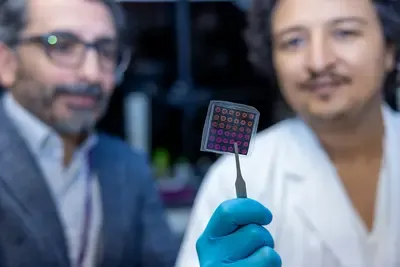
A group of Abu Dhabi-based researchers have come up with a low-cost technology that will make the future of cancer research faster, cheaper, and more accurate. It will also eliminate the need to test cancer medication on people.
The paper-based system allows scientists to easily grow tiny 3D tumors, freeze them for later use, and test cancer drugs on them. The models behave like real human tumors, making drug testing more reliable. The discovery was made by researchers at the New York University Abu Dhabi (NYUAD)
The Spheromatrix is a special type of filter paper designed to easily grow tumors in a controlled way. Unlike other methods that are costly and complicated, this system lets researchers create tumor samples that can be frozen, stored, and used later, functioning like ready-to-go models for testing cancer drugs whenever needed.
Stay up to date with the latest news. Follow KT on WhatsApp Channels.
The research team is led by Associate Professor of Mechanical Engineering and Bioengineering Mohammad Qasaimeh, with first author Postdoctoral Associate Ayoub Glia and colleagues at NYUAD’s Advanced Microfluidics and Microdevices Laboratory.
“Spheromatrix represents an important step forward in cancer research,” said Qasaimeh. “Its fiber-based structure provides a biocompatible environment for cells, letting tumor models behave more like real cancers. Preserving these models for long-term use speeds up preclinical testing, reduces reliance on animal models, and opens new possibilities for patient-focused research.”
The team tested Spheromatrix with commercial chemotherapy drugs on brain tumor models. Preserved tumors responded closely to real patient cancers, demonstrating the platform’s potential to provide reproducible, realistic, and scalable systems for drug screening.
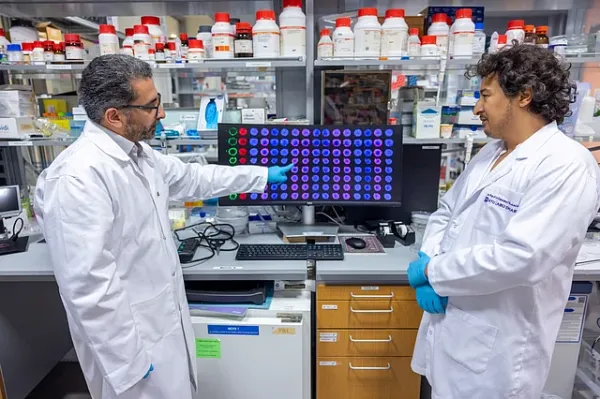
Their research also found that the results were similar before and after freezing, showing that the system preserves drug response faithfully.
According to Glia, the goal was to design a platform that was simple, reliable, and affordable, while addressing a major bottleneck in cancer drug development. “By engineering paper to support tumor spheroids, we can grow, freeze, and reuse models for multiple experiments. We are now exploring the use of patient-derived samples to enable more personalized cancer therapies,” he said.
Researchers from NYUAD have previously worked on several discoveries and important projects ranging from art and activism to revolutionary biotechnology and space travel. In June this year, a group of researchers came up with a diagnostic device that can detect infectious diseases in under 10 minutes- offering a fast, affordable, and portable solution for on-site screening of infectious diseases without the need for sophisticated lab equipment or trained personnel. Another study by NYUAD researchers also found that high-energy particles from space, known as cosmic rays, could create the energy needed to support life underground on planets and moons in our solar system.
Abu Dhabi Stem Cells Centre turns tumours into cancer-fighting weapons UAE doctors perform first-of-its-kind chemotherapy directly to liver tumours Abu Dhabi doctors reprogramme patient’s immune cells to fight rare disease-
Billy Nichols dead: Motown legend dies following brief illness

-
MPCB shuts down 19 ready mix concrete plants in Mumbai region to curb air pollution
-
Popular product used by diabetes patients recalled in UK over health fears

-
Arsenal confirm transfer for Ecuadorian twins as Andrea Berta masterplan pays off

-
Key Odisha, Chhattisgarh panels to meet on Dec 5 as Mahanadi water talks gather pace