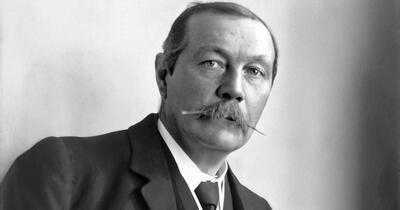
Arthur Conan Doyle was not just one of the world’s best crime fiction writers. He was a progressive wordsmith who brought light to controversial and taboo subjects. One of those taboo subjects was male vulnerability and mental health problems – a topic of personal significance to the author.
Doyle was a vulnerable child. His father, Charles, was an alcoholic, which led to financial troubles in the family. Charles was admitted to an asylum in 1881 and spent the next 12 years in various mental care establishments. So began Doyle’s interest in male vulnerability and mental health.
The character of Sherlock Holmes is a true expression of male vulnerability that does not equate it with weakness. Doyle does not represent Holmes as infallible, but as a man others can relate to – he battles with drug addiction, loneliness and depression. His genius thrives in part because of these vulnerabilities, not despite them.
Many of Doyle’s Sherlock Holmes stories examine male characters facing emotional catastrophe, betrayal or moral dilemmas. In works such as The Man with the Twisted Lip (1891), The Adventure of the Engineer’s Thumb (1892), and The Stockbroker’s Clerk (1894), Holmes’s male clients approach him with problems layered with emotional turmoil, fear and failure.
In The Man with the Twisted Lip, for example, a man named Neville St Clair hides his double...
Read more
-
SIR: Uttarakhand starts voter verification for 2003 rolls

-
IndiGo cancels over 400 flights at various airports on Friday

-
The Most Dangerous Eye Mistakes People Make — And What An Expert Wants You To Know

-
RBI MPC Panel Cuts Repo Rates By 25 Bps Amidst Low Inflation, Depreciating Rupee, And Strong GDP

-
NEET PG Counselling 2025 Round 2 Registration Begins Today At mcc.nic.in, Here's How To Apply
