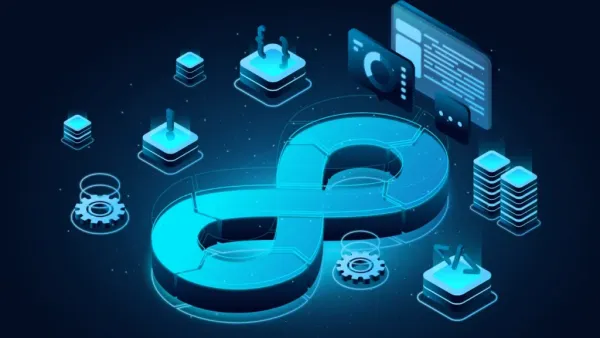
Highlights
- AI tools support parts of development and operations, but true autonomous DevOps – where AI writes, tests, and deploys code alone – remains far from reality.
- Platforms like GitHub Copilot, Ghostwriter, and Tabnine speed up coding and basic testing but still rely heavily on human judgment for CI/CD and deployment.
- The near future points to semi-automated DevOps workflows, where AI handles routine tasks while humans ensure safe, reliable decisions.
AI tools in coding are evolving rapidly, and an increasing number of people are speaking of a future with software that builds itself. There is talk of AI being able to write code, test it, fix bugs, and finally push it to the live server. It all sounds quite nice but a little outside of sci-fi at the same time.
Developers want to know one thing: Is AI anywhere close to doing the complete DevOps job on its own?
This article examines what real is today and how tools like GitHub Copilot, Replit Ghostwriter, and Tabnine behave when used for writing code, testing, and running CI/CD. The goal is simple – to see what works and what still needs human hands.
What People Think “Autonomous DevOps” Means
When someone says “autonomous DevOps,” most people imagine a system that takes an idea and builds the whole thing without help. In this picture, AI writes the feature, checks the logic, runs the tests, fixes mistakes, and sends the update to production.
But this involves multiple layers of decision-making, context, and risk evaluation. Every part needs understanding, checks, and a sense of risk. Right now, no AI tool can manage all of this. What we have today is AI-augmented DevOps, not AI-run DevOps.
Why Teams Want AI in DevOps
Software teams move faster today than ever. They push updates often, run many services, and deal with constant changes. This adds pressure and leaves less time for manual work.
AI looks helpful because it can take some of the small tasks off our hands. But running a live system is not only about speed. It is also about safety, reliability, and judgment. This is where human control still matters.
GitHub Copilot in DevOps Workflows
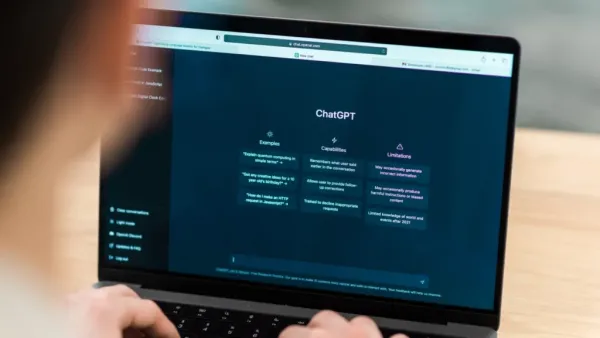
GitHub Copilot entered the market as a tool that assists with writing code. Slowly but surely, it has rolled out new features, albeit it still behaves more like an assistant than a decision-making system.
Copilot’s Role in Writing Code
Copilot suggests lines based on the file you are working on. It is good at simple parts, repeated code, and common structures. But it does not know the whole shape of your project. You still guide it at every step.
Copilot’s Testing Help
GitHub now offers test suggestions through Copilot. These tests cover small units of code. They help in early checks, but they do not replace deeper tests that complex systems need. Developers still write the necessary tests themselves.
Copilot and CI/CD
Copilot can write basic workflow files. This gives a starting point, but Copilot does not run the pipelines or fix problems during deployment. If something breaks, you step in. The tool does not know what a safe deployment looks like. Copilot helps with speed, but the pipeline stays human-controlled.
Replit Ghostwriter and Its Push Toward Automation
Among the three tools, Replit Ghostwriter feels the closest to “automation.” The reason is simple: Replit runs everything in the same browser window so that Ghostwriter can see errors as soon as the code runs.
Where Ghostwriter Helps Most
When you run small programs, Ghostwriter can spot fundamental issues, fill missing parts, and help you move quickly. For short scripts or simple apps, this feels helpful because you do not need to set up anything.

The Limits of Ghostwriter
But Ghostwriter does not handle large or multi-service apps. It does not understand long pipelines or heavy tests. It does not take safe decisions when deploying to the cloud.
Replit works well for quick ideas, but full DevOps is far beyond that environment.
Tabnine: The Controlled Coding Tool
Tabnine takes a safer path. It gives suggestions based on the code in your project. It does not try to act too smart or guess too much. Because of this, many teams trust it for steady and private work.
Tabnine in Coding
Tabnine sticks close to your code style. It avoids random guessing and provides subtle hints. This keeps mistakes low but also means it does not try to automate higher steps.
Tabnine in Testing and Deployment
Tabnine does not try to write tests or run pipelines. It stays focused on writing code only. This makes it stable but limited when it comes to DevOps tasks.

Why AI Still Cannot Handle Full DevOps Alone
Even though these tools are helpful, AI still struggles to operate without human oversight in DevOps.
AI Misses Real-World Meaning
A small change may break payments or expose user data. AI cannot judge this the way humans do.
CI/CD Pipelines Are Not Simple
Real pipelines have many steps and many tools. They include cloud links, scans, rules, and safety checks. AI does not understand these layers well.
Testing Needs Human Sense
AI can write basic tests, but it does not know which features matter the most or what users expect in real use.
Deployment Is Sensitive
Sending code live is the most risky step. A wrong move can take down a system. Teams still depend on people to make the final call.
How AI Helps DevOps Today
AI does not run the whole pipeline, but it helps make the work easier. When used as support, not as a replacement, AI gives real value.
Some ways AI helps:
- Quick code writing
- Early bug spotting
- Small test suggestions
- Starter files and configs
Developers still guide the whole process. AI removes the heavy, repeated work but not the key decisions.
The Future of Autonomous DevOps
Work is going on to build more intelligent systems. Some tools can watch pipelines, restart services, or suggest rollbacks. But these systems still follow rules made by humans.
A fully independent DevOps system would need to be aware of the app, the users, and the risks associated with every update. This level of understanding is still far away.

A more likely reality will be a semi-automated system in which AIs handle routine work, while humans make judgments.
Final Thoughts
AI tools have changed the traditional developer role in writing code and fixing issues; however, AI is not yet ready to control the entire DevOps lifecycle. Copilot, Ghostwriter, and Tabnine all help in different ways, yet they still depend on human checks, judgment, and approval.
AI speeds up work, but the pipeline still needs people to run safely.
-
Pickleball Emerges As A Unifying Sport For All Ages Across India

-
Sportzpower Pro Leagues Forum 2025: New Leagues Hold Promise

-
Akshay Kumar Says He's 'Blown Away' After Watching Ranveer Singh's Dhurandhar: 'Need Our Stories To Be Told In Hard-Hitting Way'

-
Smriti Mandhana finally breaks silence after calling off wedding with Palaash Muchhal, says…

-
Chaitra Navratri 2026 Date: When will Chaitra Navratri begin in the new year? Note down the dates and auspicious timings...
