
Highlights
- Sony and Microsoft prepare next-gen consoles with distinct strategies: tailored hardware vs. ecosystem expansion.
- Technical leaks suggest significant performance jumps, but developers stress content and scalability over raw specs.
- Release windows around 2027–2028 hinge on semiconductor supply, game launches, and ecosystem readiness.
The conversation about the next-gen console cycle has moved beyond speculative forum threads into sober industry forecasting. Both Sony and Microsoft are widely reported to be planning successor hardware to the PlayStation 5 and Xbox Series X|S families, and the tenor of available reporting suggests that these machines will not simply be iterative upgrades but represent strategic choices about the future of platform design.
Where Sony appears committed to tailored, high-performance hardware optimized for developers, Microsoft is leaning into ecosystem expansion, PC–console convergence, and cloud services as defining pillars of the next Xbox platform.
A continued focus on specialized, developer-facing hardware on Sony’s part and a systems-level, platform-agnostic approach from Microsoft that further blurs the boundary between console and PC. Recent leaks and industry reports place nominal release windows in the 2027–2028 timeframe.
Still, the precise shape, capabilities, and commercial strategies of each vendor’s offerings remain contested and, in some cases, openly contradictory.
Technical Leaks and Rumours
At the centre of the rumor cycle are technical leaks that claim significant generational leaps in raw performance. Independent hardware analysts and prominent leakers have circulated alleged specifications for a PS6-class device that would adopt a cutting-edge AMD APU fabricated on a sub-5 nm node, increase CPU core counts into a new regime, and push GPU compute substantially higher than the PS5 era.
These leaks, amplified by specialist outlets, posit a trajectory of multi-fold improvements in rasterisation and ray-tracing performance, and larger, faster unified memory systems explicitly oriented toward stable 4K at high frame rates and more sophisticated global illumination.
One of the most talked-about hardware leaks, which has been put into context by major news outlets, refers to a shift across the industry towards AMD Zen 6 CPU designs and next-gen RDNA GPU architectures. Even though such a situation is technically possible according to semiconductor roadmaps, it is best to consider these assertions cautiously until there are official confirmations; the past shows that early APU leaks often greatly exaggerate the final product configurations.
Microsoft’s Next Moves
Microsoft’s posture, as revealed through interviews and investigative reporting, leans in a different strategic direction. Executives and insiders have repeatedly emphasised system-level innovation: integrating cloud services, leveraging a Windows-derived software stack, and embedding AI-driven performance tuning across the hardware and operating environment.
The company’s public comments and reporting from credible outlets suggest that Microsoft views the next Xbox family as more than a closed, single-box platform.

The next generation is being framed as a family of devices, including a premium successor to the Series X and a handheld prototype developed in partnership with PC OEMs, with a priority on interoperability, backwards compatibility, and a near-seamless continuum with PC gaming.
Such an approach not only amplifies Microsoft’s long-term ambition to make the family of next-gen console devices available across devices but also signals an operational logic grounded in ecosystem expansion rather than exclusive hardware differentiation alone.
Sony’s Development Projects
For Sony, the narrative is subtler and more focused on developer ergonomics. Reporting and expert commentary indicate that Sony is investing in a robust developer toolkit that pairs high-performance silicon with I/O and memory architectures optimised for the kinds of streaming and asset-loading challenges that defined the PS5 generation. Sony’s historical strength: tight integration between hardware, middleware, and first-party studios, remains the company’s principal advantage.
The advantage, in the view of many developers and analysts, will be tested by the degree to which Sony can preserve a “tailored” development experience while responding to market pressures that reward cross-platform parity and economies of scale.
There are rumors among the people in the know that Sony is perfecting a dockable handheld model that combines the advantages of both portable and home consoles, such as portable play’s convenience and home console graphical fidelity. Still, these rumours are based on informal sources and thus deserve the same scepticism as any pre-release leak.
What the Developers Have to Say
While some game developers are excited about future technological advancements, they also maintain a responsible attitude. Technically speaking, studios would be able to create richer worlds and maintain more consistent frame rates if they had higher throughput, improved ray tracing, and more memory available to them, and they would not have to resort to aggressive temporal upscaling.
The developers who have been public or off-record discussing next-gen consoles usually emphasise balance: the importance of hardware is recognised, but production timelines, engine scalability, tools, and, especially, the live-service development costs have a greater impact on how new silicon is utilised in practice.
Veteran executives in the games industry have suggested that content, not hardware, will once again be decisive; they argue that hardware cycles create opportunities, but only if developers can deliver must-have experiences that justify consumer upgrade expenditure. This is not a dismissal of technical progress but a reminder that the console cycle is an ecosystem of interplay among chipmakers, platform holders, studios, and consumers, rather than a simple race for TFLOPs (a unit that measures a computer’s performance).
Motivation for Release
The market’s timing and culture are factors that make any prediction difficult. The analysts have pointed out that the drawing out of significant releases, especially the coming of age titles such as Grand Theft Auto VI, could be one of the factors that determine the launch periods, either by motivating companies to come up with new hardware that is in sync with the software or by delaying to secure the existing market economics.
The various reports forecasting releases between 2027 and 2028 are based on both semiconductor supply forecasts and the strategic advantages of the console makers.

For Microsoft, a near-term release might capitalise on ecosystem momentum and leverage cross-device subscription platforms; for Sony, a slightly later, more measured introduction could secure stronger launch software and allow for careful hardware refinement. That said, analysts also warn that leaks and insistent optimism about release dates often overestimate the speed at which high-volume manufacturing and logistics can be scaled for front-loaded launches.
Customer Expectations
From the consumer standpoint, expectations are complex. Enthusiasts demand resolution and frame-rate increases, colours and shaders that better approximate cinematic lighting, and minimal load times. At the same time, the demand for flexibility is increasing: modularity, portability, and streaming integration that enable playing in different contexts. Nevertheless, this will not result in immediate upgrades for all consumers; large-scale adoption is contingent on price, game availability, and consumers’ perceptions of the new product’s added value.
If the price levels come close to or exceed the launch prices of the PS5 Pro, the companies that own the platforms have to either provide very compelling exclusive content or develop and deliver broader ecosystem benefits such as subscription bundles, cloud-play credits, or backwards-compatible libraries.
The experts have frequently stated that the era of premium, single-console dominance is over and that the future will depend on the blending of hardware appeal with an affordable, cross-device ecosystem.
A Smoother Transition
A practical question for both companies is how they manage backward compatibility and preservation. Sony and Microsoft face not only technical challenges but institutional pressures: a mature installed base expects access to legacy libraries, and cultural conversations about game preservation increasingly push both firms toward generous compatibility promises.
Microsoft has been comparatively aggressive in this area, leveraging its software-first orientation to deliver strong backwards compatibility across multiple generations. Sony’s approach has been more selective historically, but its engineering investments in I/O and memory systems suggest that it too may prioritise a workable compatibility story to smooth consumer transition. The degree to which each company can deliver “lifting-and-shifting” of older titles without compromise will shape early adopter sentiment.
A Battle With Many Standards
Ultimately, the fight for the next-generation console will take place across many areas simultaneously: technical specifications, relationships with developers, the scope of the ecosystem, game lineups, and consumer financing. Leaks and insider reports provide useful indicators and a sense of the direction. Still, they are not the best substitutes for the strategic decisions that will influence the level of commercial success.
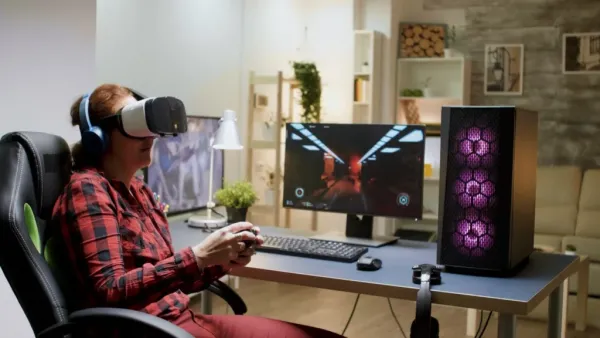
Sony’s likely focus on a carefully chosen, developer-friendly platform and Microsoft’s operating-system-level, PC-compatible strategy can both be justified with reasonable arguments. Which method will turn out to be better is less about the power of the components and more about meticulousness: who gets the irresistible launch moments, who organizes pricing and availability, and who turns hardware potential into software reality in the most efficient way.
Both the onlookers and the gamers will have to take a careful interest stance: it seems very likely that there will be a significant technological progress, but the games and the environments that provide them will still be the main factors.
-
Man held over murder of missing woman in Kerala

-
Gautam Adani interacts with differently-abled children in Dhanbad school, inaugurates New Udan Cafe

-
Gautam Adani interacts with differently-abled children in Dhanbad school, inaugurates New Udan Cafe
-
Man films self casting vote during local body polls in Kerala, booked

-
Emmerdale's Charity Dingle star's dramatic transformation
