EPFO 3.0 Updates 2025: EPFO 3.0 introduces uniform rules for partial withdrawals, expands facilities for unemployment, education, marriage, and housing, and also provides digital processing and other facilities
The Employees' Provident Fund Organization (EPFO) has implemented new partial withdrawal rules under its upgraded EPFO 3.0 system. These new rules will provide greater convenience and uniformity to subscribers. The decision to change this scheme was made by the Central Board of Trustees, the EPFO's key decision-making body. This meeting was held on October 13th, chaired by Labor Minister Mansukh Mandaviya.

Continuous Unemployment - Under previous rules, an EPF member could withdraw 75% of their EPF balance if they were unemployed for one month, and the remaining 25% after two months of unemployment. These rules have changed under EPFO 3.0. According to the new rules, members can withdraw 75% of their EPF balance immediately, while the full amount (100%) can be withdrawn after 12 months of continuous unemployment.

Pension Withdrawal After Job Loss - Previous rules allowed pension withdrawals after two months of unemployment following job loss. Under the new rules, this waiting period has been extended. According to EPFO 3.0, members will now be able to withdraw their pension only after 36 months (3 years) of unemployment.

EPF withdrawal rules in case of lockout or company closure - Under previous rules, if a company was locked out or closed, employees could withdraw from their EPF account, but this amount was limited to either the employee's share or 100% of the total deposit. New rules have now been amended. Under these rules, employees can withdraw up to 75% of their EPF corpus, while maintaining a minimum balance of 25%.

EPF Withdrawal Rules in Epidemic or Pandemic Situations - Under the previous rules, in the event of an epidemic or pandemic, EPF members could withdraw up to three months' basic salary and dearness allowance (BW + DA) or 75% of their EPF balance, whichever was lower. This condition remains largely unchanged under the new rules, but has now been implemented in accordance with the new and uniform (standard) rules set under EPFO 3.0 to simplify the process for all members.

EPF Withdrawal Rules in Case of Natural Calamity - Under previous rules, EPF withdrawals in case of a natural calamity were limited to ₹5,000 or 50% of the employee's contribution (including interest), whichever is lower. Under the new rules, a minimum service period of 12 months has been set for all partial withdrawals, including this category. This means that a minimum of one year of service will now be required to withdraw partial funds from EPF.

EPF withdrawal rules for medical treatment (self or family) - Under previous rules, EPF members could withdraw an amount equal to six months' basic salary and dearness allowance (BW + DA) or the employee's own contribution, whichever was less. This facility could be availed of more than once. This provision has been retained in the new rules, but it has now been incorporated into a uniform rule under EPFO 3.0. This means that partial withdrawals from EPF for medical reasons will now require at least 12 months of service.

EPF Withdrawal Rules for Education and Marriage - Under the old rules, EPF members could withdraw up to 50% of their contributions after completing seven years of membership. During this period, withdrawals were allowed three times for education and two times for marriage. Under EPFO 3.0, this rule has been relaxed. Now, EPF withdrawals can be made up to ten times for education and five times for marriage-related expenses. This will provide greater flexibility to employees for major expenses like education and marriage.

EPF withdrawal rules for buying a home, building a home, or purchasing a plot - Under previous rules, EPF withdrawals for buying a home, building a home, or purchasing a plot were only possible after completing 24 to 36 months of service. The withdrawal limit was the sum of basic salary + dearness allowance (BW + DA) or the construction cost, whichever was lower, and this facility was available only once. Under the new EPFO 3.0 rules, a minimum service period of 12 months has been set for all partial withdrawals. This means that the rules for withdrawing EPF funds for home or plot-related expenses have now become simpler and more consistent.

EPF Withdrawal Rules for Home Improvements, Additions, or Alterations - Under the previous rules, members could withdraw from EPF for home improvements, additions, or alterations up to 12 months' basic salary and dearness allowance (BW + DA) or their contribution, whichever was lower. The new EPFO 3.0 rules retain these conditions, but now include a uniform rule for partial withdrawals. This will facilitate employees' home improvements or additions.

EPF withdrawal rules for housing loan repayment - Under the previous rules, members could withdraw a single amount from EPF to pay their housing loan installments, up to 36 months' basic salary and dearness allowance (BW + DA), the total balance, or the outstanding loan amount, whichever is lower. This feature remains in place under the new EPFO 3.0 rules, but the process has been made digitally easier and faster. This allows members to conveniently pay their housing loan installments from EPF.

EPF withdrawal rules for purchasing a house or flat Under the previous rules, members could withdraw up to 90% of their EPF contributions, including interest, or the purchase cost, whichever is lower, to purchase a house or flat, and this facility was available only once. The new EPFO 3.0 rules retain these requirements, but digital processing will make transactions even smoother and faster. This will allow employees to easily withdraw EPF funds for their house or flat.
PC: HindiNews18
-
Monday’s fast is not just a matter of faith, it is also a scientific formula for health.

-
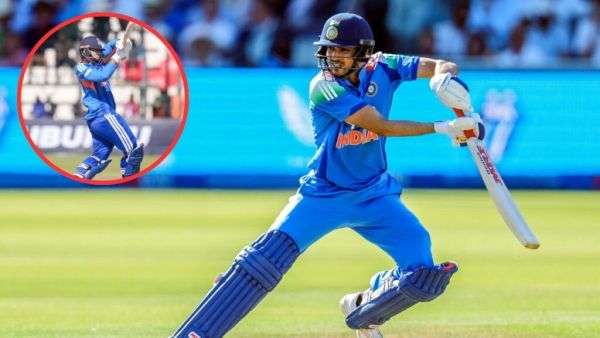
ICC Rankings: Gill again becomes the world’s number-1 ODI batsman, leaving Darryl Mitchell behind; 15 year old Vaibhav also created a stir
-
Vaibhav Suryavanshi shines in ICC rankings, jumps 230 places, enters top 50 batsmen

-
In MP’s Shajapur, bearded wife turned out to be a eunuch, made the excuse of periods on the wedding night; Then after 25 days of marriage the secret was revealed like this

-
From Nehru to Modi: 40 decisions in 75 years, when central governments had to change their stand under pressure from the public, movements and courts.