Beat the January blues with a trip abroad in the sun, including lesser-known destinations in Europe, the Middle East and Africa.
Yearning for some sun to beat the post-Christmas blues? You're not alone. January is typically the busiest month for travel bookings as people dream of azure seas and white-sand beaches to escape the cold and rain outside.
And while much of the Northern Hemisphere remains dank and dark, you don't need to necessarily book a trip to Australia or the Caribbean for winter sun - there are many destinations worth checking out on the continent, or just beyond.
Laura Carden-Lovell, travel expert and head of operations at Transfer Travel, has shared her hotspots for warmer climes in Europe, the Middle East and Africa.
Average highs in January of 21/22C
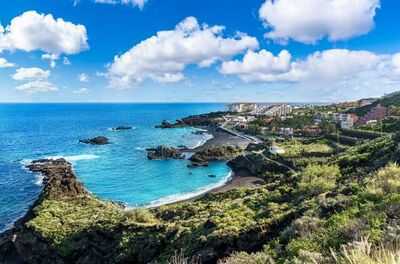
The Canary Islands often top the list for Britons seeking a warm winter escape but the majority usually flock to one of three islands - Tenerife, Lanzarote and Gran Canaria. In reality, the choice is much broader as the Spanish archipelago is made up of eight islands, all of which offer something different and are just as pretty.
In fact, La Palma is often referred to as "La Isla Bonita" or (The Beautiful Island) due to its jaw-dropping scenery. "It's known for being the greenest of the Canary Islands," says Laura. "It's got forest, volcanoes and hikes through volcanic landscapes with black sandy beaches. Then you've got the walk through the UNESCO Biosphere Reserve of Los Tilos that's home to the laurel forest and waterfalls."
There's also much to enjoy for holidaymakers who like history and culture. The island's capital, Santa Cruz de la Palma, is known for its archaeological sites such as Parque Arqueológico de Belmaco and churches, including the breathtaking Iglesia Matriz de El Salvador.
Laura also recommends stargazing at the beach as a must-do activity. "La Palma has a restrictive lighting policy in place, with the Roque de la Mucha - a rocky mound that is the highest point of La Palma - the perfect place for stargazing," she says.
How to get there: Fly direct from Gatwick (LGW) to La Palma (SPC), with return, with TUI for £67 in January; four-hour 25-minute flight time.
 Madeira, Portugal, Europe
Average highs in January of 19C
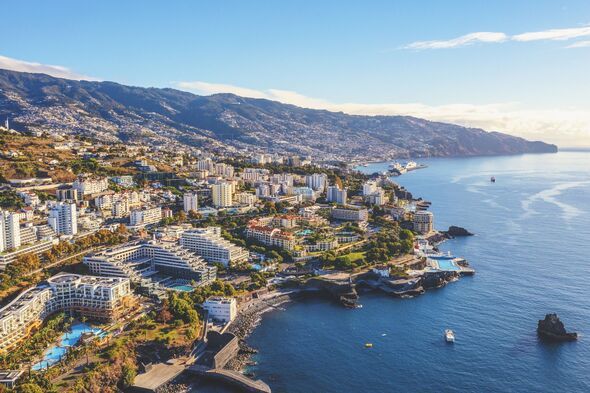
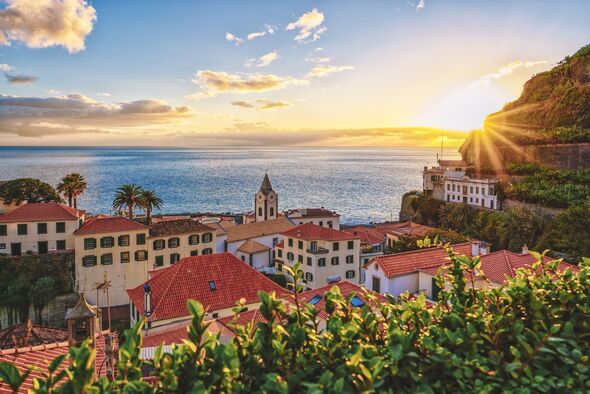
Tucked away in the North Atlantic, some 250 miles north of the Canary Islands, lies the Portuguese archipelago of Madeira. "Madeira is known for being the Island of Eternal Spring thanks to its consistent mild climate and year-round pleasant temperatures," says Laura.
The island's microclimate supports lush, green landscapes and bountiful flowers, even in winter. Visitors can enjoy this landscape on one of Madeira's levadas, or walking trails, with over 1,350 miles to choose from across the archipelago.
Holidaymakers can also enjoy unique experiences such as The Monte Toboggan Ride in one of the hand-made wicker basket sledges. One of the island's most famous attractions, the unforgettable experience sees drivers called "carreiros" push the sledges two kilometres through the parish village of Monte, using their boots with thick rubber soles as breaks to control the speed. It's a thrilling ride and offers stunning panoramic views of Funchal, the island's capital.
Laura also recommends swimming in Madeira's natural pools formed by volcanic rocks, including Porto Moniz and Doca do Cavacas.
How to get there: Fly direct from Gatwick (LGW) to Madeira Airport (FNC), with return, with easyJet for £127 in January; four-hour flight time.
 Muscat, Oman, Middle East
Average highs in January of 25C
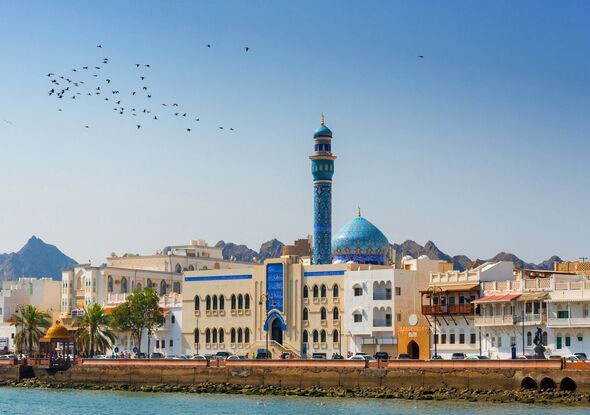
While Dubai and Abu Dhabi often top the list of countries to visit in the Middle East, Oman's capital, Muscat, has held onto its traditions and charm. Situated on the Gulf of Oman where the water is crystal-clear, the city is surrounded by mountains and desert landscapes and is a mix of majestic mosques and high-rises with upmarket shopping.
The city's ancient port dates back to the first century AD. Muscat was ruled by the Persians, and later the Portuguese from 1507 to 1650 - the 6th-century clifftop Portuguese forts Al Jalali and Mirani still loom over Muscat Harbour today.
To escape the city, Laura recommends visitors hop on a boat tour navigating the uninhabited Daymaniyat Islands. The nine isles are home to vibrant coral reefs and abundant marine life, including fish, rays and sharks. They are also a protected area for migratory birds and sea turtles.
"A five-hour excursion only costs about £5 to £7 and has crystal-clear waters, which is always a plus," says Laura.
How to get there: Fly direct from Heathrow (LHR) to Muscat International Airport (MCT) with Oman Air, with return, for £482 in January; seven-hour 10-minute flight time.
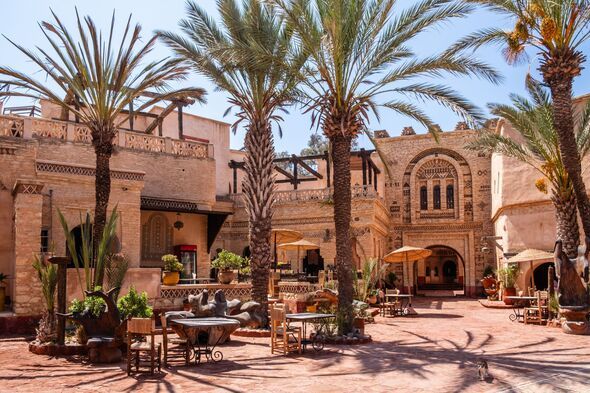 Agadir, Morocco, North Africa
Average highs in January of 21C
Africa's Mediterranean coast is dotted with beautiful resorts such as Agadir, located about a three-hour car ride south west of Marrakech. The Moroccan coastal resort boasts a wide crescent beach and an impressive seaside promenade lined with cafes, restaurants and bars.
"Agadir has got golden beaches and all-inclusive resorts that are perfect for older travellers or families," says Laura. "The city has many beautiful mosques to explore, like the Mohammed V Mosque and even a free-admission animal park, The Valley of the Birds, which is an easy walk into the town to spot some exotic and local species."
Visitors cannot leave without sampling the mint tea for which the region is famous. The beverage can be enjoyed in one of the many traditional cafes dotted around the city.
Agadir also boasts one of Africa's largest urban markets, Souk El Had, with 3,000 shops spanning 13 hectares. Shoppers are guaranteed to grab bargains here, says Laura.
How to get there: Fly direct from Gatwick (LGW) to Agadir (AGA) with easyJet, with return, for just £80 in January; three-hour 40-minute flight time.
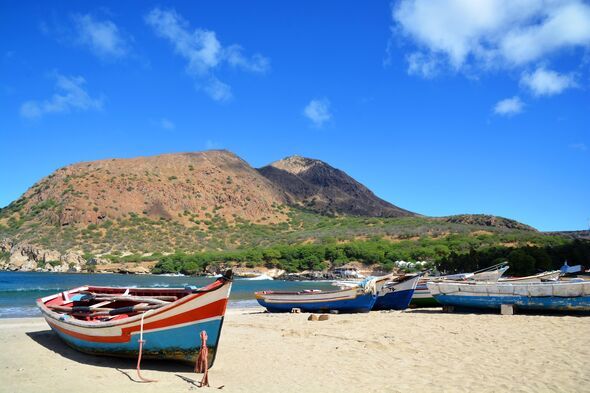 Cape Verde, West Africa
Average highs in January of 25C
Just off Africa's western coast lies the island country of Cape Verde, with 10 volcanic islands, including Sal, Boa Vista and Santiago.
"Being an archipelago, there are miles of soft sandy beaches to be found on Cape Verde that are perfect for swimming and for soaking up the winter sun," says Laura. "Some of the most well-known are Santa Maria on Sal, Praia de Chaves on Boa Vista and Tarrafal Beach on Santiago."
For excursions, you can take a guided tour to Sal Island's salt flats and volcanic crater, hike the Pico do Fogo on the volcanic island of Fogo, visit Santa Maria's colourful pier or take a short dune-buggy trip on Boa Vista's desert-like sands.
Nature-lovers should visit the islands of Maio and Sao Vicente, which provide fantastic opportunities to spot baby sea turtles hatching between November and January. And for the adventurous, there is horseback riding along the beaches or through the hills.
How to get there: Fly direct from Gatwick (LGW) to Sal Island (SID) with easyJet, with return, for £244 in January; six-hour flight time.
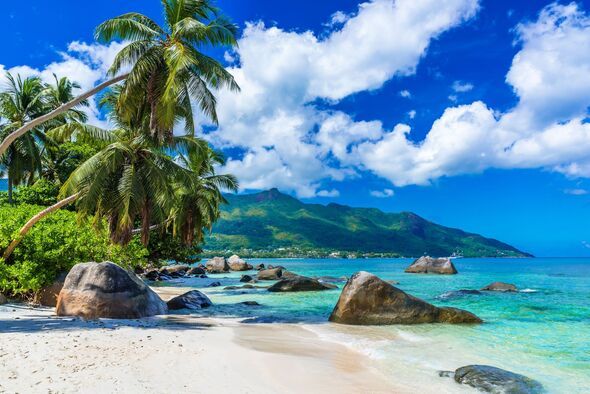 Seychelles, East Africa
Average highs in January of 29C
If you don't mind a 12-hour travel day, the iconic East African archipelago of the Seychelles is a guaranteed winter sun destination. Well-known for its beautiful beaches like the Anse Lazio, Anse Intendance or Anse Source d'Argent, the Seychelles is made up of an incredible 115 idyllic islands scattered across the Indian Ocean.
"For those wanting to hike, there are various trek trails in the Morne Seychellois National Park found on the island of Mahé," says Laura. "For even more wildlife and nature, you can visit the Vallée de Mai National Park on Praslin, where you may spot the local Seychelles black parrot, or you can take a boat trip to Curieuse Island to see giant tortoises."
Elsewhere, the capital and largest city of the Seychelles, Victoria, offers museums, beautiful architecture, and local culture in abundance. Laura suggests visiting the local lively market to enjoy traditional Creole dishes such as grilled red snapper with coconut rice.
How to get there: Fly from Gatwick (LGW) with a stop in Addis Ababa (ADD) to Seychelles International Airport (SEZ) in Mahé with Ethiopian Airlines, with return, for £463 in January; 14-hour flight time.
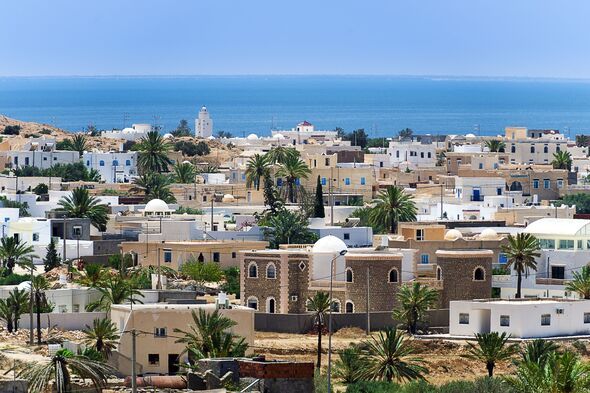 Djerba, Tunisia, North Africa
Average highs in January of 16C
The Tunisian island of Djerba, celebrated for its Mediterranean beaches and whitewashed desert towns, is a fantastic option for travellers seeking sunshine closer to home. Legend has it that the island is "the land of the Lotus-eaters", referenced in Homer's Odyssey - the tale goes that shipwrecked warriors became so addicted to the local delicacy of lotus flowers that they abandoned all thoughts of returning home.
While the eight miles of sand deserve a spotlight, the unpolished towns like the capital, Houmt Souk, must never be overlooked. Here, you can explore cobblestone alleys and sun-drenched squares, while further inland, visitors can discover fruit orchards among quaint rural villages.
Sidi Mahrez is Djerba Island's headline beach. It runs from Taguermess Lighthouse in the east all the way to Flamingo Point in the north, where pink-feathered visitors congregate in February each year.
Djerba also boasts what is thought to be the oldest synagogue in the world, the El Ghriba Synagogue in the Jewish village of er-Riadh (formerly known as Hara Sghira). While extensively renovated in the 19th century, some of the village's buildings date from the 6th century BC. Djerba was declared a UNESCO World Heritage Site in 2023.
How to get there: Fly direct from Luton (LTN) to Djerba-Zarzis International Airport (DJE) with easyJet return for just £88 in January; three-hour 20-minute flight
-
China’s economy grows 5 pc in 2025 despite Trump tariffs

-
North Korea-linked hackers target Naver, Google ads to spread malware

-
Severe pollution in Delhi NCR as AQI surpasses 450
-
India to reach upper middle-income status by 2030: SBI research

-
Centre’s irresponsible handling of Manipur affected economy, security: Congress