UPI could not eliminate ATM and cash in 9 years, how will India go digital?
Samira Vishwas | January 8, 2026 11:24 AM CST
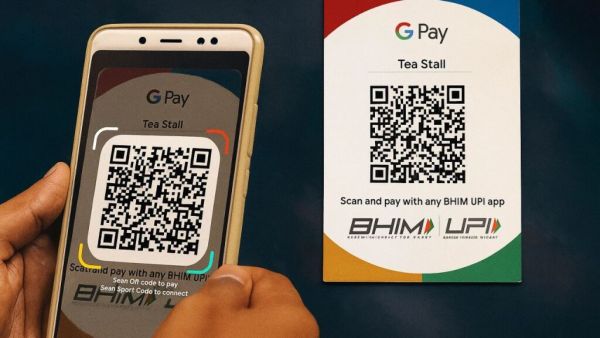
Just scanned the QR code… opened PhonePe, GooglePay, Paytm or any UPI and made the payment. Due to this, neither the tied note had to be broken nor the hassle of giving change to the shopkeeper also ended. This is how our life, your life and the lives of all of us have changed. Especially in terms of payment.
And when did all this happen? When demonetization happened in 2016. Suddenly Rs 500 and Rs 1000 notes were banned. At that time it was necessary to keep cash. But due to demonetization the cash kept in the pocket was of no use. In such a situation, UPI payment system gained momentum in India and today it has become an important part of our lives. The special thing about UPI is that even small transactions can be done through it. How much money is left in the first bank account? To know this one had to either go to the bank or the ATM. But now account balance can also be checked on UPI apps. Whether you want to borrow money from someone or lend it to someone, this work can also be done in a moment through UPI.
Thanks to UPI, the lives of Indians who are a little away from technology have now become dependent on digital payments. Indians, who used to roam around with cash in their pockets and purses, now pick up their phones and go shopping. Now the situation is such that every day transactions worth about Rs 80 thousand crores take place through UPI.
Read this also–‘Bribery for releasing goods’, the story of the fight between Wintrack and Chennai Customs
How UPI became the ‘boss’ of digital payments
India’s UPI works on an IMPS infrastructure, making it easy to transfer money from one bank to another.
UPI was launched in 2016 and since then its users are continuously increasing. All the work of UPI is handled by National Payment Corporation of India (NPCI). NPCI provides monthly transaction data on its website. Its figures show that in July 2016, only Rs 38 lakh transactions were done through UPI. When demonetization took place in November 2016, transactions worth Rs 100 lakh crore were done through UPI.
NPCI data shows that in 2016-17, transactions worth more than Rs 7 thousand crore were made through UPI. However, since then it has been continuously increasing. In 2017-18, transactions worth Rs 1 lakh crore were done through UPI. At the same time, in 2018-19 it further increased to Rs 8.77 lakh crore.
Read this also–Fraud of Rs 13000 crore, then how did Nirav Modi’s brother-in-law get forgiveness?
Now every year the transactions through UPI are breaking records. In 2022-23, transactions worth Rs 148.81 lakh crore were made through UPI across the country. In 2024-25, it will increase to Rs 260.56 lakh crore. That means, within 4 years the transactions through UPI almost doubled. In just 5 months of 2025-26 – April to August, transactions worth more than Rs 123 lakh crore have taken place.
Not only this, now the average transaction done every day through UPI is also increasing a lot. According to NPCI, an average transaction of Rs 75,743 crore was made every day through UPI in January 2025. By August it increased to Rs 80,176 crore. Till 21st September, an average transaction of Rs 83,200 crore is being done through UPI every day. This figure is expected to increase further as the new GST rates have come into effect from 22nd. After this the purchasing has increased a lot.
Read this also– 29% during Manmohan’s era and how much rupee fell during Modi government? understand math
Is UPI eliminating cash?
There was a time when the Indian economy ran on cash. Most people did not trust digital payment or rather were afraid to use it. But now the trend has changed. People are making more digital payments instead of cash.
RBI’s report came in September, in which it was told how the demand for cash is now decreasing due to UPI. It was told that now more than 84% of all digital payments are being made through UPI. This means that if a transaction of Rs 100 was done through digital payment, then Rs 84 out of it was done only through UPI.
RBI had said in its report that due to increasing digital literacy and easy technology of UPI, digital payments are increasing rapidly.
Due to increase in UPI and digital payments, the demand for cash is now decreasing. But this does not mean that cash is running out. Cash is also increasing but the pace of its growth has slowed down. RBI report shows that in recent years the demand for cash has increased at the rate of only 4 to 6 percent.
According to the RBI report, the share of cash in GDP is now decreasing, which shows that demand is decreasing. The share of cash in GDP was 14.4% in 2020-21, which will come down to 11.7% by 2023-24. The share of cash in GDP is further reduced to 11.2% in 2024-25. However, one reason for this is that the government gradually banned the Rs 2000 note completely.
RBI’s annual report states that till 2022-23, cash worth Rs 33.48 lakh crore was in circulation. In the language of economics it is called Currency in Circulation (CIC). By 2023-24, this cash will increase to Rs 34.77 lakh crore. Whereas, by 2024-25 it will further increase to Rs 36.86 lakh crore. That is, cash is still circulating in the economy.
Read this also–From morning till evening… how much will be left from the things used daily in the house?
However, due to the increasing use of UPI and digital payments, the number of ATMs and the amount withdrawn from them is decreasing.
RBI’s monthly report shows that till August 2025 there were 2.07 lakh ATMs across the country. Rs 2.38 lakh crore was withdrawn from them in the month of August. If we go back one year, by August 2024 the number of ATMs was more than 2.15 lakh. Rs 2.53 lakh crore was withdrawn in August 2024. Going back a little, till August 2023, there were more than 2.19 lakh ATMs, from which Rs 2.72 lakh crore were withdrawn in a month. If seen, withdrawals from ATM have reduced by about 12 percent in two years.
Overall, the use of UPI is continuously increasing in India. This is affecting the demand for cash. However, there is still a large section of people in India who transact in cash instead of UPI or digital payments. This section lives in small states. NPCI data shows that there are still 20 states and union territories where less than 1% of transactions happen through UPI.
READ NEXT
-
Why is Lionel Messi not playing tonight for Inter Miami against CF Montréal?

-
Sip, Snack, Repeat: The Ultimate Guide To Monsoon Food And Beer Cocktails

-
World Hepatitis Day: Awareness against hepatitis; Radcliffe Labs organizes free screening camps across Mumbai
-
The explosion of iQOO in the budget segment! A new smartphone entry with powerful features and stylish looks, priced at just Rs
-
IND vs ZIM: Tilak Verma’s storm in the second T20 against Zimbabwe, explosive fifty studded with a strike rate of 206