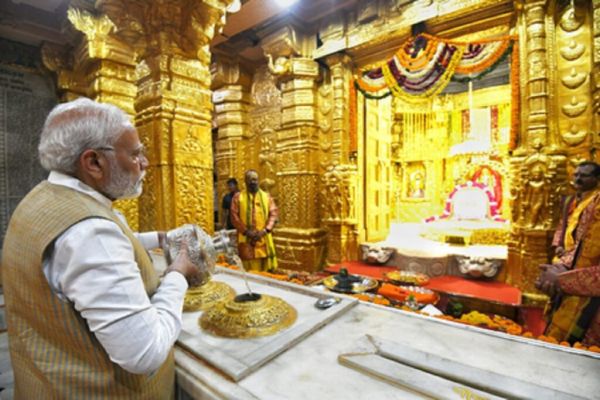
The grandeur and richness of the Somnath temple had become a reason for attraction for the invaders in ancient times. In 1025-26 AD, Sultan Mahmud Ghaznavi of Ghazni province of Afghanistan launched his most destructive and barbaric attack on Somnath. At that time, Somnath was a very rich religious center, to plunder which Ghaznavi had to cross the difficult routes of the desert area.
The local rulers and people faced him bravely, but Ghaznavi caused huge damage to the temple and looted the immense wealth of the temple. Despite this, Ghaznavi failed to destroy the faith of the people. Soon after his departure, the Chalukya (Solanki) rulers rebuilt the temple and kept the culture alive.
After the independence of India, the reconstruction of Somnath temple became a matter of national pride. Iron Man Sardar Vallabhbhai Patel resolved to rebuild the temple to its original glory in 1947.
After Prime Minister Modi became the Chairman of Shri Somnath Trust, a new and modern chapter has started in the development of Somnath. Under his visionary plan, the temple complex has been made a world class tourist destination. There has been unprecedented growth in digital darshan, security and facilities for devotees.
Promenade:- The beautiful pedestrian walkway built on the beach has become a center of attraction for tourists.
Technology:- Efforts have been made to keep history alive through grand ‘Light and Sound Show’.
Conservation:- Special technical measures have been taken to protect the temple from sea alkali and corrosion.
Today, Somnath Temple stands as an excellent example of the coordination of traditional values and modern development and a living symbol of faith and national self-respect for devotees all over the world.
-
This Week's Horoscope For All 12 Zodiac Signs - January 19 To 25, 2026

-
BJP MP Chandolia questions AAP leaders about Atishi's whereabouts
-
Five economic themes shaping the UAE's outlook in 2026

-
Momentum in the UAE's real estate likely to continue this year

-
INS Sagardhwani flagged off for research collaboration with 8 IOR countries