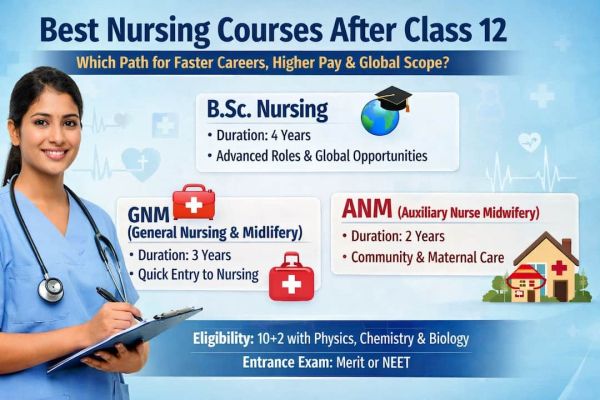
Among the available options, B.Sc. Nursing is considered the most comprehensive route. Spread over four years, it blends theoretical nursing science with extensive clinical exposure. This programme is suitable for students who seek a strong academic foundation, higher salaries, leadership positions, or aspirations to work abroad. The degree also creates pathways for postgraduate specialisations such as paediatric, critical care, psychiatric, and emergency nursing.
The GNM (General Nursing & Midwifery) diploma is a three-year course designed to introduce students to hands-on patient care and midwifery. Candidates often choose GNM when they want to enter the healthcare workforce sooner or are looking for a cost-efficient option. GNM graduates can later upgrade through a Post Basic B.Sc. Nursing programme if they want to qualify for senior or international roles.
For students who prefer grassroots healthcare or government initiatives, the ANM (Auxiliary Nurse Midwifery) programme offers a two-year training option. The curriculum emphasises preventive care, community health services, and maternal health making it particularly relevant for work in rural primary health centres, maternity homes, and public health projects.
Choosing the Right Path
- The right course depends largely on career goals:
- For fast entry into jobs: GNM or ANM
- For global opportunities & senior positions: B.Sc. Nursing
- For specialised fields: B.Sc. Nursing followed by M.Sc. Nursing
Eligibility & Admission
Most institutions require 10+2 with Physics, Chemistry, and Biology (PCB). Admissions are based either on merit or entrance examinations, with some colleges accepting NEET scores for selection.
-
Slight relief for Delhi as Air Quality improves to ‘Very Poor’

-
SC missed federalism test in Article 370 case: Salman Khurshid

-
Catholic Bishops question moral foundations of US foreign policy

-
'Can't Do It Anymore': Saina Nehwal Calls Time On Competitive Badminton Career

-
NABARD Development Assistant Recruitment 2026: Apply For 162 Posts At nabard.org, Know How To Apply