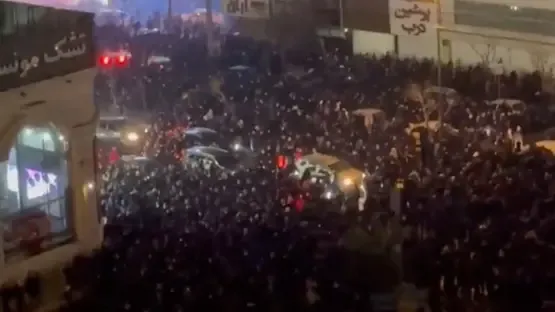
Iran at a Crossroads: The events unfolding in Iran at the start of 2026 have shaken not only the nation itself but also the wider international community. Streets once filled with daily life are now marked by fire, grief, and anger. Large crowds have emerged across major cities, openly challenging the ruling system and demanding change. What has followed is a severe crackdown, leaving thousands dead and many more injured. These developments reveal a country standing at a critical crossroads, where internal unrest and external pressure are dangerously colliding.
A Nation in Flames and Fear
The scale of the protests is unprecedented in recent Iranian history. Demonstrations have spread rapidly from city to city, fueled by years of economic hardship, political repression, and social frustration. On New Year’s Day, scenes of lifeless bodies lying in public spaces shocked citizens who had never witnessed such mass casualties before. Families mourn openly, while survivors express a mix of rage and despair. According to reports circulating internationally, more than 2,500 people may have lost their lives within just two weeks, underscoring the intensity of the conflict between the state and its people.
Government Crackdown and Use of Public Fear
To suppress dissent, the Iranian leadership has escalated its response. Security forces initially relied on bullets and mass arrests to disperse protesters. Recently, however, authorities have reportedly adopted harsher methods designed to instill fear. Public executions, carried out in prominent locations, are seen as a deliberate warning to deter further resistance. This approach signals that the leadership, under Ayatollah Ali Khamenei, is prepared to go to extreme lengths to retain control, even at the cost of global condemnation.
International Warnings and Evacuation Advisories
As the situation worsens, foreign governments are taking precautionary steps. India’s Ministry of External Affairs has advised its citizens living in Tehran to leave the city at the earliest opportunity. Such advisories reflect growing concerns about safety and stability within Iran. The unrest is no longer viewed as a purely domestic issue but as a crisis with regional and global implications.
United States Strategy and Military Signals
The United States has adopted a firm stance in response to reports of executions and mass casualties. American officials have openly warned that further violence against protesters could trigger direct action. Reports suggest that Washington has identified around 50 strategic locations within Iran that could be targeted in potential air operations. These sites reportedly include key command centers linked to Iran’s powerful security and military institutions. Such preparations indicate that the US is keeping military options on the table while closely monitoring developments on the ground.
A Human Face of the Protests
Amid statistics and strategic calculations, individual stories highlight the human cost of the crisis. One such case is that of Irfan Sultani, a 26-year-old who became a symbol of the protests. His alleged crime was participation in demonstrations against the government. Arrested in early January, his family was informed within days that he faced execution. Although the sentence was reportedly postponed, the case illustrates the fear gripping thousands of Iranian families whose loved ones have been detained.
Political Messaging and Social Media Influence
The protests have also taken on a global digital dimension. Former US President Donald Trump used social media to openly encourage Iranian protesters, calling on them to persist and promising consequences for those responsible for violence. Such statements have intensified debate over foreign involvement in Iran’s internal affairs. Critics argue that these messages fuel unrest, while supporters claim they highlight human rights abuses.
Nuclear Tensions and Diplomatic Deadlock
Behind the public rhetoric lies a deeper strategic conflict. Diplomatic observers note that tensions escalated after Iran rejected an invitation from Washington to resume discussions on the nuclear deal. This refusal appears to have hardened the US position, coinciding with increasingly vocal support for protesters. Many analysts believe that the nuclear issue remains central to the standoff, shaping both diplomatic pressure and public messaging.
Regional Reactions and Leadership Rivalries
Iran’s leadership has responded by redirecting attention toward external rivals. Ayatollah Ali Khamenei continues to project defiance, issuing warnings to both the United States and Israel while avoiding meaningful dialogue with protesters at home. Statements from senior Iranian officials have directly blamed foreign leaders, including Benjamin Netanyahu, for inciting unrest. Meanwhile, Russia and Turkey have urged caution, warning that further escalation could have dangerous consequences for regional stability.
A Crisis Without Easy Answers
Iran now faces a complex and volatile situation. Economic collapse, political repression, foreign pressure, and public anger are converging at once. The lack of peaceful engagement between the government and its citizens increases the risk of prolonged instability. As global powers weigh their interests and issue warnings, ordinary Iranians continue to pay the highest price. Whether this crisis leads to reform, further repression, or international confrontation remains uncertain, but its impact is already reshaping the geopolitical landscape.
-
Enjoy eating vegetables! Now make soft, silky and royal tasting ‘Veg Galouti Kebab’ at home, note the recipe

-
Enjoy eating vegetables! Now make soft, silky and royal tasting ‘Veg Galouti Kebab’ at home, note the recipe
-
Why am I not getting results from reciting Hanuman Chalisa? You will be shocked to know the reason

-
Why am I not getting results from reciting Hanuman Chalisa? You will be shocked to know the reason
-
Cricket or magic? The victory of Pretoria Capitals which shocked even Joburg Super Kings