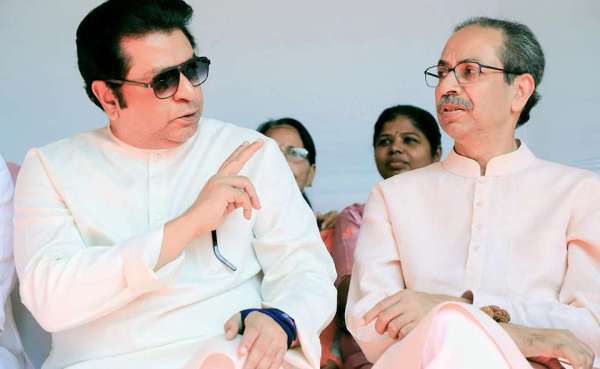
Mumbai: The recent civic election results in Mumbai have marked a decisive shift in the city’s political landscape, ending a 25-year-long control of the Brihanmumbai Municipal Corporation by the Thackeray family. Despite this major electoral setback, the Thackeray cousins have made it clear that their commitment to Marathi identity politics remains unchanged. The loss is being viewed not as an end, but as a pause in a longer political journey rooted in regional pride, language, and cultural assertion.
Legacy of Marathi Identity Politics
For decades, the politics associated with the Thackeray name has revolved around safeguarding the interests of the Marathi-speaking population. This ideology was originally shaped by the late Balasaheb Thackeray, whose influence on Maharashtra’s political discourse continues even after his passing. His vision of regional identity, cultural pride, and political assertiveness became the foundation on which Shiv Sena expanded its influence, particularly in Mumbai.
After the recent results, Uddhav Thackeray reaffirmed that the struggle for dignity and recognition of Marathis would continue. His party, Shiv Sena (Uddhav Balasaheb Thackeray), managed to secure 65 out of 227 wards, a significant number but not enough to retain control of the civic body. Party leaders described the verdict as a temporary setback rather than a rejection of their ideology.
Raj Thackeray’s Defiant Stand
Raj Thackeray, known for his fiery speeches and uncompromising stance, echoed a similar sentiment. Although his party, the Maharashtra Navnirman Sena, could win only six seats, he asserted that electoral numbers do not define the strength of a movement. According to him, the struggle for Marathi language, culture, and identity is a long-term mission that transcends individual elections.
Raj Thackeray emphasized that any action perceived as unjust or harmful to the Marathi community would be strongly opposed. He also highlighted that political defeats should not be mistaken for ideological surrender. In his view, movements rooted in cultural identity often face ups and downs, but they draw resilience from the people they represent.
Allegations Against the Ruling Alliance
The Thackeray cousins have accused the ruling Mahayuti alliance of sidelining and exploiting Marathi interests. According to Raj Thackeray, whether in the Mumbai Metropolitan Region or across Maharashtra, ruling forces consistently fail to prioritize local communities. He argued that this pattern of governance makes the fight for regional rights even more relevant.
Such statements underline a broader narrative in Maharashtra politics, where regional identity continues to compete with national-level political agendas. The Thackerays’ emphasis on Marathi pride seeks to reconnect with voters who feel culturally or economically marginalized in a rapidly globalizing city like Mumbai.
BJP and Shinde Sena’s Electoral Breakthrough
The election proved to be a major victory for the BJP-led alliance, which included the faction led by Eknath Shinde. Together, they won 118 wards in the Brihanmumbai Municipal Corporation, comfortably crossing the majority mark of 114. The BJP emerged as the single largest party with 89 seats, while the Shinde-led Shiv Sena faction secured 29 wards.
This outcome reflects a significant realignment of voter preferences, possibly influenced by governance narratives, development promises, and internal divisions within opposition parties. The Mahayuti alliance also performed strongly across Maharashtra, winning control of 25 out of 29 civic bodies, indicating a broader statewide trend.
Significance of the BMC Loss
The Brihanmumbai Municipal Corporation is not just another civic body; it is the richest municipal corporation in India, with an annual budget exceeding Rs 74,400 crore. Control over the BMC has historically provided political leverage, financial influence, and grassroots power in Mumbai. Losing this stronghold after decades is therefore symbolically and strategically significant for the Thackerays.
The elections were held after a long gap of nine years, including a four-year delay, and witnessed participation from nearly 1,700 candidates for 227 seats. In the previous 2017 elections, the then-united Shiv Sena had managed to retain control, making the latest defeat even more impactful.
The Road Ahead for Thackeray Politics
Despite the setback, both Uddhav and Raj Thackeray have signaled introspection and reorganization. Raj Thackeray has spoken about rebuilding his party from the ground up, analyzing mistakes, and reconnecting with grassroots supporters. Uddhav Thackeray’s camp, meanwhile, continues to frame the struggle as one for respect, dignity, and rights of Marathis rather than mere political power.
The coming years will reveal whether Marathi identity politics can adapt to changing urban realities and voter expectations. What remains clear is that the Thackeray brand, though weakened electorally, is far from disappearing from Maharashtra’s political stage.
-
The Health Benefits of Ghee: A Nutritional Powerhouse

-
Kendall Jenner's Pashmina shawl is a masterclass in quiet winter luxury

-
Charming Surrey country pub named one of UK's best and is just 30 minutes from London

-
YouTube now allows more controversial content to earn full revenue

-
India has world's lowest data costs, highest data usage: Scindia