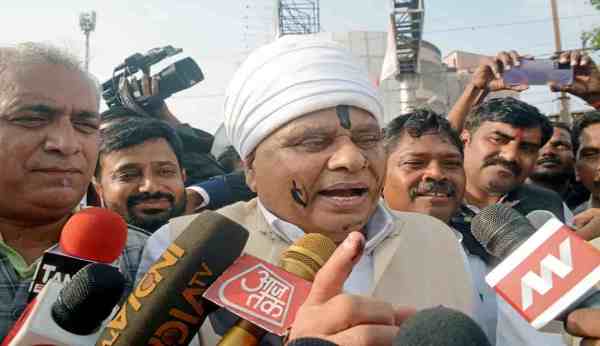
Madhya Pradesh: A major political controversy has erupted in Madhya Pradesh after a Congress legislator made statements that were widely perceived as insensitive, regressive, and harmful to the discourse around women’s safety. The remarks sparked strong reactions across the political spectrum, with the Bharatiya Janata Party accusing the Congress of normalising sexual violence and promoting a mindset that undermines the dignity of women and marginalised communities. What began as a media interaction quickly escalated into a broader debate on political responsibility, social attitudes, and accountability in public life.
Background of the Controversy
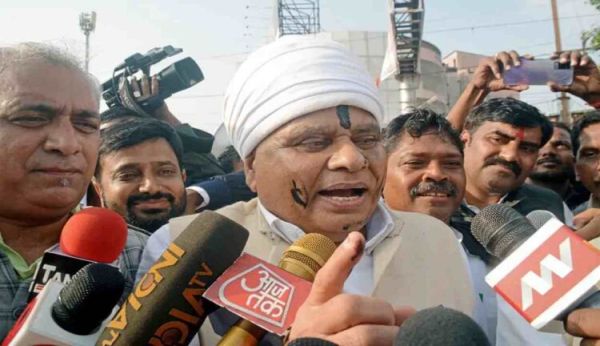
The issue surfaced after Congress MLA Phool Singh Baraiya made comments during a conversation with journalists that attempted to explain the causes of rape in a deeply controversial manner. His statements, captured on video and circulated widely on social media platforms, were criticised for shifting focus away from criminal accountability and instead placing indirect blame on victims and social identity factors. The controversy intensified as opposition leaders and civil society voices questioned how such views could come from an elected representative.
“Distraction by Beauty” Argument
One of the most criticised aspects of Baraiya’s remarks was his claim that sexual violence can occur due to what he described as a temporary distraction caused by physical beauty. According to his argument, even individuals with otherwise normal thinking could lose self-control when confronted with extreme attraction. This reasoning was immediately condemned for trivialising a serious crime and for reinforcing narratives that blame women rather than perpetrators. Critics pointed out that such logic ignores consent, law, and the structural causes of violence, while also legitimising harmful stereotypes.
Caste-Based Interpretation of Sexual Violence
The controversy deepened when the MLA went on to link sexual violence with caste identity. He suggested that women from Scheduled Castes, Scheduled Tribes, and Other Backward Classes are more frequently targeted due to what he termed as distorted beliefs drawn from misinterpreted religious texts. By doing so, he not only invoked caste in an already sensitive discussion but also implied that ancient traditions encourage such crimes. These remarks were widely denounced as baseless, misleading, and offensive to marginalised communities that already face systemic discrimination.
Reference to Religious Texts
Baraiya further attempted to justify his claims by citing a tantric text, arguing that certain interpretations equate sexual acts with spiritual merit. According to him, such beliefs allegedly influence criminal behaviour. Scholars and social commentators quickly rejected this claim, stating that selective and inaccurate references to religious literature cannot be used to explain or excuse criminal acts. Many emphasised that misusing religious narratives in this manner only deepens social divisions and misinformation.
Response and Lack of Apology
When confronted by the media over the backlash, the MLA did not offer an apology or retract his statements. Instead, he argued that his comments were taken out of context and were never intended for public circulation. He defended himself by claiming that his views were based on personal research, travel, and observations. This response further fuelled criticism, as many felt that an elected official should demonstrate greater sensitivity and accountability rather than doubling down on controversial views.
Political Fallout and BJP’s Reaction
The Bharatiya Janata Party launched a sharp attack on the Congress, holding the party leadership responsible for the remarks. BJP leaders argued that such statements reflect a deeper ideological problem rather than an isolated incident. They criticised the Congress leadership for remaining silent and failing to take disciplinary action, calling it a moral lapse. The BJP also linked the issue to broader concerns about how women’s safety and social justice are addressed in political narratives.
Broader Implications for Political Discourse
This controversy has reignited discussions on the standards expected from public representatives. Many observers argue that elected leaders play a crucial role in shaping social attitudes, and irresponsible statements can legitimise harmful thinking. The episode has also highlighted the need for political parties to respond swiftly and decisively when their members make remarks that undermine constitutional values and social equality.
-
Haryana PSC Veterinary Surgeon Recruitment 2026: Apply Now

-
Watch: Begum Bazaar skies once again leave internet mesmerised

-
Rape case against Bishop Mulakkal: Victim thanks Kerala govt for appointing special prosecutor
-
How to Use Instagram's New Quick Share Feature: Faster Way to Send Posts to Close Contacts

-
Tour of India on a plate: 6 regional thalis to try in Hyderabad