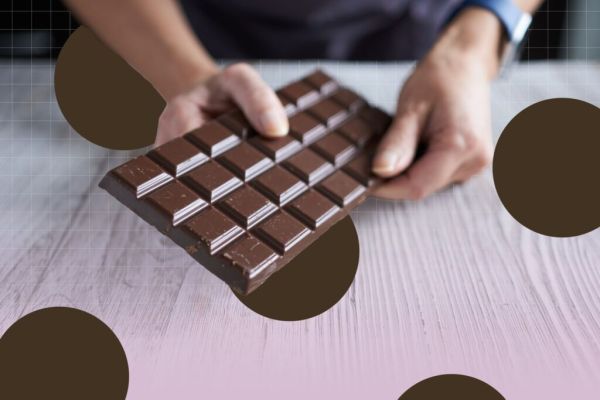
A chocolatier shares how to decode ingredient lists and avoid fake cocoa products.
Design elements: Getty Images. EatingWell design.
Key Points
- Real chocolate contains cocoa mass and cocoa butter as primary ingredients.
- Terms like “artisanal” or “fine” aren’t regulated and can be misleading.
- Cocoa alternatives and synthetic flavors are common in cheaper chocolates.
When it comes to buying chocolate, fancy packaging and high prices don’t always mean what’s inside the wrapper is real. In fact, even the Food and Drug Administration’s regulatory codes for cacao products are incomplete, creating an opportunity for some categories, including dark chocolate, to be misrepresented. EatingWell spoke with a chocolate expert to find out the truth behind each bar.
Understanding Real vs. Fake Chocolate
Innovations in the chocolate manufacturing industry are increasingly driving the mass production of fake chocolate products by using synthetic ingredients and employing an emerging technology that manipulates cells from the cacao plant to create lab-grown chocolates. In contrast, authentic chocolate products require only a handful of natural ingredients.
Key Ingredients in Authentic Chocolate
“Good-quality cocoa is key, whether that is just cocoa butter in the case of white chocolate, or cocoa mass in the case of dark [and milk chocolate],” says Rhona MacFadyensenior chocolatier, Hotel Chocolat. “Some sugar is usually necessary, too, unless your go-to cocoa treat is 100% dark.” She further explains that milk powders are added when making white and milk chocolate, providing a creamy texture and mellowing the intensity of the cocoa flavor, while plant-derived emulsifiers, though not always necessary, are commonly added in small amounts to improve the texture and mouthfeel.
- Cocoa butter is the fat component of the cocoa beans. “It’s what gives chocolate its smooth, glossy appearance, as it’s the element of chocolate that goes through tempering, which is the controlled process of heating and cooling to form stable cocoa butter crystals, creating the right structure for your chocolate,” says MacFadyen. “It forms part of cocoa mass but is also often added as a separate ingredient […] to help provide the right mouthfeel, melt and viscosity.”
- Cocoa mass—sometimes referred to as “cocoa liquor”—is a cocoa paste made from shelled and ground roasted cocoa beans. “It contains both cocoa solids, which provide flavor, and cocoa butter, which […] creates that ‘melt in the mouth’ experience and helps make it so smooth,” says MacFadyen. “Depending on how much cocoa mass you add, you can increase or decrease the intensity of cocoa flavor in your chocolate. As a result, dark chocolate tends to be more intense in flavor because it usually contains more cocoa mass.”
The Cost of Cocoa
Climate change, crop diseases and labor issues are among the challenges affecting global cocoa supplies. While global cocoa bean production steadily increased over the past decade, lower production in West African countries led to decreased U.S. imports and, in turn, higher consumer prices for cocoa products.
To cut costs, many chocolate companies have turned to cocoa alternatives, like palm and soy oils, that MacFadyen says are often formulated and sold as ready-to-use cocoa butter equivalents. “These fats are much cheaper than cocoa butter and can mimic the smooth texture and mouthfeel that cocoa butter provides. At Hotel Chocolat, we believe that there is no substitute for the real thing.”
She also noted that the high cost of natural sweeteners and flavorants, including cane sugar and vanilla bean, has led companies to use less expensive substitutes, like corn syrup and artificial flavors, to enhance their products, as well as to add preservatives to extend shelf life.
Choosing Your Chocolate Wisely
Just as the use of the loosely defined word “natural” creates confusion among consumers across many other food categories, the same can be said for several of the words found on chocolate product packaging. Phrases that are often not backed by regulated certifications or have little meaning in terms of the actual quality of the product include “artisanal,” “small-batch” and “fine chocolate.” It’s also important to understand that just because a label lists the country of origin, it does not ensure the quality of the product.
On the other hand, regulated certifications are often distinguished by recognizable tags. Those associated with the manufacturer’s commitment to specific ethical and environmental practices include Fairtrade, Rainforest Alliance and Organic, while quality and purity tags include Kosher and Halal.
Certifications aside, MacFadyen says the best way to check for authenticity (other than by taste) is to read the ingredient list. “It really is as simple as checking the ingredient contents on any chocolate that you purchase. In my opinion, it’s the most important thing! It lets you know what has been used to produce the chocolate, and you should ensure that some of the [core] ingredients read first on the label.”
The true test of fine chocolate lies in its aroma, taste and texture. “High-quality chocolate should have a strong shine to it and make a nice snapping sound when you break it. Quality chocolate should [also] have a strong aroma of cocoa when you sniff it, because so much of what we often refer to as ‘taste’ is smell,” says MacFadyen. “Words and descriptions that you would associate with good-quality chocolate include things like rich, smooth, flavorful, melt in your mouth and complex. What you don’t want to come to mind as you’re enjoying your chocolate are things like artificial, waxy, grainy or gritty, overly sweet or notice a distinct lack of cocoa flavor.”
Our Expert Take
Discerning between real and fake chocolate isn’t as difficult as it may seem, especially when equipped with expert insights. When shopping, remember to carefully read labels, looking for a limited ingredient list that leads with cocoa butter and cocoa mass and is free from sweetener substitutions, like corn syrup. Tags from certified organizations, such as Organic and Rainforest Alliance, can help you understand the manufacturer’s commitment to quality ingredients and ethical practices. This step can help you choose a fine chocolate product, which should have a strong cocoa taste and aroma and a smooth texture and should snap when broken.
-
Digital infidelity! A new match of married people is being made every 7 seconds, more than 3.5 lakh people are using this app.

-
Mobile Security Alert: Are Third-Party Apps Dangerous? Check Benefits, Hidden Risks Of Downloading, And Here’s How To Stay Safe | Technology News

-
No Handshake At U-19 World Cup Toss Vs India: ‘Unintentional… Momentary Lapse In Concentration’, Clarifies Bangladesh

-
Man United Beats Man City 2-0 in Michael Carrick Debut

-
Congress accuses Modi-Yogi of destroying religious and cultural heritage of Varanasi over destruction of ancient temples, ghats