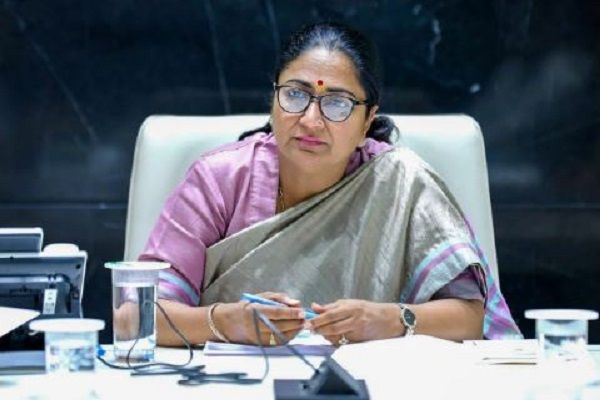
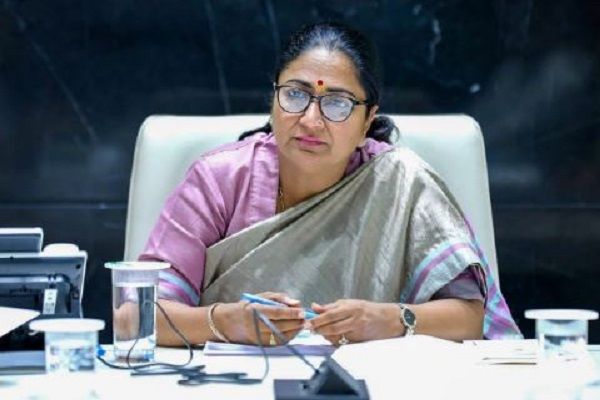
New Delhi, 17 January. A major decision has been taken towards making the food security system more equitable and poor-centric in the national capital Delhi. Now families with annual family income up to Rs 1.20 lakh will be entitled to a ration card, which was earlier limited to Rs 1 lakh. This important decision was taken in the recent Delhi Cabinet meeting chaired by Chief Minister Rekha Gupta.
‘Food security is not a favor, but the right of the poor’
CM Rekha Gupta clearly said – ‘Food security is not a favor, but the right of the poor. It is the resolve of our government that no needy person should remain hungry merely because of the shortcomings of the system. According to government information, due to lack of clear rules for years, more than 3 lakh 89 thousand 883 applications are pending in Delhi and more than 11 lakh 65 thousand 965 people are still waiting for food security, who will now be included under the transparent and need-based system.
He said that under the new rules, the income limit for identifying priority families has been made practical. Now families with annual family income up to Rs 1.20 lakh will come under the ambit of food security. Earlier this income limit was Rs 1 lakh. For this, income certificate issued by the Revenue Department has been made mandatory, which will end the system of self-verification.
Such families will not be eligible for this scheme
According to the new rules, families who own property in A to E category colonies in Delhi, who pay income tax, who own a four-wheeler (except a commercial vehicle used for livelihood), who have any member of the family in government service or who have an electricity connection of more than 2 kilowatts at home will not be eligible for this scheme.
‘First come first serve’ system ended
Chief Minister Rekha Gupta said that now the system of ‘first come-first serve’ will be abolished and the applications will be scrutinized, approved and prioritized through district level committees. This will give the most needy families a higher place in the list.
District level committees will now be the central unit for priority setting.
He said that the district level committee has been made the central unit for priority setting. It will be headed by the District Magistrate (DM) or Additional District Magistrate (ADM). The committee will include local MLAs and concerned officials. This committee will scrutinize the applications and sort them so that the neediest families get the benefits first. Besides, a waiting list of 20 percent will also be created, so that the vacancies can be filled on time.
There was a huge backlog due to lack of clear rules for years
The Chief Minister said that due to lack of clear rules for years, there was a huge backlog. Government examined food safety system data. Many errors were found in it. On the basis of this, those people have been removed from the list, who were not actually entitled to it. Data verification revealed that about 6 lakh 46 thousand 123 beneficiaries were found whose income information did not match the rules. There were 95 thousand 682 people who were in the system for a long time but were not taking benefits. About 23 thousand 394 names were found in duplication. In 6,185 cases the benefits were registered in the names of dead people. About 56 thousand 372 people themselves requested to be out of the system.
Due to all these reasons, a total of more than 8 lakh 27 thousand 756 vacancies were created. It was also revealed that currently more than 3 lakh 89 thousand 883 applications are pending and more than 11 lakh 65 thousand 965 people are waiting for food security. Now people who have been waiting for ration cards or food security for years will be included in these vacant places.
Delhi Government’s resolution – ‘No needy should remain hungry’
CM Rekha Gupta said that this is not just a document of rules, but a guarantee of respect, transparency and trust for the most vulnerable sections of Delhi. It is the resolve of our government that no needy person should remain hungry and the food security system should truly work on the principle of ‘Sabka Saath, Sabka Vikas, Sabka Vishwas’. According to the Chief Minister, this decision has been taken in the direction of effective and equitable implementation of the National Food Security Act, 2013. Through new rules, a technology-based, equitable and transparent public distribution system is being developed, which will prevent misuse and reach the benefits to the genuine needy.
-
Why strict diets won't result in long-term weight loss

-
Four Maoists neutralised in major anti-LWE operation in Chhattisgarh

-
Winning Lotto numbers LIVE: Full National Lottery results with Thunderball on 17 January

-
Farmer Suicide Case: SIT inspects Kathgodam crime scene
-
Red Bull's task to keep Max Verstappen is clear when you cut through all the engine noise