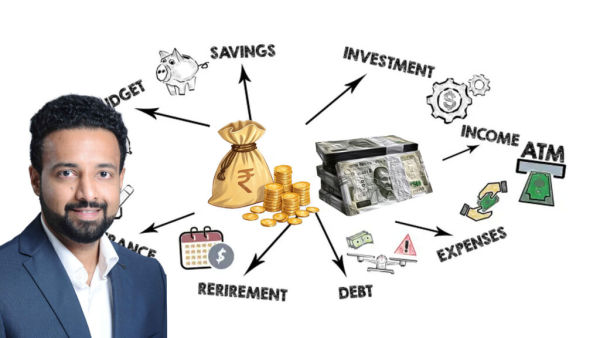
Salary credit day once meant relief. Today, for many Gen Z and millennial Indians, it raises a sharper question—where does all the money go? As incomes rise and financial responsibilities deepen, money decisions are becoming serious for the first time.
The moment a salary hits the bank account, advice begins pouring in from all sides. Fixed deposits are safe, mutual funds beat inflation, start a SIP now, stock markets are the future… These phrases are familiar, but understanding how they actually work is far less common.
At the heart of all these choices lies one basic concept—interest. Interest is essentially the price of money. When you give your money to a bank, a company, or the market, you expect something in return. Banks pay interest, while markets generate returns. Though they sound similar, they function very differently.
Interest basics
In India, interest rates are guided by the Reserve Bank of India. The RBI sets the repo rate, which is the rate at which banks borrow money. When the repo rate rises, bank interest rates usually increase. When it falls, bank rates tend to come down.
This direct linkage is why fixed deposit rates change over time. Traditionally, when Indians think about saving, fixed deposits are often the first option that comes to mind.
“If you historically look at it, we’ve always been into three asset classes. One is FDs, the second would be real estate, and then gold,” says Arun Kumar, author of The 80-20 Money Makeover. “FDs are seen as extremely safe, which is right in a way, but there is a small nuance to it.”
How FDs work
A fixed deposit means parking your money with a bank for a fixed period—one year, three years, or five years—at an interest rate decided in advance. This return does not depend on stock market movements or economic fluctuations.
That predictability is the main reason FDs are considered safe. Deposits up to ₹5 lakh per bank are also insured by the government, adding another layer of comfort for savers.
According to financial experts, fixed deposits work best for emergency funds, short-term goals, and conservative savers. “FDs are primarily something to be used for a near-term purpose,” Arun Kumar explains. “If you need money in the next three to five years and can’t take much risk, FD has a role.”
Inflation risk
Problems arise when FDs are treated as long-term wealth builders. Many people lock their savings into fixed deposits for 10 to 15 years, which experts consider a poor financial choice.
“FDs make sense for short horizons, but investing in them for long periods exposes you to inflation risk,” Kumar warns. Historically, inflation in India hovered around 7 percent. Though it has eased in recent years, a realistic expectation even today is around 6 percent.
In comparison, FD returns generally range between 6 and 7 percent. Once taxes are accounted for, the effective return drops further, depending on the income slab.
“If the same ₹100 is invested in an FD, by next year it is probably ₹105 or ₹106 post-tax,” Kumar says. “That barely keeps pace with inflation.”
Real returns
The real issue with fixed deposits is not safety, but purchasing power. If an FD earns 7 percent but inflation rises by 6 percent, the actual increase in buying power is marginal.
For example, an investment of ₹1 lakh at 7 per cent interest yields ₹1.07 lakh after a year. But if prices rise by 6 per cent during the same period, something that earlier cost ₹1 lakh now costs ₹1.06 lakh. The real gain is just about ₹1,000.
“The biggest risk of FDs is that they do not allow you to grow your money post-inflation,” Kumar explains. “Whatever you can buy today, you can buy the same thing—or sometimes even less—after a few years.”
Most large banks currently offer around 6 percent on one-year fixed deposits, while private banks may offer slightly higher rates. However, after adjusting for tax and inflation, FDs rarely generate meaningful real growth.
The big picture
Fixed deposits offer safety, certainty, and peace of mind, but limited growth. They are useful for short-term goals, emergency funds, and low-risk needs, but unsuitable for long-term wealth creation.
“FDs by default do not beat inflation,” Kumar concludes. “At best, they match it. In many cases, especially for those in higher tax brackets, they don’t even do that.”
Ultimately, the choice depends on individual goals, timelines, and risk appetite. Understanding what fixed deposits can—and cannot—do is the first step toward making smarter financial decisions.
The content above has been transcribed from video using a fine-tuned AI model. To ensure accuracy, quality, and editorial integrity, we employ a Human-In-The-Loop (HITL) process. While AI assists in creating the initial draft, our experienced editorial team carefully reviews, edits, and refines the content before publication. At The Federal, we combine the efficiency of AI with the expertise of human editors to deliver reliable and insightful journalism.
This content is for informational purposes only and does not constitute investment advice.
-
There will be pain like splitting of head, Chhoomantar! Adopt these natural methods to prevent migraine attacks

-
On which day is Rath Saptami? Know the date, auspicious time, worship method and remedies

-
Is it right or wrong to take paracetamol during pregnancy? New study ends women’s fear

-
Kaziranga Elevated Corridor: How the new project aims to protect wildlife and improve connectivity |

-
A Global Call to Care for Vulnerable Children