
Indore’s Beggar-Free: Indore’s ambitious drive to make the city free of begging took an unexpected turn when authorities encountered a case that challenged common assumptions about poverty, disability, and street life. What initially appeared to be a routine identification exercise soon became a striking example of how appearances can be deeply misleading, even within well-structured social reform campaigns.
A Shocking Discovery on the Streets
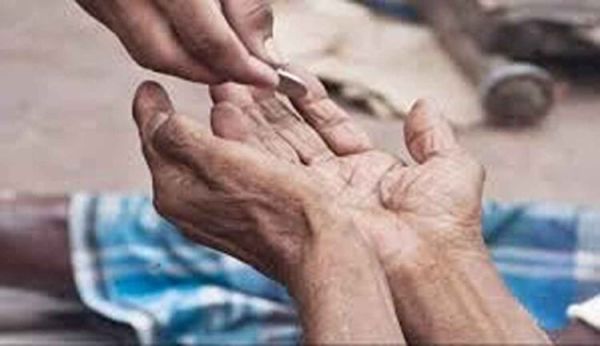
During routine checks under the beggar-free initiative in Indore, officials came across a physically disabled man who spent his days moving slowly across busy roads on a low iron cart. He propelled himself forward using his hands, which were covered with worn shoes for protection. To most people, he looked like someone struggling for survival, silently appealing for help. Passers-by often dropped coins or small notes, assuming they were helping a helpless individual.
Hidden Wealth Behind a Humble Appearance
The man, later identified as Mangilal, surprised officials with revelations about his financial status. According to information that surfaced during questioning, he was not a beggar in the conventional sense. He claimed that he never verbally asked for money. Instead, people voluntarily gave him cash as he moved through the streets. Over the years, this passive form of income generation turned into a steady daily earning.
Reports quoted by The Times of India suggested that Mangilal earned anywhere between Rs 500 and Rs 1,000 per day. While this amount may not seem extraordinary at first glance, its consistency over many years, combined with his financial decisions, resulted in assets that placed him far above the poverty line.
Property Ownership and Asset Accumulation
What truly astonished the authorities was the scale of Mangilal’s property holdings. He disclosed ownership of a three-storey residential building in Bhagat Singh Nagar and another 600 square foot house in Shiv Nagar. In addition, he owns a one-bedroom flat in Alwasa, which he reportedly received through a housing assistance program due to his disability.
Beyond real estate, Mangilal also owns three auto-rickshaws that he rents out, creating a regular stream of passive income. He even possesses a Swift Dzire car and employs a driver on a monthly salary. These details painted the picture of a man who had carefully diversified his income sources while maintaining the outward appearance of extreme hardship.
Money Lending and Informal Finance
Another critical aspect of Mangilal’s financial life is his involvement in informal money lending. He admitted to lending money to people at high interest rates, collecting repayments either daily or weekly. This practice, though common in informal economies, often raises ethical and legal questions. It also highlights how unregulated financial activities can thrive unnoticed, especially when conducted by individuals who do not attract suspicion.
Official Scrutiny and Welfare Verification
Following these revelations, officials documented Mangilal’s bank accounts and cash reserves for detailed verification. He is expected to be presented before the district collector to explain how he obtained a housing unit under the Pradhan Mantri Awas Yojana despite already owning multiple properties. The matter has prompted discussions around stricter verification mechanisms to ensure that welfare benefits reach genuinely deserving individuals.
The Larger Context of Indore’s Social Reform Drive
Indore has been working steadily toward eliminating street begging since February 2024. Over the past two years, authorities have identified more than 6,500 individuals engaged in begging-related activities. In May 2025, District Magistrate Ashish Singh announced that nearly 5,000 people had already been rehabilitated through this campaign.
Rehabilitation, Recognition, and Global Attention
Unlike punitive approaches seen in some regions, Indore’s campaign emphasizes rehabilitation and inclusion. More than 170 rescued children have been enrolled in schools, while adults have received skill training and job placements through state-supported programs. This human-centric strategy has earned appreciation from the Union Ministry of Social Justice and Empowerment and international institutions such as the World Bank.
A Lesson Beyond One Individual
The case of Mangilal serves as a reminder that social realities are often complex. While it exposes loopholes in welfare distribution, it also underlines the need for data-driven policies and continuous monitoring. Indore’s experience shows that meaningful social change requires not only compassion but also accountability, transparency, and adaptive governance.
-
Bank Rules Change: These important SBI rules will change from February 15th! This will have a direct impact on your wallet.
-
Video tour: A look inside The 50’s massive palace-like house

-
How to Start a Secret Conversation on Facebook Messenger: A Step-by-Step Privacy Guide

-
CEPT University Confers Degrees on 589 Students at Its 20th Convocation; Announces Launch of New Program - MBA in Real Estate

-
Sensex tanks 500 points: What's behind today's decline?