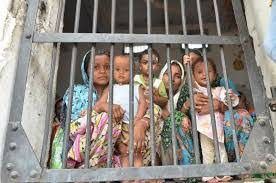
A Childhood Behind Bars: Akriti is nearly six years old, yet most of her memories are shaped not by playgrounds, classrooms, or neighborhood friends, but by iron gates, high walls, and locked corridors. She has committed no offense, yet her early years have unfolded inside the Sriganganagar Central Jail in Rajasthan. Her story reflects a larger, often overlooked reality within the Indian criminal justice system, where children grow up inside prisons solely because their mothers are undertrial inmates.
A Life Defined by Circumstances, Not Choice
Under Indian prison rules, children are allowed to live with their mothers in jail until they reach the age of six. Akriti’s mother, Nisha Munjal, was arrested in 2020 under the Narcotic Drugs and Psychotropic Substances Act and has remained in judicial custody since then. During this time, Akriti has known no other world.
Sriganganagar Central Jail houses nearly 590 inmates, of whom only 30 are women. Among these women, a few live with young children. At one point in 2024, five children were living inside the prison. Each child carries a different story, but all share a common experience of confinement during their most formative years.
Motherhood Inside Prison Walls
Life for mothers inside prison is layered with emotional and psychological strain. Alongside the uncertainty of legal proceedings, they carry the responsibility of nurturing a child in an environment never meant for childhood development. Nisha hopes that if she is granted bail, she can finally enroll Akriti in school and give her a chance at a normal routine.
Other women have briefly experienced similar journeys. Some entered prison pregnant, others with infants in their arms. A few were released on bail, allowing their children to step outside prison gates for the first time. For those still inside, the wait continues, marked by court dates, legal arguments, and delayed trials.
Delays in Justice and the Bail Struggle
One of the most critical challenges faced by undertrial prisoners is the slow pace of legal proceedings. In Nisha’s case, bail applications have been rejected multiple times, both by the trial court and the High Court. Legal arguments have ranged from procedural lapses in search and seizure to humanitarian considerations involving her minor child.
Despite directives to expedite the trial, the case has progressed slowly. Witness examinations are still ongoing, prolonging both Nisha’s incarceration and Akriti’s confinement. Legal experts note that bail decisions often depend on evolving circumstances, but until those changes occur, families remain in limbo.
The Impact on Children Growing Up in Prison
Children raised inside prisons experience a restricted form of socialization. Their world is limited to uniformed officials, inmates, and confined spaces. Concepts such as community life, education systems, and social relationships remain abstract until they leave the prison environment.
Prison authorities state that they provide basic necessities such as food, clothing, toys, and medical care for children. However, due to space and infrastructure limitations, facilities like creches or nursery schools are often absent. While these measures address physical needs, they cannot replace the emotional and developmental stimuli essential for early childhood growth.
Family Struggles Beyond the Prison
The impact of incarceration extends beyond prison walls. Nisha’s older children live with relatives, while extended family members struggle with health issues and legal challenges of their own. Financial burdens, emotional stress, and fractured family structures become long-term consequences of prolonged undertrial detention.
In many such cases, families rely on limited resources to manage legal expenses and childcare responsibilities. The absence of a parent during crucial years leaves lasting effects on children, even after reunification.
National Perspective on Women Prisoners and Children
According to national prison data, thousands of children across India are living with their incarcerated mothers. Most of these women are undertrials, not convicts, highlighting systemic delays in the justice process. States such as Uttar Pradesh, Bihar, and West Bengal report particularly high numbers of women inmates with children.
Reports focusing on prison nurseries and caregiving environments point to issues like overcrowding, emotional trauma, and inadequate child-focused facilities. These conditions raise serious questions about child rights, mental health, and long-term social outcomes.
A Childhood on Hold
For Akriti, the outside world remains an idea rather than a lived experience. Her days pass within prison routines, unaware of classrooms, parks, or neighborhood streets. For her mother, years have slipped by through video-conferenced court hearings and unanswered bail pleas.
Their story underscores a pressing need for policy reforms, faster trials, and child-sensitive approaches within the prison system. Until meaningful changes occur, many children like Akriti will continue to spend their earliest years waiting for freedom they did not lose, but never truly had.
-
How to Use WhatsApp’s Blur Tool on iPhone: Step-by-Step Guide to Hide Sensitive Details

-
How to Reduce Mobile Data Usage During WhatsApp Voice Calls: Easy Settings for Android and iPhone Users

-
India Exim Bank Recruitment 2026: Applications for Management Trainee positions at Exim Bank have started; apply online..

-
How to Use Boomerang and Hyperlapse Features on Instagram: Complete Step-by-Step Guide

-
How to Temporarily Limit Someone from Commenting on Your Instagram Posts: A Complete Privacy Guide