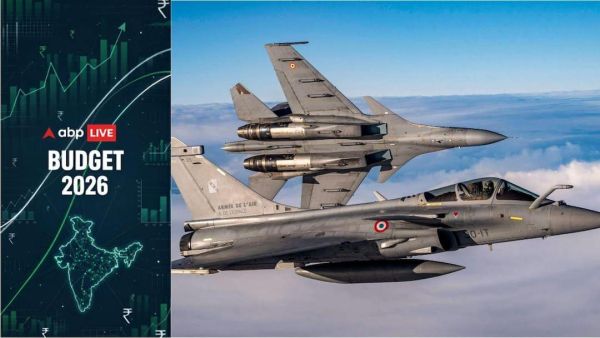
With global security tensions rising, the Union Budget 2026 should sharply prioritise growth-enhancing capital expenditure, with a special focus on strengthening India’s defence capabilities, industry body FICCI said in its pre-Budget memorandum. The organisation stressed that defence spending must increasingly be driven by technology, innovation and indigenisation to safeguard India’s strategic autonomy.
FICCI warned that India’s external security environment is marked by heightened uncertainty, as adversaries invest heavily in advanced military technologies such as autonomous weapons, hypersonic systems, UAV swarms and AI-enabled warfare. In this context, the industry body said a modern, well-resourced and technologically advanced defence architecture is no longer optional but essential.
Shift From Platforms To Technology-Led Warfare
Calling for a deeper emphasis on Atmanirbharta in defence, FICCI argued that future conflicts will be defined by technology-driven, multi-domain and information-centric operations, rather than by platforms alone. Warfare, it said, will increasingly span land, air, sea, cyber, space and the electromagnetic spectrum.
“For India, preparing for such challenges requires a shift from platform-centric to networked, integrated and AI-enabled capabilities, backed by robust indigenous defence innovation,” FICCI said, adding that increasing defence allocations should be viewed as a strategic imperative, not merely a budgetary decision.
Higher Capital Outlay, Stronger DRDO Funding
FICCI noted that in Budget 2025, the Ministry of Defence was allocated Rs 6,81,210.27 crore for FY 2025–26, a 9.53% increase over the previous year’s Budget Estimates. While recommending that the government maintain an overall growth of about 10% in defence spending, the industry body said the share of capital outlay should be raised to 30%, from around 26% earlier.
Additional capital expenditure, FICCI said, would accelerate the modernisation of military infrastructure, particularly investments in frontline assets, UAVs and counter-UAV systems, electronic warfare capabilities and air defence systems in border areas.
The memorandum also called for a significant increase in funding for the Defence Research and Development Organisation (DRDO). The DRDO’s budget was raised by 12.4% last year to Rs 26,816.82 crore in FY 2025–26. FICCI recommended an additional Rs 10,000 crore allocation in Budget 2026 to strengthen fundamental research in frontier technologies and deepen collaboration with private players through schemes such as the Technology Development Fund.
Defence Corridors, Exports And Eastern India Focus
Highlighting progress under the Atmanirbhar Bharat initiative, FICCI pointed to the establishment of Defence Industrial Corridors in Uttar Pradesh and Tamil Nadu. To sustain this momentum, it proposed setting up an Eastern India Defence Industrial Corridor, aligned with the government’s Purvodaya Scheme.
Such a move, FICCI said, would rejuvenate industrial clusters in eastern India, spur job creation, boost R&D and help position India as a global hub for defence exports, while strengthening national security across all three borders.
The industry body also urged greater focus on defence exports, which have grown at a compound annual growth rate of 46% between 2016–17 and 2023–24, largely driven by private sector firms. With the government targeting defence exports of Rs 50,000 crore by 2028–29, FICCI suggested the creation of a Defence Export Promotion Council to co-ordinate efforts among the armed forces, defence PSUs, private manufacturers, the Ministry of External Affairs, Indian embassies and the Ministry of Defence.
Industry Flags Sustainability And Scale Challenges
Echoing these concerns, Vamsi Vikas, founder and managing director of Raghu Vamsi Aerospace Group, said India’s defence manufacturing ecosystem no longer lacks ambition or capability, but now needs sustained policy and budgetary support to transition from promise to performance.
He said the most fragile phase of defence programmes is the shift from early production to scale, when timelines often stretch and costs rise due to refinements and testing. Long-term capital investments by industry, he added, are vulnerable to uneven budget cycles, which can disrupt capacity planning, quality systems and after-sales support.
On exports, Vikas said global interest in Indian defence systems is growing, but success abroad requires upfront investment in regulatory compliance, certifications, documentation and long-term maintenance infrastructure. A Union Budget that recognises these realities, he said, could simultaneously strengthen national security and generate long-term economic value.
-
How to Use WhatsApp’s Blur Tool on iPhone: Step-by-Step Guide to Hide Sensitive Details

-
How to Reduce Mobile Data Usage During WhatsApp Voice Calls: Easy Settings for Android and iPhone Users

-
India Exim Bank Recruitment 2026: Applications for Management Trainee positions at Exim Bank have started; apply online..

-
How to Use Boomerang and Hyperlapse Features on Instagram: Complete Step-by-Step Guide

-
How to Temporarily Limit Someone from Commenting on Your Instagram Posts: A Complete Privacy Guide