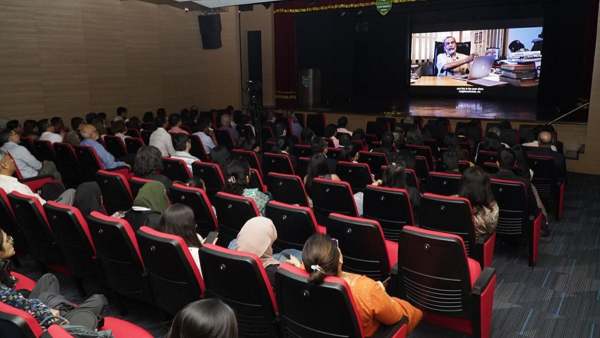
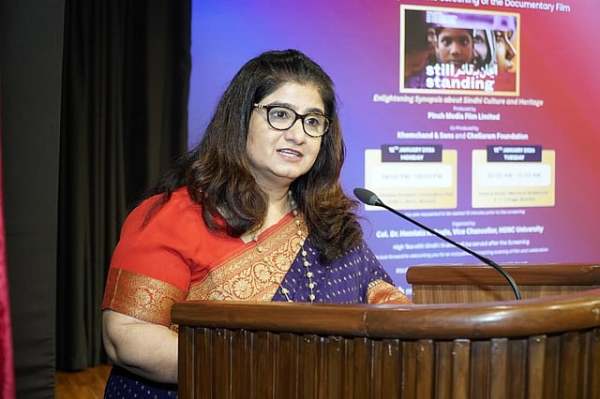
Hyderabad Sind National Collegiate University (HSNC University), a State Public University, under the leadership of Vice Chancellor Col. Dr. Hemlata K. Bagla, organised two screenings of the documentary ‘Still Standing’ on 12th and 13th January 2026 at two prominent venues in Mumbai the Hiro Sitaldas Punwani Convocation Hall at HSNC University, Worli and the Rama & Sundri Watumull Auditorium at K.C. College. In partnership with the Chellaram Foundation and supported by HSNC Board Trustee Mr. Sham L. Chellaram, the event brought together students, research scholars, faculty, non-teaching staff and members of the Sindhi community for an insightful exploration of the rich cultural heritage and enduring identity of one of the world’s oldest civilisations. Col. Dr. Hemlata K. Bagla, Vice Chancellor of HSNC University, emphasised the significance of such events in preserving and celebrating diverse cultural histories.
Produced by Pinch Media Film Limited and co-produced by Khemchand & Sons along with Chellaram Foundation, Still Standing delves deeply into the lives, memories and identities of the Sindhi people, who were profoundly affected by the Partition of 1947 (when Sindh became part of newly-formed Pakistan) and subsequently dispersed across the globe. The film’s strength lies in its intimate storytelling, eschewing purely historical facts for personal narratives that convey the emotional complexity of displacement, resilience and cultural survival. The documentary’s restrained cinematography and evocative sound design enhanced its emotional depth without overwhelming the narrative.
The documentary explores the Sindhi experience through multiple voices spanning across generations; elders recalling a homeland steeped in tradition and younger generations grappling with how to preserve their heritage in far-flung diasporas. By foregrounding authentic voices from within the community, the documentary avoids nostalgia-driven romanticism and instead presents a grounded, honest portrayal of Sindhi identity. Recurring visual motifs, such as homes, archival photographs and everyday rituals, serve as quiet symbols of continuity amid historical rupture. The film maintains a measured pace, giving space to silence and reflection, which amplifies the emotional weight of memory and loss. Rather than functioning as a conventional historical account, the documentary succeeds as a collective memoir, where personal recollections become a lens to understand a larger socio-historical moment. The visual narrative skillfully integrates archival footage with present-day interviews, crafting a contemplative and dignified portrayal that resonates deeply with audiences. While deeply rooted in the Sindhi experience, the film’s themes of displacement, belonging and cultural survival resonate universally. The documentary also gestures toward the ancient roots of Sindhi civilisation, evoking the legacy of Mohenjo-daro as a reminder of a culture that has endured for millennia despite repeated historical ruptures. Still Standing emerges as a quietly powerful documentary, intimate in scale, dignified in tone and enduring in its emotional impact.
Still Standing highlights not only loss but also the enduring spirit of a community that continues to thrive through language, customs and collective memory. The film invites viewers to reflect on broader themes of identity, belonging and the power of cultural continuity in the face of upheaval.
The screenings recreated an authentic cinematic experience, complete with printed theatre-style tickets, ushers guiding attendees to their seats and classic movie snacks, evoking the charm of traditional movie-watching and deepening audience engagement with the documentary. The screenings concluded with a warm high-tea featuring traditional Sindhi snacks, fostering camaraderie and cultural exchange among attendees. The screening was followed by animated discussions among students, scholars and community members, highlighting the film’s relevance to contemporary conversations on identity and migration. Several attendees described the film as deeply moving, with many reflecting on personal family histories and shared memories that the documentary brought to the surface. For students and research scholars, the documentary served as a powerful visual archive, complementing academic studies on Partition, diaspora and cultural preservation.The enthusiastic audience response underscored the documentary’s ability to connect on both emotional and intellectual levels, making Still Standing a landmark film for those interested in heritage, migration and community resilience. In an era marked by global displacement and cultural homogenisation, Still Standing offers a timely reminder of the importance of safeguarding community narratives. The collaboration with the Chellaram Foundation reflects a shared commitment to preserving Sindhi heritage through meaningful cultural initiatives.
This successful screening reaffirms HSNC University’s dedication to promoting cultural dialogue and honouring the stories that shape India’s multifaceted social fabric. Such initiatives pave the way for future screenings, archives and interdisciplinary engagements centred on India’s diverse cultural histories. The event also stood as a testament to the power of cinema as a medium of remembrance, resilience and cultural continuity.
-
Political : Public Rift in a High-Profile Marriage Sparks Nationwide Debate
-
Lucknow : Hosts a Landmark National Conference to Reinforce Legislative Traditions and Democratic Values
-
What happens if you apply gram flour mixed with curd and turmeric on your face?

-
43 inch smart TV for less than Rs 20 thousand at 32% discount in Flipkart sale

-
Virat Kohli’s 124 in vain as New Zealand win by 41 runs, claim historic 2-1 series over India