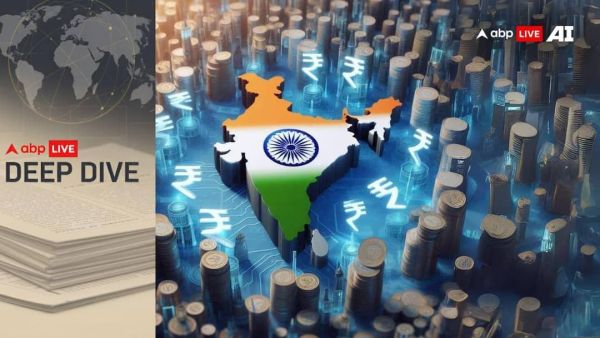
India’s growth story has received a strong endorsement from the International Monetary Fund (IMF), which has sharply raised its economic expansion forecast for 2025 to 7.3 per cent, an upgrade of 0.7 percentage point from its earlier estimate.
The revision, announced in the IMF’s January 2026 World Economic Outlook (WEO) Update, comes even as the global economy grapples with tariff shocks, trade uncertainty and a technology-led investment boom that carries both promise and risk.
The Fund said the upgrade reflects a “better-than-expected outturn in the third quarter of the year and strong momentum in the fourth quarter”, underscoring India’s resilience at a time when many large economies are slowing, reported IANS.
India’s growth surprise: What changed?
According to the IMF, India’s stronger-than-anticipated performance in the second half of 2025 prompted the upward revision. With domestic demand holding firm and activity gaining traction, the economy outperformed earlier projections.
At 7.3 per cent growth in 2025, India remains one of the fastest-growing major economies globally. However, the IMF expects this pace to moderate to 6.4 per cent in both 2026 and 2027 as “cyclical and temporary factors wane”.
Even with this cooling, India stands out. The IMF said emerging market and developing economies are projected to grow at just over 4 per cent in 2026 and 2027, making India a key driver of global expansion in that group.
Inflation near target, demand stays resilient
The IMF also struck a reassuring tone on India’s inflation outlook. It said inflation “is expected to go back to near target levels after a marked decline in 2025, driven by subdued food prices”.
This easing in price pressures could further support domestic demand, giving policymakers room to keep financial conditions accommodative while sustaining growth.
A world economy absorbing tariff shocks
India’s upgraded outlook comes against a backdrop of surprising global resilience. In a blog published alongside the WEO Update, the IMF said the world economy has shown “notable resilience” despite significant US-led trade disruptions and tariff shocks.
Global growth is now projected to hold steady at 3.3 per cent in 2026 and 3.2 per cent in 2027. These figures represent an upward revision of 0.2 percentage point compared with the IMF’s October estimates, with most of the improvement coming from the United States and China.
The IMF said the global economy has “shaken off the immediate impact of the tariff shock”, helped by easing trade tensions, accommodative financial conditions and a surge in technology-driven investment.
Tariffs, trade and why India still stands out
While tariffs and protectionist policies remain a risk to global growth, India appears relatively insulated for now. The IMF said emerging and developing Asia continues to benefit from strong technology-related investment and trade, even as global momentum becomes uneven.
For India, steady services exports, resilient domestic demand and technology-linked investment have helped offset external uncertainty.
However, the Fund cautioned that renewed trade frictions or a worsening tariff environment could still hurt export-oriented sectors and tighten financial conditions, with spillover effects for emerging economies.
The AI boom: Tailwind with warning signs
A major theme in the IMF’s update is the powerful, but potentially fragile, role of artificial intelligence.
The Fund said global growth has been supported by a surge in information technology investment, particularly in artificial intelligence. It noted that IT investment as a share of US output has climbed to its highest level since 2001, providing a major boost to business spending and activity, with positive spillovers to global trade, especially Asia’s technology exports.
Since late 2022, equity markets have risen sharply alongside the rollout of widely used generative-AI tools, supported by favourable financial conditions and robust corporate earnings.
But the IMF warned that rising dependence on AI-driven investment has created new vulnerabilities.
“Should expectations about AI-driven productivity gains turn out to be overly optimistic and outcomes disappoint, a sharp drop in real investment in the high-tech sector, as well as in spending on AI adoption in other sectors and a more prolonged correction in stock market valuations … could ensue,” the Fund said.
Debt, leverage and dot-com echoes
The IMF flagged growing leverage in parts of the technology sector as a key risk. It said debt financing is increasingly being used to fund expansion, which could magnify shocks if earnings disappoint or financial conditions tighten.
It also warned that frequent upgrades of advanced processors could squeeze profit margins, as firms face faster depreciation and higher borrowing needs.
Drawing comparisons with the dot-com era, the Fund said IT investment as a share of output is now at levels similar to the late 1990s, although the rise has been more gradual. Market valuations have also increased, but potential overvaluation in the United States is “only about half that of the dot-com episode”.
Still, risks remain elevated. The IMF said equity market gains have been driven largely by a narrow group of AI-related firms, making broader growth more sensitive to a reversal in sentiment.
What could lift or dent growth next
On the upside, the IMF said faster adoption of artificial intelligence could lift global growth, provided productivity gains materialise and financial risks are contained.
Rapid AI adoption, supported by heavy investment in both hard and soft infrastructure, could boost productivity and medium-term growth prospects sooner than expected. Global growth could rise by as much as 0.3 percentage point in 2026 and by 0.1–0.8 percentage point per year in the medium term, depending on adoption speed and global readiness, the Fund said.
On the downside, a reassessment of AI-driven productivity gains could trigger a pullback in investment and tighter global financial conditions, with spillover effects for emerging markets.
The bottom line for India
For India, the IMF’s 7.3 per cent growth forecast for 2025 is a strong endorsement at a time when tariffs, trade tensions and global uncertainty dominate headlines.
But the Fund’s caution is equally clear. India’s medium-term outlook will depend not only on domestic demand and inflation control, but also on how global trade tensions, tariff policies and the AI investment cycle evolve.
In a world where technology optimism, debt-fuelled expansion and geopolitical trade risks are colliding, India’s upgraded growth projection is a powerful headline — one that comes with a clear warning label attached.
-
Political : Public Rift in a High-Profile Marriage Sparks Nationwide Debate

-
Lucknow : Hosts a Landmark National Conference to Reinforce Legislative Traditions and Democratic Values

-
What happens if you apply gram flour mixed with curd and turmeric on your face?

-
43 inch smart TV for less than Rs 20 thousand at 32% discount in Flipkart sale

-
Virat Kohli’s 124 in vain as New Zealand win by 41 runs, claim historic 2-1 series over India