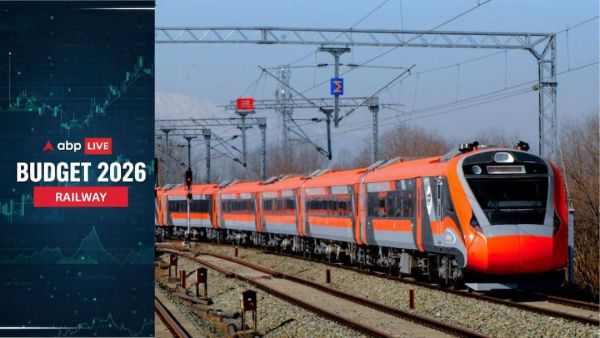
As India stands on the cusp of another transformative year, the upcoming 2026 Union Budget, particularly its railway allocations, emerges as a pivotal instrument in the government's arsenal. With the Bharatiya Janata Party (BJP) at the helm under Prime Minister Narendra Modi, this budget is not merely an economic blueprint but a calculated political maneuver, especially as assembly elections loom in key states like West Bengal, Tamil Nadu, Assam, and Kerala in March-May 2026. These polls represent high-stakes battles: the BJP aims to defend its stronghold in Assam, challenge the Trinamool Congress (TMC) in West Bengal, disrupt the Dravida Munnetra Kazhagam (DMK) dominance in Tamil Nadu, and make inroads against the Left Democratic Front (LDF) in Kerala.
The railway sector, the nation's lifeline, is set for a substantial boost, with capital expenditure likely to hover around ₹2.52-2.75 lakh crore, broadly steady or modestly up from FY26's ₹2.52 lakh crore, focusing on reallocation toward safety, decongestion, and premium services like Vande Bharat. This targets freight efficiency (aiming for 1,700 million tonnes loading and ₹1.88 lakh crore earnings in FY26, en route to 3,000 million tonnes by 2030 and 45% modal share by 2045), alongside safety upgrades and electrification (now over 99% complete).
The political undertones are unmistakable. Just as the Modi government leveraged the 2025 Union Budget-presented on February 1, 2025-to announce sweeping income tax relief, raising the exemption limit to ₹12 lakh annually (benefiting salaried middle-class voters), which contributed to the BJP's surprising victory in the Delhi assembly elections days later-the 2026 railway budget appears primed to court electorates in poll-bound states. In West Bengal, the inauguration of India's first Vande Bharat sleeper train on January 17, 2026, between Howrah and Kamakhya (Guwahati), flagged off by the Prime Minister at Malda Town, signals direct outreach to TMC's bastion. This, part of a broader rollout of sleeper variants, enhances eastern connectivity, freight corridors, and economic upliftment.
Similar targeted investments could flow to Tamil Nadu's industrial hubs, Assam's tea estates and border regions, and Kerala's coastal networks, blending infrastructure with voter appeasement. Safety remains paramount amid accident scrutiny, with allocations potentially exceeding ₹1.3 lakh crore-nearly half of capex-for track renewals, signaling upgrades, and Kavach expansion. The bullet train project may see renewed focus, while private partnerships and AI-driven maintenance aim to boost efficiency.
As the BJP navigates opposition challenges from TMC's welfare populism, DMK's regional pride, and LDF's ideological hold, the railway budget could tip the scales, much like the tax bonanza did in Delhi, paving rails to electoral triumphs.
Economic Thrust: Scaling Up Capex For National Growth
The 2026 railway budget is poised to elevate capital expenditure to new heights, potentially crossing ₹3 lakh crore, a 15% jump from the ₹2.52 lakh crore allocated in 2025-26. This surge is not arbitrary; it responds to robust utilization trends, with 80.54% of the previous budget spent by December 2025, underscoring the sector's capacity to absorb funds efficiently. At its core, the allocation targets freight augmentation, aiming for 1,700 million tonnes in loading and ₹1.88 lakh crore in earnings for the ongoing fiscal, en route to 3,000 million tonnes by 2030. The modal share, currently hovering at 29%, is slated to reach 45% by 2045, aligning with the National Rail Plan and PM Gati Shakti initiatives to slash logistics costs.
Politically, this economic push resonates in election-bound states. In Assam, where the BJP governs under Chief Minister Himanta Biswa Sarma, enhanced freight corridors linking mineral clusters and ports could bolster the party's narrative of development in the Northeast. Tamil Nadu, under DMK's M.K. Stalin, might see investments in industrial rail links, challenging the regional party's hold by promising job creation. In Kerala, where the LDF led by Pinarayi Vijayan emphasizes equitable growth, coastal rail expansions could appeal to fishing communities and tourists, subtly eroding leftist strongholds. West Bengal's TMC, helmed by Mamata Banerjee, faces direct competition as new lines and gauge conversions decongest networks, potentially swaying urban voters tired of infrastructure bottlenecks. This mirrors the BJP's pre-Delhi election tactic, where the ₹12 lakh tax exemption invigorated middle-class support, flipping the capital from AAP's grasp. By prioritizing economic corridors, the budget weaves fiscal prudence with electoral ambition, positioning railways as engines of both GDP growth and political realignment.
Safety Imperatives: Addressing Scrutiny With Record Allocations
Amid heightened public and political scrutiny over train accidents,despite a decade-long decline in rates,the 2026 budget earmarks its largest-ever safety outlay, surpassing ₹1.3 lakh crore, comprising nearly half of total capex. This includes track renewals, rolling stock maintenance, advanced signaling, and the rapid expansion of Kavach, India's homegrown anti-collision technology. The push is timely, as recent mishaps have amplified calls for zero-failure systems, necessitating not just funds but also enhanced training and discipline.
In the political arena, safety becomes a wedge issue. For the BJP, it's an opportunity to project accountability, especially in West Bengal, where accidents have fueled TMC's criticisms of central neglect. By accelerating Kavach rollout and signaling upgrades, the government could neutralize opposition narratives, much like how the middle-class tax relief in 2025 quelled urban discontent in Delhi, aiding the BJP's comeback. In Assam, safety investments in border routes reinforce the party's security plank. Tamil Nadu's dense networks, prone to overcrowding, stand to benefit, potentially eroding DMK's voter base among commuters. Kerala's hilly terrains demand robust maintenance, offering the BJP a foothold in LDF-dominated areas. Overall, this focus transforms safety from a liability into a political asset, blending humanitarian concerns with strategic outreach.
Technological Leaps: Vande Bharat & Beyond
The budget heralds a new era with 10-12 Vande Bharat sleeper trains, the first launching in January 2026, alongside exceeding 100 chair car variants. Bullet trains receive fresh allocations despite cost overruns, while AI for predictive maintenance and private R&D in freight corridors signal modernization. Electrification, at over 99%, promises cost savings and faster operations.
Politically, these innovations target aspirational voters. The Howrah-Kamakhya sleeper, will be inaugurated by the PM on January 17mamid West Bengal's poll buzz, positions the BJP as a modernizer against TMC's regionalism. In Tamil Nadu, high-speed links could appeal to tech-savvy youth, challenging DMK. Assam's connectivity boosts BJP's incumbency, while Kerala's premium services woo tourists, subtly shifting LDF loyalties. Echoing the 2025 tax strategy, this tech push aims to capture middle-class imaginations.
Political Maneuvering: Rails As Electoral Lifelines
The budget's state-specific thrusts, freight in Assam, sleepers in Bengal, industrial links in Tamil Nadu, and coastal upgrades in Kerala, mirror the BJP's playbook from Delhi, where ₹12 lakh tax exemptions swung middle,class votes. By fostering private partnerships and AI reforms, it counters opposition like TMC's welfare focus and DMK's federalism, positioning Modi as a unifier. This could reshape 2026 outcomes, extending BJP's influence southward and eastward.
-
The love language of Gen Z! These words from Q to T are telling the truth of today’s relationship.

-
Big update of Google Gemini: ‘Answer Now’ button, now you will get instant AI answer

-
Lava Blaze Duo 3 Launched In India With Dual AMOLED Displays: Check Battery, Camera, Price, Availability And Other Specs | Technology News

-
BCB Denies ICC has Set January 21 as Deadline to Decide on T20 World Cup Participation

-
Big update before Australia series: Sriyanka Patil included in T20I team