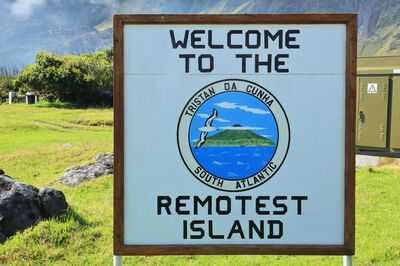
A British mum who lives on the world's most remote inhabited island has offered a glimpse into her daily life, including what she does to combat her hunger. Kelly Green, who is originally from East Sussex, now documents her life on Tristan da Cunha on social media.
The 35-year old moved to the volcanic island in the South Atlantic more than 10 years ago and despite its lack of amenities, she hasn't looked back. The island, which is only accessible via a boat from Cape Town, South Africa, boasts just one shop - which closes during winter - making food supply something she has to take into her own hands quite literally.
Kelly moved to the island after visiting her parents there, who had made the move themselves due to her dad's job.
- American buys first ever Tesco meal deal and everyone has same reaction
- Longest road in the world road spans 19,000 miles across 14 countries
And it was there she soon met her now husband, Shane, with the pair going on to have two children who attend the island's only school.
"So living on the world's most uninhabited island, means that if you woke up one morning and fancied fish for supper, you can't just go to the local shop and buy it," Kelly began in a TikTok video.
Her clip continued, showing the family casting their reels into the Atlantic. "You have to physically go out and catch it," she said. "They do sell chicken and pork - we do have chickens on Tristan, but they are normally reared for their eggs."
Kelly went on to explain that the island's shop's closure coincides with the government shutting down too. "It closes on December 19th and will reopen on January 12th," she said.
"So you need to make sure you have everything like your toilet roll," Kelly added. "But if you get hungry and don't have any fish in your freezer, you spend the day out and catch it, dig up some fresh potatoes... it's a fantastic day out."
The family's diet also includes beef, mutton, lobster along with fresh vegetables and fruit. Meanwhile, two ships visit the island on nine occasions every year in order to export produce and bring fuel to residents.
Kelly also said of island life: "On Tristan da Cunha, sheep dogs are more than pets they’re part of how the island works. Since residents don’t breed dogs locally, many companion breeds and working dogs are carefully imported from Cape Town with health certificates and licences before they arrive.
"These hardy animals now help herd sheep across the rugged landscape, round up calves and livestock, and give loyal company to families in the Settlement. From the Potato Patches to the shoreline, dogs play a practical and lasting role in daily life out here in the South Atlantic."
Kelly runs the island's tourism office, which according to its website, states that Tristan was ignored by early explorers as a possible home due to its rugged mountain landscape, absence of natural harbour, lack of land for agriculture, and a harsh climate with heavy rain and high winds at all seasons.
"It took an extra-ordinary breed of people, ready to live at the margins of life, to settle and eventually thrive in the world's most isolated community," it said.
The site continues: "Tristan da Cunha is a British Overseas Territory : one of the remaining former colonies which have not yet asked for independence, and wish specifically to retain their link with the United Kingdom. For Tristan, the link dates back to 1816, when the island was garrisoned by Britain."
As of October 2018, the island has 250 permanent inhabitants, who all carry British Overseas Territories citizenship.
-
Slight relief for Delhi as Air Quality improves to ‘Very Poor’
-
SC missed federalism test in Article 370 case: Salman Khurshid

-
Catholic Bishops question moral foundations of US foreign policy

-
'Can't Do It Anymore': Saina Nehwal Calls Time On Competitive Badminton Career

-
NABARD Development Assistant Recruitment 2026: Apply For 162 Posts At nabard.org, Know How To Apply