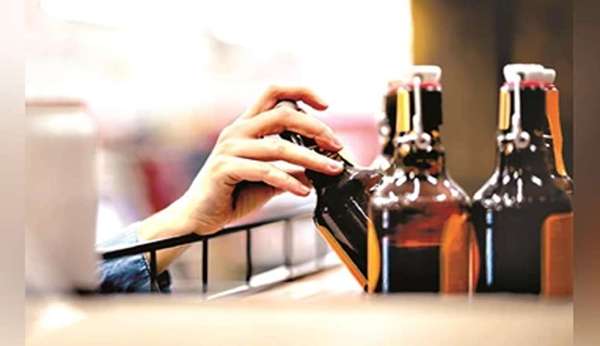
Supreme Court : The Supreme Court of India on Monday temporarily stayed an order passed by the Rajasthan High Court that had directed the state government to remove or relocate all liquor shops located within 500 meters of national and state highways. The High Court’s directive was issued in response to a noticeable increase in fatal road accidents, many of which were allegedly linked to drunk driving. The apex court’s intervention has provided interim relief to liquor vendors and the state administration while also keeping the broader issue of road safety open for future consideration.

Background of the Supreme Court Stay
A bench of Justices Vikram Nath and Sandeep Mehta passed the interim order while hearing multiple petitions filed by liquor shop owners and the Rajasthan government. These petitions challenged the Rajasthan High Court’s ruling, arguing that the blanket direction to remove or relocate liquor outlets would cause significant economic disruption and administrative difficulties. After briefly hearing the parties, the Supreme Court issued notice and stayed the operation and effect of the High Court’s order until further hearing.
At the same time, the bench acknowledged that the High Court’s concerns were not without merit. The judges observed that road safety is a serious issue and that the state government may take these concerns into account while framing its liquor policy in the future. This observation indicates that while immediate enforcement has been paused, the underlying problem has not been dismissed.
Origin of the High Court Proceedings
The Rajasthan High Court order under challenge originated from a petition filed in 2023 by two residents of Sujangarh town in Churu district. The petitioners raised objections to the presence of liquor shops in close proximity to highways, arguing that such locations encouraged drunk driving and posed a threat to public safety. What began as a local grievance gradually expanded into a broader examination of road safety across the state.
During the course of the hearings, the High Court undertook a detailed review of accident data and enforcement records. It referred to statistics indicating a sharp rise in drunk driving cases in Rajasthan during 2025. The court also took note of several recent road accidents in which dozens of people lost their lives within a short span of time, underscoring the urgency of the issue.
High Court’s Reasoning on Highway Safety
While assessing the matter, the High Court rejected the state government’s justification for allowing liquor shops near highways. The state had relied on earlier Supreme Court directions that provided limited discretion in treating certain highway stretches passing through municipal areas differently. The High Court held that this discretion had been misused and that categorising highways as municipal areas defeated the very objective of ensuring road safety.
Based on this reasoning, the High Court issued a firm direction that all liquor shops situated within 500 metres of national and state highways must be removed or relocated within a period of two months. This sweeping order had wide-ranging implications, affecting a large number of vendors across Rajasthan and prompting immediate legal challenges.
Petitions by Vendors and the State
Following the High Court’s directive, several liquor vendors approached the Supreme Court, arguing that the order would severely impact their livelihoods. They contended that many shops were operating with valid licences granted under existing policies and that sudden relocation would result in financial losses. The Rajasthan government also filed a petition, expressing concerns about revenue implications and practical difficulties in implementing the order within the stipulated timeframe.
The Supreme Court’s decision to stay the High Court order has brought temporary relief to these stakeholders. However, the matter remains pending, and a final decision will depend on a more detailed examination of legal principles, public safety considerations, and policy frameworks.
Other Matters Considered by the Supreme Court
In addition to the liquor shop case, the Supreme Court dealt with other significant issues on the same day. In one matter, the court granted the central government four weeks’ time to trace a Russian woman who had allegedly fled to Moscow with her child amid a contentious custody dispute with her estranged Indian husband. The government informed the court that Interpol notices had been issued to locate and bring both the mother and the child back to India.
Another important issue related to the welfare of homeless individuals suffering from mental illnesses. The Supreme Court described such persons as extremely destitute and among the most vulnerable sections of society. The bench directed the central government to frame standard operating procedures for their rehabilitation. The matter has been scheduled for further hearing, with the government seeking time to submit its response.
Balancing Public Safety and Policy Concerns
The Supreme Court’s stay on the Rajasthan High Court order highlights the delicate balance between enforcing strict public safety measures and ensuring fair policy implementation. While the immediate relocation of liquor shops has been put on hold, the apex court’s observations make it clear that road safety remains a priority. The outcome of this case is likely to influence how states across the country design and implement policies related to liquor sales near highways.
As the legal proceedings continue, the final verdict may set an important precedent on the extent to which courts can intervene in policy matters, especially when public safety concerns intersect with economic and administrative considerations.
-
AI democratizing intelligence in food delivery business: Swiggy executive
-
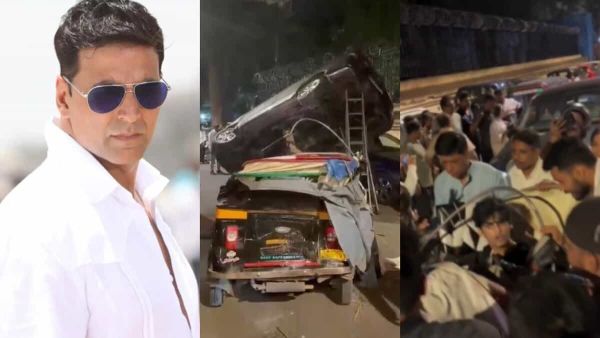
Video: Major road accident involving Akshay Kumar’s convoy
-
WPL 2026 After RCB Vs GG: Updated Points Table, Orange & Purple Cap
-
ABP Live Pet First | 7 Popular Grooming Mistakes That Can Damage Your Pet’s Skin

-
Akshay Kumar's security car meets with accident, 1 hurt