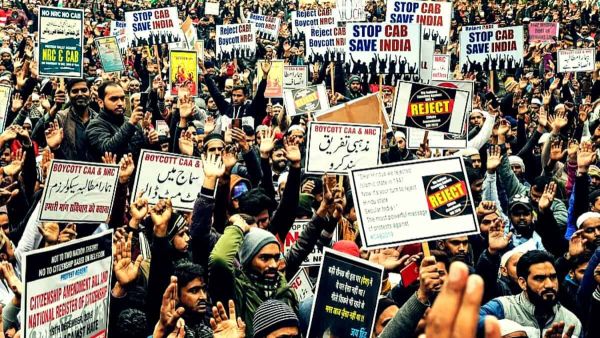
In contemporary India, terms such as “deshdrohi,” “urban Naxal,” “sickular” and “presstitutes” have increasingly been deployed by right-wing ideologues, not as analytical descriptors but as instruments of political delegitimisation. Their elasticity and, considering some terms are newly coined, lack of accepted definition, allow dissent to be falsely projected as disloyalty.
This rhetorical move is strikingly inconsistent with an earlier, widely reported assessment that former armed Naxalites were “not anti-nationals” but citizens alienated by governance failures: an acknowledgement that opposition to a government does not equate to opposition to the nation.
Dissent is a nation’s ‘quality-control’ mechanism
Across constitutional and quasi-constitutional systems, valuable dissenting opinions are increasingly stigmatised through elastic political epithets like “deshdrohi, “urban Naxal,” etc. When we examine the systemic misuse of such labels in India, South Asia, Saudi Arabia and China, we see that they are all aimed at a common result: removing constitutional dissenters from the moral and legal community without formally suspending constitutional guarantees.

Realising dissenters are the nation’s “quality-control” mechanisms rather than threats to national security, we see that the true danger to state integrity lies not in protest but in the executive equating the party’s, leaders’ or regime’s interest with national interest. Dissent, it fails to understand, is not a democratic pathology but a patriotic asset indispensable to constitutional endurance.
A linguistic shift has occurred in contemporary political discourse. The vocabulary of national security, once reserved for armed insurrection or external aggression, is now routinely deployed against civil society, student movements, minorities, journalists and constitutional protestors. Terms such as “deshdrohi” (traitor) in India, “subversive” or “splittist” in China and “discord sower” or “breaker of allegiance” in Saudi Arabia are not neutral descriptors but are devised as instruments of stigmatising and exclusion.
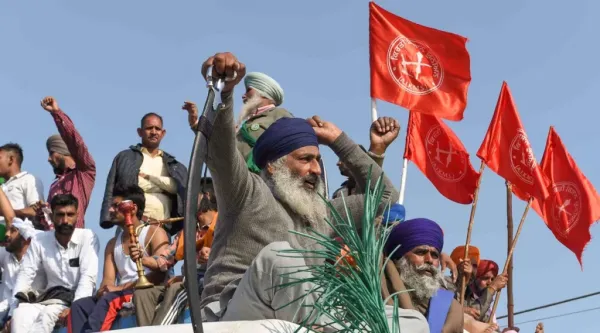
Disloyalty and sabotage
These labels serve a precise Machiavellian purpose. The dissenter occupying the realm of constitutional protection is relocated to a category of existential threat. Once that move is accomplished, ordinary constitutional safeguards of due process, free speech, etc, can be denied as naïve indulgence or even dangerous.
Exercise of rights projected as obstacles, protest labelled sabotage, disagreement becomes disloyalty.
This produces a constitutional paradox: when the Constitution guarantees freedom of speech, association, conscience and protest, then the citizen who invokes those guarantees is not undermining the state but activating its founding logic. The dissenter, not the conformist, becomes the most literal constitutionalist.
The stigmatisation of dissent, therefore, marks a shift away from constitutional governance toward pretended nationalism, where loyalty is measured not by fidelity to foundational principles but by alignment with incumbent power.
Against this backdrop, protests against recent legislative and policy trajectories, most notably the Citizenship Amendment Act (CAA)-National Register of Citizens (NRC) exercise, the recalibration of citizenship definitions and judicial trends affecting religious conversion and inter-faith property transactions, should have been understood as expressions of constitutional patriotism. These movements invoke Articles 14, 19, 21 and 25, not to weaken the republic, but to preserve moral and legal coherence.
Organisations and communities often resent their “quality-control” functions, but these are indispensable to institutional health. In the same way, students from institutions such as Jawaharlal Nehru University (JNU), Delhi University (DU), Jamia Millia, alongside Muslims, Dalits, Scheduled Castes(SC) and Scheduled Tribes (ST) communities and civil-society activists, performed a very important correctional role.
Their dissent signalled an abiding investment in India’s constitutional future and its progress as a nation to which they know they belong, and which they consider their home. In periods of democratic stress, whatever judges and governments may claim, it is precisely these unpopular voices, scrutinising power, resisting homogenisation and insisting on equality before law, that embody the deepest, most consequential form of patriotism.
Constitutional dissent is patriotism
Some judgments, in fact, speak for the proposition that constitutional dissent is patriotism, and that anxieties about conversion/inter-faith association must be handled through rights-based legality, not stigmatising labels.
In Amit Sahni v Commissioner of Police (Shaheen Bagh case), the Supreme Court observed “Democracy and dissent go hand in hand, but… demonstrations… have to be in designated places… disapproving of [a] blockage of a public way…” The apex court, thus, clearly recognised dissent as democratic, while insisting on regulation in time, place and manner. That means dissent is not the same as disloyalty.
In Kedar Nath Singh v State of Bihar, the Supreme Court observed that sedition is attracted only where words have “a tendency to incite violence” or public disorder, not mere criticism. Yet, the “deshdrohi” rhetoric often misdescribes criticism of government as “anti-national” activity.
In Shreya Singhal v Union of India, 2015, the Supreme Court observed that speech can have elements of “discussion, advocacy and incitement,” and that the State’s action is justified only at incitement. Thus, we see that branding a protestor as an “urban Naxal” for being critical of the State and uncomfortable under what the protestor’s speech considers a situation inconsistent with his rights, or violating a constitutional duty of the State, is constitutionally and legally baseless.
In S Rangarajan v P Jagjivan Ram, 1989, the Supreme Court asked, “What good is… freedom of expression if the State does not take care to protect it?” The State’s duty is to secure space for lawful expression, not morally police it by delegitimising labels which have no nexus with truth or facts.
In Shafin Jahan v Asokan KM, the Hadiya case, the Supreme Court cautioned, “Neither the State nor the law can dictate a choice of partners… choices of faith… are within… autonomy.” Given the State’s unfounded anxiety in respect of conversion of religion, property sale-purchase between adherents of differing religions and/or inter-faith marriages, the court speaks in support of adult autonomy, not deferring to baseless or motivated majoritarian suspicion.
In Lata Singh v State of UP, on inter-faith/inter-caste protection, the Supreme Court observed, “This is a free and democratic country… once a person becomes a major, he or she can marry whosoever…,” showing that the court frames inter-faith/inter-caste marital union not as “anti-national,” but as liberty the State must, and is constitutionally bound to, protect against majoritarian onslaught.
Together, these precedents establish that dissent is a democratic constant, criticism is not sedition in the absence of any incitement, the State must protect lawful expression and adult choices in faith and inter-faith association are protected autonomy interests. This can only mean that today’s protestors are the republic’s quality-control patriots, not its enemies, turning the false-label-appliers’ illogical claim on its head.
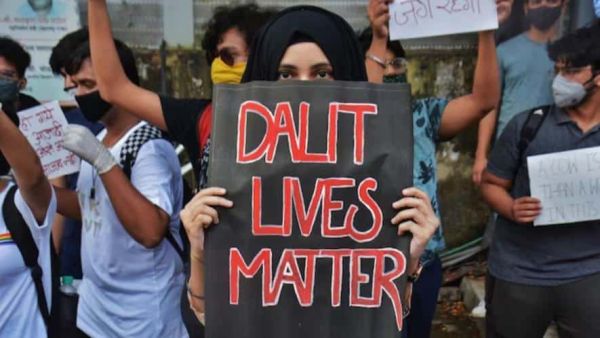
Introspection and power
These constitutional benchmarks invite an unavoidable question for those occupying positions in the executive and legislature: whether the routine branding of protestors as “deshdrohi”, “urban Naxal” or “anti-national” reflects fidelity to the Constitution they have sworn to uphold, or is an instance of a fraud sought to be played on the republic by those who came to political and constitutional office swearing their oaths of allegiance to it, but now adopt stands that seek to destroy its very spirit and ethos, scuttle it in favour of a majoritarian regime under a different Constitution, whether the difference be textual or, retaining the text as form for merely plausible deniability, ensure misinterpretation altering the substance altogether.
When courts consistently affirm that dissent, criticism of government policy and autonomous choices in faith and association lie at the core of constitutional liberty, it becomes incumbent on holders of public power to ask themselves whether the stigma is being attached to the wrong actors. Is it the citizen invoking constitutional guarantees who undermines the nation, or is it the majoritarian authority that treats constitutional disagreement as subversion? To quote one anchor adrift in the majoritarian tide, “the nation wants to know.”
A moment of institutional introspection establishes the need for switching labels. Those who insist on uniformity of thought, suppress protest through rhetoric or coercion, and misbrand party interest as national interest are, in fact, those weakening the republic’s constitutional foundations, not those who dissent. Protestors, whether students, minorities, Dalits, SC/ST communities or civil-rights advocates, perform a function analogous to quality control in any serious organisation, identifying defects that require corrective steps before organisational collapse, reputational loss, or irreversible harm sets in.
Early warning systems
In democratic terms, they are the republic’s early-warning systems. History shows that nations rarely fail because of excessive scrutiny. They begin to falter when scrutiny is silenced. In that sense, constitutional protest is not a problem to be managed, but a patriotic asset to be preserved and even encouraged, especially in periods of political turbulence.
Across disciplines, from systems engineering to organisational governance, robust institutions depend on early detection of failure. In complex systems, breakdown rarely occurs suddenly and is preceded by warning signals that are inconvenient, disruptive, or unpopular. The dissenting voice forewarns us.
In absolute monarchies, the charge of “breaking allegiance” performs a function structurally identical to “anti-national” rhetoric in electoral democracies. Saudi Arabia’s treatment of peaceful reformists illustrates the cost of suppressing internal quality control. Human rights advocates and jurists campaigned for judicial codification, an end to discretionary sentencing, gender inclusion and protection of minority sects.
Women’s rights activists argued that economic modernisation and global credibility required recognition of women as full citizens. These arguments were framed not as rebellion but as fidelity to justice, Islamic ethics and national interest. Many of the reforms for which activists were imprisoned were later actually adopted by the state itself, certifying their value to the nation, but without the release of protestors and without acknowledgement.
This sequence exposes the core fallacy of repression: the problem was never the substance of the critique, but the fact that it originated outside of executive control. By punishing those who correctly diagnosed institutional weaknesses, the state chose symbolic dominance (oppression) over institutional learning, incurring reputational fragility and internal brittleness in the process.
Speech may be criminalised only when there is a clear, direct and imminent connection between expression and violence or disorder. Abstract apprehension, ideological discomfort or political inconvenience cannot substitute for this requirement.
Constitutional credibility
Discussion and advocacy, even of unpopular or unsettling ideas, are protected, and only incitement to imminent violence or harm justifies restriction. These doctrines exist precisely to prevent executive convenience from masquerading as national security. When states dilute these standards, they do not strengthen sovereignty, they weaken their own constitutional credibility.
Constitutional democracies embed this logic structurally. Courts, free media, elections, audits and protests operate as feedback mechanisms. Dissent performs a diagnostic function. It identifies stress fractures in governance long before collapse becomes unavoidable. The suppression of dissent does not eliminate instability; it merely postpones its recognition until the cost becomes catastrophic.
Such dissent is not revolutionary, it is restorative, seeking to align State behaviour with the State’s own declared norms. Challenging arbitrary power is not hostility to the State but opposition to authoritarian methods. That distinction lies at the heart of constitutional loyalty.
Indian constitutional jurisprudence has long insisted that democracy presumes disagreement. Courts have repeatedly distinguished advocacy from incitement, criticism from sedition and dissent from disorder. The threshold for criminalisation is intentionally high because constitutional democracy is incompatible with enforced homogeneity, whether in religion, culture, food or dress.
To label constitutional protest as treasonous is, therefore, not merely incorrect, it is jurisprudential ignorance. It treats the Constitution as a privilege conferred by the State rather than a restraint imposed upon it. When students, minorities, Dalits, SC/ST communities and civil-society actors invoke Articles 14, 19, 21, or 25, they do not weaken the republic, they insist that it live up to its promises.
Political sociology often speaks of the “loyal opposition.” In any organisation, those who identify defects are not saboteurs, they are indispensable. Without internal critics, unchecked error multiplies from institutional blind spots.
Subversion labels produce harm, normalise unconstitutional laws and diluted standards, insulate executive power from corrective feedback. Socially, it alienates communities whose loyalty is questioned precisely because they care enough to object. Worse, future generations “learn” that fidelity to power matters more than fidelity to principle. A polity educated in such a lesson may retain the shell of constitutionalism, losing its substance.
Minorities, marginalised communities, students, journalists and civil society actors function as non-State auditors of the social contract. Their grievances are not noise, they are data. Suppressing dissent is equivalent to deleting error logs from a complex system. The appearance of stability is purchased at the cost of situational awareness. Dissent is not a law-and-order problem, it is a governance resource.
To save the republic, labels must be switched. Protestors are not enemies of the nation but its quality-control mechanism, its early-warning system and its most patriotic citizens, choosing constitutional wisdom over pretended nationalism. The claim that protest “creates disorder” reverses causality. Disorder arises from suppressing unresolved injustice, systemic exclusion and arbitrariness in justice, not from the articulation of these.
Silencing the alarm does not extinguish the fire.
Jai Hind.
-
Start investing in this scheme for your daughter; it offers over 8% interest.

-
How much discount can you get if you buy an AC in February? Find out how much you can save!

-
The amount deducted for the Vande Bharat Sleeper ticket cancellation is enough to buy a Rajdhani ticket; see the calculation.

-
Career Tips: How to get a job at Google? Here's the step-by-step process..

-
Get instant cash in 30 minutes for your old gold: India's first Gold ATM installed in this city