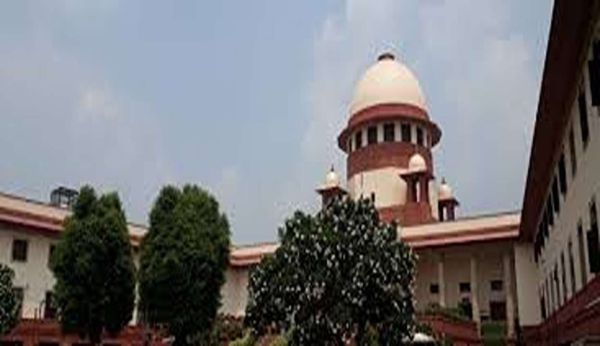
Federalism, Diversity, and Democratic Dialogue: Senior Congress leader Salman Khurshid recently offered a thoughtful critique of the Supreme Court’s handling of the Article 370 case, suggesting that a rare and significant opportunity to deeply examine Indian federalism was left unexplored. His remarks were made during the launch of two books by journalist and author Bashir Assad, which focus on Kashmir’s political and social realities. Khurshid’s comments have reignited a broader debate on constitutional values, the balance of power between the Centre and states, and the importance of listening to voices from regions often spoken about but rarely spoken with.
Context of the Supreme Court Verdict
The discussion emerged in the aftermath of the Supreme Court’s December 11, 2023 judgment, in which the court upheld the revocation of Article 370. This provision had earlier granted special status to the erstwhile state of Jammu and Kashmir. While endorsing the government’s move, the court also directed that full statehood be restored at the earliest possible time. According to Khurshid, this assurance from the executive, conveyed through the Attorney General, led the court to refrain from a deeper constitutional examination of federalism.
Federalism as a Constitutional Principle
Khurshid emphasized that although the Indian Constitution strongly articulates values such as fraternity, equality, and liberty, federalism has not always been given the same level of judicial attention. In his view, the Article 370 case represented a rare test scenario where federalism could have been examined in its most intense and complex form. He argued that federalism is not merely a technical arrangement of governance but a living principle that reflects the idea of unity in diversity, which has long defined India’s national identity.
Unity in Diversity and National Strength
Expanding on this idea, Khurshid described federalism in simple terms as unity in diversity. He noted that India’s strength lies in its multiplicity of languages, cultures, traditions, and ways of life, all bound together by shared constitutional values. While acknowledging that some believe uniformity is essential for national strength, he maintained that such perspectives should be engaged with rather than dismissed. Respectful disagreement, he said, is central to a healthy democracy.
The Role of Diverse Opinions in Democracy
Khurshid further explained that accepting views different from one’s own is fundamental to being true to democratic ideals. According to him, diversity of thought and the free exchange of ideas are not weaknesses but essential features of India’s democratic ethos. Engaging with contrasting opinions respectfully allows the nation to evolve while staying rooted in its constitutional framework.
Literature as a Medium for Unheard Voices
The book launch itself became a platform for reflecting on how narratives about Kashmir are constructed and consumed. The two books, Kashmir: The Unfiltered Truth and House Without Witness, were praised for presenting perspectives that are often marginalized in mainstream discourse. Literature, in this sense, was highlighted as a powerful medium to bring forward lived experiences that statistics and official statements often fail to capture.
Kashmir Beyond Territory and Politics
Rajya Sabha MP Manoj Sinha, who also spoke at the event, echoed similar sentiments. He pointed out that discussions about Kashmir frequently romanticize the land while overlooking the people who inhabit it. According to him, those in positions of power have, over time, normalized speaking at Kashmiris rather than engaging in genuine dialogue with them.
Pain, Agony, and Hope in the Kashmiri Experience
Sinha observed that many books and analyses on Kashmir reveal stories of pain, suffering, and prolonged uncertainty. Yet, alongside these hardships exists a persistent sense of hope. He suggested that while acknowledging agony may be uncomfortable, society must learn to be comfortable with hope. Recognizing this duality is essential for any meaningful engagement with the region and its people.
Broader Implications for Indian Democracy
Together, the remarks by Khurshid and Sinha underline a larger concern about how constitutional principles, democratic dialogue, and regional voices are addressed in contemporary India. The Article 370 verdict, beyond its legal implications, has become a symbol of unresolved questions around federal balance, democratic consultation, and the importance of inclusive narratives. These discussions suggest that the future strength of Indian democracy will depend not on enforced uniformity, but on its ability to respect diversity, uphold federal values, and listen to those who have long felt unheard.
-
Deadly crash mars Spain’s flagship high-speed rail service

-
Printing presses of Punjab Kesari newspaper shall continue to function: SC
-
UP: Family of 5 found dead with gunshot wounds to head in Saharanpur

-
Shares in Asia track European markets lower

-
Fastest Pakistani drama to cross 1 Billion views on YouTube 2026