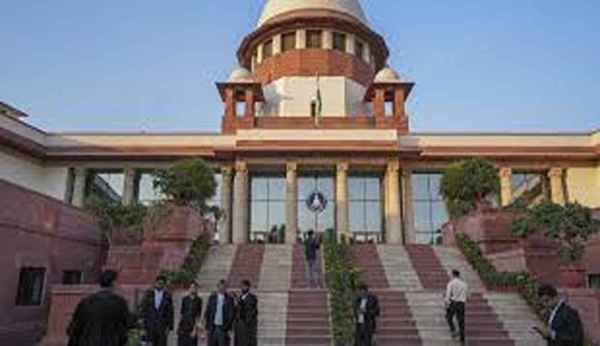
Supreme Court: The Supreme Court of India has provided significant interim relief to the Punjab Kesari newspaper group by directing the Punjab government to refrain from taking any coercive action against its publication. The apex court also ordered that the newspaper’s printing press must be allowed to function without interruption, reinforcing the principle that a free press is essential to a democratic system. This development comes at a crucial time when concerns over media independence and administrative overreach are increasingly being debated across the country.
Background of the Case
The matter reached the Supreme Court while the Punjab and Haryana High Court is still in the process of delivering its final verdict on related petitions. An urgent oral mention was made before the apex court on behalf of the Punjab Kesari management, following which the court agreed to hear the issue. The Bench, led by Chief Justice of India Surya Kant, acknowledged the urgency and passed interim directions aimed at preventing immediate harm to the newspaper’s operations.
Allegations by the Newspaper Group
Senior advocate Mukul Rohatgi, representing the Punjab Kesari group, informed the court that a series of coercive actions were initiated against the media house shortly after it published reports that were critical of the Punjab state government. According to the submissions, these actions included the disconnection of electricity supply, issuance of notices by the Punjab Pollution Control Board, closure of the printing press, sealing of hotels run by the group, and registration of multiple FIRs.
The counsel emphasized that all these measures were taken within a very short span of time, creating an atmosphere of pressure and intimidation. He further stated that the printing press, which has been functioning for nearly two decades, was ordered to shut down immediately on allegations of pollution violations, without following due process.
Supreme Court’s Observations
While considering the submissions, the Chief Justice-led Bench made a strong observation that a newspaper cannot be stopped from functioning. The court directed that the printing press of Punjab Kesari must be allowed to operate, ensuring uninterrupted publication. At the same time, the Bench clarified that its order was limited to the newspaper’s printing operations and did not extend immediate relief to other commercial establishments run by the group, such as hotels.
The court made it clear that the interim protection was being granted without expressing any opinion on the merits of the case. It stated that the arrangement would continue until one week after the Punjab and Haryana High Court pronounces its verdict. This balanced approach was aimed at protecting press freedom while allowing the legal process to continue independently.
Stand of the Punjab Government
Appearing for the Punjab government, Additional Advocate General Shadan Farasat argued that all actions taken against the Punjab Kesari group were strictly in accordance with the law. He informed the court that the Punjab and Haryana High Court had already reserved its judgment on similar petitions filed by the media group. The state maintained that only one unit had been ordered to be closed and not the entire newspaper operation.
In response, the Bench highlighted the importance of distinguishing between a newspaper and other commercial ventures. It observed that while regulatory action against hotels or other businesses could be understandable under certain circumstances, the publication of a newspaper should not be halted.
Proceedings Before the High Court
Earlier, the Punjab and Haryana High Court had reserved its decision on the petitions challenging the closure of the printing press and a hotel run by the Punjab Kesari group. However, it had declined to grant interim relief at that stage. This refusal prompted the newspaper management to approach the Supreme Court for immediate protection, citing the urgent need to continue publication.
Concerns Over Due Process
One of the key issues raised by the Punjab Kesari group was the alleged lack of due process in the actions taken against it. The management claimed that closure orders were passed on the very day of inspection, without waiting for test reports or providing an opportunity of hearing. Such actions, according to the group, raise serious questions about administrative fairness and transparency.
Significance for Media Freedom
The interim order of the Supreme Court is being viewed as an important reaffirmation of constitutional values, particularly the freedom of speech and expression. By ensuring that the printing press continues to function, the court has sent a message that regulatory powers should not be used in a manner that undermines independent journalism. The final outcome of the case will be closely watched, as it may have wider implications for media organizations and their relationship with state authorities.
-
A Guide to Recognising Symptoms of Ovulation After an HCG Injection

-
Caution: Dense fog can deceive your eyes; these 5 "golden rules" of driving will help you avoid accidents..

-
Global industry sees India as reliable supply-chain partner: Ashwini Vaishnaw in Davos

-
Raigad Pen Growth Centre near New Mumbai Airport will host a number of GCCs, FinTech: Devendra Fadnavis in Davos

-
Some asteroids become more lethal during Earth entry, study finds