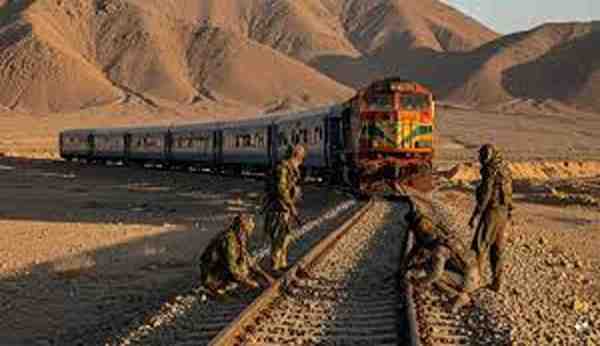
Railway Infrastructure: A major railway line near Dera Murad Jamali in Pakistan’s Balochistan province was damaged by an explosion, temporarily disrupting train connectivity between Quetta and other parts of the country. The incident once again highlighted the persistent security challenges faced by critical transport infrastructure in the region, especially railway networks that play a vital role in economic movement and civilian travel.
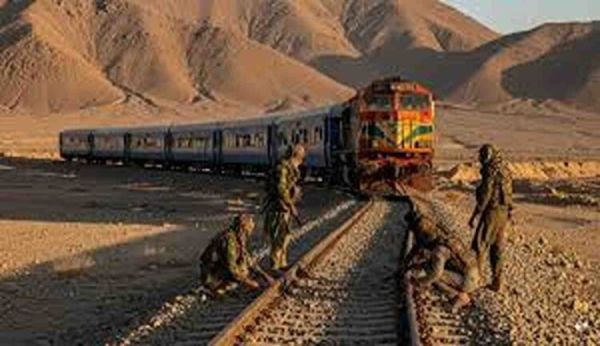
Incident Overview Near Dera Murad Jamali
According to local law enforcement agencies, unidentified attackers planted an explosive device along the main railway track in the Dera Murad Jamali area. The blast damaged nearly two feet of the track, forcing railway authorities to suspend train services for several hours. The incident occurred when no passenger train was passing through the affected section, which helped avoid casualties.
Police officials stated that the explosive was detonated using remote control technology and that approximately three kilograms of explosive material were used. Soon after the explosion, security forces reached the site, secured the area, and launched an investigation to trace those responsible.
Immediate Response by Security and Railway Authorities
Following the blast, railway engineers and security personnel coordinated efforts to assess the damage and begin repair work. The affected section of the track was cordoned off to prevent further risks, while investigators collected evidence from the site. Authorities emphasized that restoring rail connectivity was a priority due to the importance of the route for passenger and freight movement across the province.
Railway services were resumed after temporary repairs, but officials noted that repeated attacks place additional strain on maintenance resources and operational planning. Investigations were formally launched, and authorities reiterated their commitment to holding the perpetrators accountable.
Pattern of Attacks on Railway Tracks
This was not an isolated incident. Earlier in the same month, another explosion targeted a railway track near the national highway in the Notal area of Nasirabad district. In that case, the blast partially damaged the track, again occurring when no train was present. Police sources confirmed that there was no loss of life or property, but train movement was temporarily suspended until repairs were completed.
Security forces conducted search operations in the surrounding areas after that incident, indicating a broader concern about organized sabotage efforts aimed at disrupting transportation networks.
Previous Explosions and Prevented Disasters
In December of the previous year, a similar attack took place near Dera Murad Jamali when a bomb planted on the railway track exploded. On the same occasion, police successfully defused another improvised explosive device placed nearby. Reports indicated that the explosive detonated shortly before the Jaffar Express, traveling from Peshawar to Quetta, was scheduled to pass through the area, narrowly preventing a potential disaster.
These repeated incidents suggest careful planning by attackers and underline vulnerabilities along railway routes that pass through remote or lightly monitored regions.
Armed Attack on Passenger Train
Beyond track sabotage, passenger trains themselves have also been targeted. In November, the Jaffar Express came under armed attack in the Bolan Pass area of Balochistan. The train, en route from Quetta to Peshawar, was fired upon when it reached near Aab-i-Gum.
Railway officials confirmed that security personnel onboard, including railway police, responded to the attack. After a brief exchange of gunfire, the attackers fled the area. Fortunately, no injuries or fatalities were reported, but the incident raised serious concerns about passenger safety on long-distance rail routes.
Broader Implications for Transport Security
The repeated targeting of railway infrastructure in Balochistan has broader implications for national security, economic stability, and public confidence in transportation systems. Railways serve as a backbone for intercity travel and goods movement, especially in regions where alternative transport options are limited.
Security analysts note that sustained attacks on infrastructure can disrupt daily life, increase operational costs, and discourage investment. Strengthening surveillance, improving intelligence coordination, and increasing patrols along sensitive railway sections are often cited as necessary steps to mitigate such risks.
Ongoing Investigations and Future Measures
Authorities have stated that all recent incidents are under active investigation and that enhanced security measures are being considered to protect railway assets. This may include the use of advanced monitoring systems, closer coordination between railway authorities and law enforcement agencies, and community engagement to improve early warning mechanisms.
While train services continue to operate, the recurring nature of these attacks underscores the need for long-term solutions to ensure safe and reliable rail transport across Balochistan and beyond.
-
Bad news for Nita Ambani’s MI, G Kamalini ruled out of WPL 2026, THIS player named as replacement, name is…

-
Telangana Chief Electoral Officer welcomes Mexican delegation at IICDEM 2026
-
EU, India on cusp of ‘historic’ trade agreement: Ursula von der Leyen

-
Lamborghini sold 111 cars in India in 2025, SUVs in demand

-
Gold breaches Rs 1.5 lakh/10g, silver jumps to record Rs 3.23 lakh/kg