Apurva Asrani recalls heartbreaking childhood apology and real-life pact with his late father: 'Let's be friends'
ETimes | January 20, 2026 8:39 PM CST
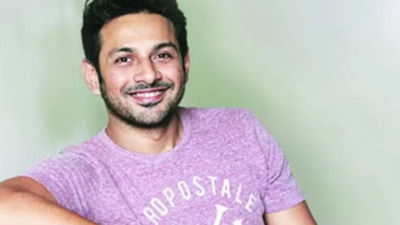
Producer, writer and editor Apurva Asrani has revealed that his upcoming short film ‘The Pact’ draws deeply from his relationship with his late father, turning personal grief into poignant storytelling. It has been five years since Asrani’s last released work, ‘Criminal Justice: Behind Closed Doors’ (2020). During this period, he wrote multiple series that are yet to be released. This creative pause also coincided with a life-altering moment when he lost his father in 2023, an experience that became the emotional foundation of ‘The Pact’.
Apurv Asrani recalls a complicated bond with his late father
Reflecting on his father, Asrani shared with Mid-Day, “I had known my father as a strong, strict, larger-than-life personality. Vulnerability wasn’t part of his language.” He spoke about witnessing his father’s growing dependence and how it affected him emotionally. “I realised he believed his vulnerability was a burden on the family. I loved him deeply, but I was also afraid of him. That generation believed discipline and distance mattered,” he said, admitting they never fully found a shared emotional language.
Led by Parambrata Chattopadhyay, ‘The Pact’ follows a man revisiting his late father’s home and confronting unresolved memories. The film’s title comes from a real incident in Asrani’s life. “Once, my father had hit me. Later, he felt immense guilt. He took me out for ice cream, apologised, and said, ‘Let’s not be trapped by father-son roles. Let’s be friends,’” Asrani recalled, calling it a rare glimpse of his father’s vulnerability.
Why did Asrani choose to produce the film?
With Lakshmi R Iyer directing the short, Asrani stepped in as producer to safeguard its emotional core. “When a story is this personal, a lot can be lost in translation. Producing allowed me to protect it,” he explained.
Asrani described ‘The Pact’ as a reflective, understated film, far removed from mainstream spectacle. Pointing to his own journey, which includes films like ‘Satya’ (1998), ‘Shahid’ (2013) and ‘Aligarh’ (2016), he lamented the shrinking space for grounded storytelling. “Stories about real people and universal struggles are disappearing,” he said, adding that when commerce overtakes storytelling, creators are often forced to tell their stories independently.
Apurv Asrani recalls a complicated bond with his late father
Reflecting on his father, Asrani shared with Mid-Day, “I had known my father as a strong, strict, larger-than-life personality. Vulnerability wasn’t part of his language.” He spoke about witnessing his father’s growing dependence and how it affected him emotionally. “I realised he believed his vulnerability was a burden on the family. I loved him deeply, but I was also afraid of him. That generation believed discipline and distance mattered,” he said, admitting they never fully found a shared emotional language.
Led by Parambrata Chattopadhyay, ‘The Pact’ follows a man revisiting his late father’s home and confronting unresolved memories. The film’s title comes from a real incident in Asrani’s life. “Once, my father had hit me. Later, he felt immense guilt. He took me out for ice cream, apologised, and said, ‘Let’s not be trapped by father-son roles. Let’s be friends,’” Asrani recalled, calling it a rare glimpse of his father’s vulnerability.
Why did Asrani choose to produce the film?
With Lakshmi R Iyer directing the short, Asrani stepped in as producer to safeguard its emotional core. “When a story is this personal, a lot can be lost in translation. Producing allowed me to protect it,” he explained.
Asrani described ‘The Pact’ as a reflective, understated film, far removed from mainstream spectacle. Pointing to his own journey, which includes films like ‘Satya’ (1998), ‘Shahid’ (2013) and ‘Aligarh’ (2016), he lamented the shrinking space for grounded storytelling. “Stories about real people and universal struggles are disappearing,” he said, adding that when commerce overtakes storytelling, creators are often forced to tell their stories independently.
READ NEXT
-
Campaigners given fresh hope as they call for child abusers to be treated like sex fiends

-
Sabarimala gold loss: Accused 'jointly looted' Lord Ayyappa's property, says Kerala HC

-
Liam Rosenior makes tough Cole Palmer decision as Chelsea wonderkids involved vs Pafos

-
Prince Harry and Meghan Markle should learn one lesson from Diana before UK return

-
Infrastructure boom and refurbishment drive tools demand in UAE and GCC