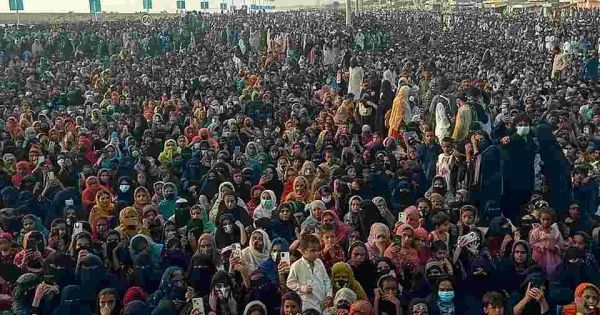
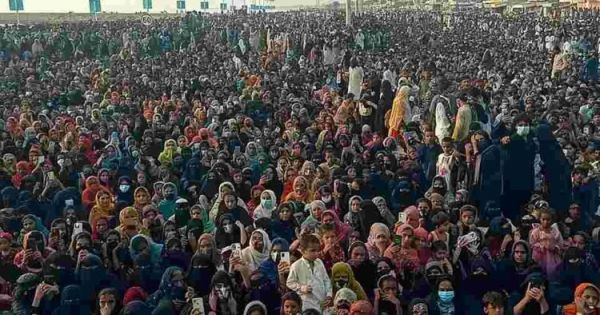
Balochistan: A serious debate has re-emerged in Pakistan after the Balochistan provincial government officially claimed that the long-standing issue of missing persons in the region has been resolved permanently. This statement has triggered strong reactions from human rights groups, families of the disappeared, and civil society activists who argue that the situation on the ground tells a very different story. According to them, enforced disappearances in Balochistan remain an ongoing humanitarian crisis rather than a closed chapter.
Official Claims Versus Independent Findings
The Human Rights Council of Balochistan rejected the provincial government’s declaration, calling it misleading and disconnected from reality. The organization stated that announcing a permanent resolution while hundreds of families continue to search for their loved ones amounts to a denial of facts. Human rights observers believe that such claims risk silencing victims rather than addressing their grievances.
According to the council, official statements issued after cabinet meetings create a false impression of progress. In reality, families of missing persons are still protesting, filing legal petitions, and approaching human rights forums, both nationally and internationally.
Documented Data on Enforced Disappearances
In its 2025 assessment, the Human Rights Council of Balochistan documented 1,455 cases of enforced disappearances across the province. These included 1,443 men and 12 women. Out of this total, 1,052 individuals are still missing, 317 were released after prolonged detention, 83 reportedly died in custody, and only 3 were transferred to formal jail facilities.
These figures reflect a continuing pattern of unlawful detentions rather than a resolved issue. Rights advocates emphasize that statistical evidence directly contradicts official narratives suggesting closure. The scale of the problem indicates that enforced disappearance remains a systemic concern rather than isolated incidents.
Impact on Families and Civil Society
Hundreds of families in Balochistan continue to live in uncertainty, not knowing whether their missing relatives are alive or dead. Many have approached courts, inquiry commissions, and human rights organizations, yet meaningful answers remain elusive. This prolonged uncertainty has led to psychological trauma, economic hardship, and social instability within affected communities.
Human rights defenders argue that dismissing enforced disappearances as propaganda undermines the suffering of these families. Such characterizations, they say, erase years of documentation, eyewitness testimonies, and legal petitions.
Legal and Constitutional Violations
According to rights organizations, many Baloch civilians were allegedly abducted without warrants, lawful arrest procedures, or judicial oversight. In numerous cases, detainees were never presented before any court of law. This practice represents a clear violation of Pakistan’s constitution, which guarantees due process, as well as international human rights obligations under treaties to which Pakistan is a signatory.
International law defines enforced disappearance as a serious crime, not a political narrative. Legal experts warn that normalizing such practices weakens the rule of law and sets a dangerous precedent for other regions.
International Law and Accountability
Human rights bodies insist that enforced disappearances cannot be justified under the guise of national security or counterterrorism. International conventions clearly define the crime and obligate states to investigate, disclose the fate of victims, and prosecute those responsible.
The Human Rights Council of Balochistan has reiterated its demand that all forcibly disappeared individuals be immediately produced before courts or released unconditionally. It also calls for transparent investigations and accountability for officials involved in illegal detentions.
Concerns Over New Detention Frameworks
Another major concern has been raised by Paank, the human rights wing of the Baloch National Movement. The organization condemned the approval of new detention-related rules by the Balochistan cabinet, arguing that these measures do not solve the issue of missing persons.
Instead, Paank believes that the new legal framework attempts to rebrand enforced disappearances under a different administrative label. Rights activists fear that such policies could further institutionalize arbitrary detention rather than prevent abuses.
An Unresolved Human Rights Crisis
Human rights groups maintain that the crisis of enforced disappearances in Balochistan is far from resolved. Any claim suggesting otherwise is seen as irresponsible and dismissive of ongoing suffering. Sustainable solutions, they argue, require transparency, judicial oversight, victim-centered policies, and genuine political will.
Without these steps, the issue will continue to undermine trust between citizens and state institutions, deepen social unrest, and attract further international scrutiny.
-
Today’s Horoscope (Aaj ka Rashifal) 23 January 2026: People of these zodiac signs including Gemini, Virgo, Sagittarius should not get impulsive, one decision will spoil the whole game.

-
Tesla’s Market Share Dives In EV Stronghold California In 2025, Paving Way For Asian Rival’s Growth

-
More people with this degree become IAS-IPS, the secret of UPSC pass is hidden in this subject… – News Himachali News Himachali

-
Kanpur Weather Today: Will the cold increase in Kanpur today? Weather update of 23 January Kanpur Weather Report 23 January 2026 Cold Wave Fog Temperature Update In Hindi

-
Basant Panchami 2206: Best wishes in Hindi, English and beautiful images to welcome Spring