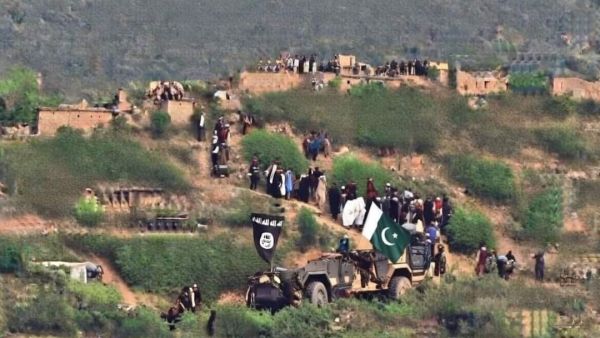
Fresh intelligence inputs have exposed a dangerous new phase in Pakistan’s proxy war against India. After months of covert coordination, Pakistan’s intelligence agency ISI has now operationalised a joint headquarters of Lashkar-e-Taiba (LeT) and Islamic State Khorasan Province (ISKP) in the mountains of Khyber District in Khyber Pakhtunkhwa province with the explicit objective of orchestrating major terror attacks in Jammu & Kashmir.
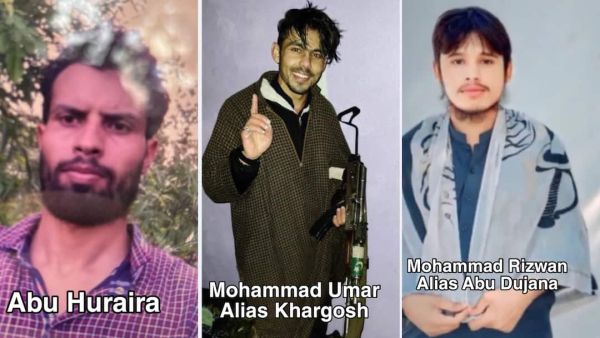
This revelation comes days after ABP News first reported that, on ISI’s directions, Lashkar-e-Taiba had joined hands with ISKP to activate a 12-member fidayeen module inside Jammu & Kashmir. That module is currently divided into three groups, led by Abu Huraira, Mohammad Umar alias Khargosh, and Mohammad Rizwan alias Abu Dujana, all Pakistani nationals. The entire hybrid module is being supervised by Huzaifa Bakkarwal, a top Lashkar commander with direct access to handlers in Rawalpindi.
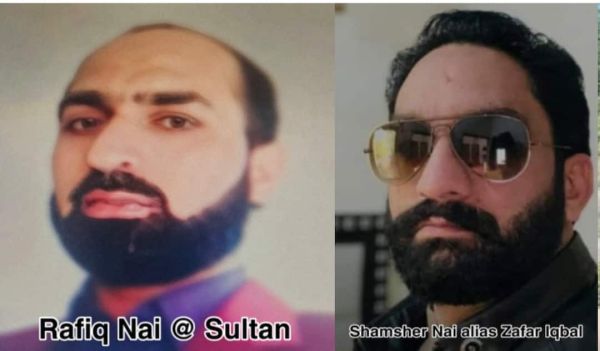
According to intelligence sources, ISI has now gone a step further by establishing a formal LeT–ISKP joint headquarters in the mountainous region of Khyber District, a region that has long remained outside meaningful international scrutiny. Command of this facility has been handed over to Hafiz Zubair Mujahid, a seasoned terrorist who perfectly embodies Pakistan’s terror ecosystem. Before joining ISKP, Hafiz Zubair Mujahid served as Lashkar-e-Taiba’s liaison between the group and Pakistan Army’s Military Intelligence, facilitating terrorist infiltration into India with the help of known handlers Shamsher Nai, Rafiq Nai and Qasim Lala. In 2019, Lashkar formally deputed him to ISKP, where he went on to establish ISKP bases in Balochistan and played a key role in coordinating attacks in Afghanistan.
Now, the same operative has been placed incharge of the LeT–ISKP joint headquarters in Khyber District of Khyber Pakhtunkhwa province of Pakistan, whose primary task is to push Afghan-national ISKP terrorists into Jammu & Kashmir, merging them with Lashkar’s existing networks. Sources reveal that ISI plans to expand the existing 12-member LeT-ISKP joint hybrid module into a much larger formation. Over the next six months, ISI aims to induct 45–60 Afghan terrorists into this structure, increasing each group’s strength to 15–20 terror operatives. While Afghan terrorists are to be infiltrated into Jammu & Kashmir for attacks inside India, the remaining ISKP cadres stationed in Tirah Valley, comprising hundreds of Pakistani nationals, will be tactically deployed by ISI within Pakistan itself, particularly against Tehreek-e-Taliban Pakistan (TTP) in Khyber Pakhtunkhwa.
This strategy mirrors ISI’s established playbook in Balochistan, where ISKP has been systematically used as a proxy force to target the Baloch Liberation Army (BLA) and Baloch Liberation Front (BLF) under the direct coordination of ISI handler Shafiq Mangal, exposing once again Pakistan’s policy of weaponising terror groups for internal control and external aggression. In effect, the Tirah Valley headquarters allows ISI to kill two birds with one stone: wage terror against India while managing internal militant threats through selective proxy warfare.
Intelligence inputs further indicate that this joint terror brigade is the brainchild of Pakistan Army’s X Corps Commander Lieutenant General Amer Ahsan Nawaz in coordination with Brigadier Faiq Ayub, ISI’s sector commander for Pakistan-occupied Kashmir (PoK). The plan was conceptualised and executed eight months after India’s Operation Sindoor, underscoring Pakistan’s refusal to abandon terrorism as state policy despite military setbacks.
The infiltration of Afghan terrorists into India will once again be handled by veteran ISI assets Rafiq Nai and Shamsher Nai, designated as terrorists under UAPA and have spent over two decades pushing Jaish-e-Mohammad and Lashkar terrorists across the Line of Control. Operational instructions to field commanders will be relayed by Huzaifa Bakkarwal, who will coordinate this hybrid module via satellite phone from Rawalpindi.
The exposure of this terror headquarters raises serious questions about Pakistan’s credibility. Over the past year alone, the Pakistan Army has conducted repeated airstrikes in Khyber District, claiming to target TTP hideouts. These strikes have killed over 60 civilians, including nine children, with one of the deadliest incidents occurring on 22 September 2025, when 30 civilians were killed in a single day. At the same time, Pakistan claims to have eliminated 35 terrorists and destroyed multiple “terror camps” in the very same region, even as it quietly allows ISI to establish a joint ISKP–Lashkar terror headquarters in that valley, exposing a glaring contradiction between its claims and its actions.
This duplicity raises serious questions for the international community how can Pakistan be treated as a credible counter-terrorism partner when it conducts so-called anti-terror operations that kill civilians while simultaneously hosting joint command centres of globally designated terrorist organisations, and for how long will Pakistan be permitted to sustain its proxy war against India by continuously reinventing terror architectures through the merger of outfits such as Lashkar-e-Taiba and Islamic State Khorasan Province (ISKP) under the direct supervision of its notorious intelligence agency, the ISI.
-
Sourabh Raaj Jain criticises authorities after Noida engineer Yuvraj Mehta drowns in open pit, calls it ‘Terribly shocking’

-
Ahan Shetty reacts to being compared with Saiyaara star Ahan Panday: ‘We’re being put up against each other’

-
Sanatana Dharma Row: Madras HC Quashes FIR Against BJP Leader, Calls Udhayanidhi’s Remarks Hate Speech

-
Brooklyn Beckham Speaks Out Against Family Control Amid Personal Struggles

-
'Globalisation is a failed policy': US Commerce Secy Howard Lutnick at Davos